
Object Details
Manufacturer
NASA - Langley Research Center
Summary
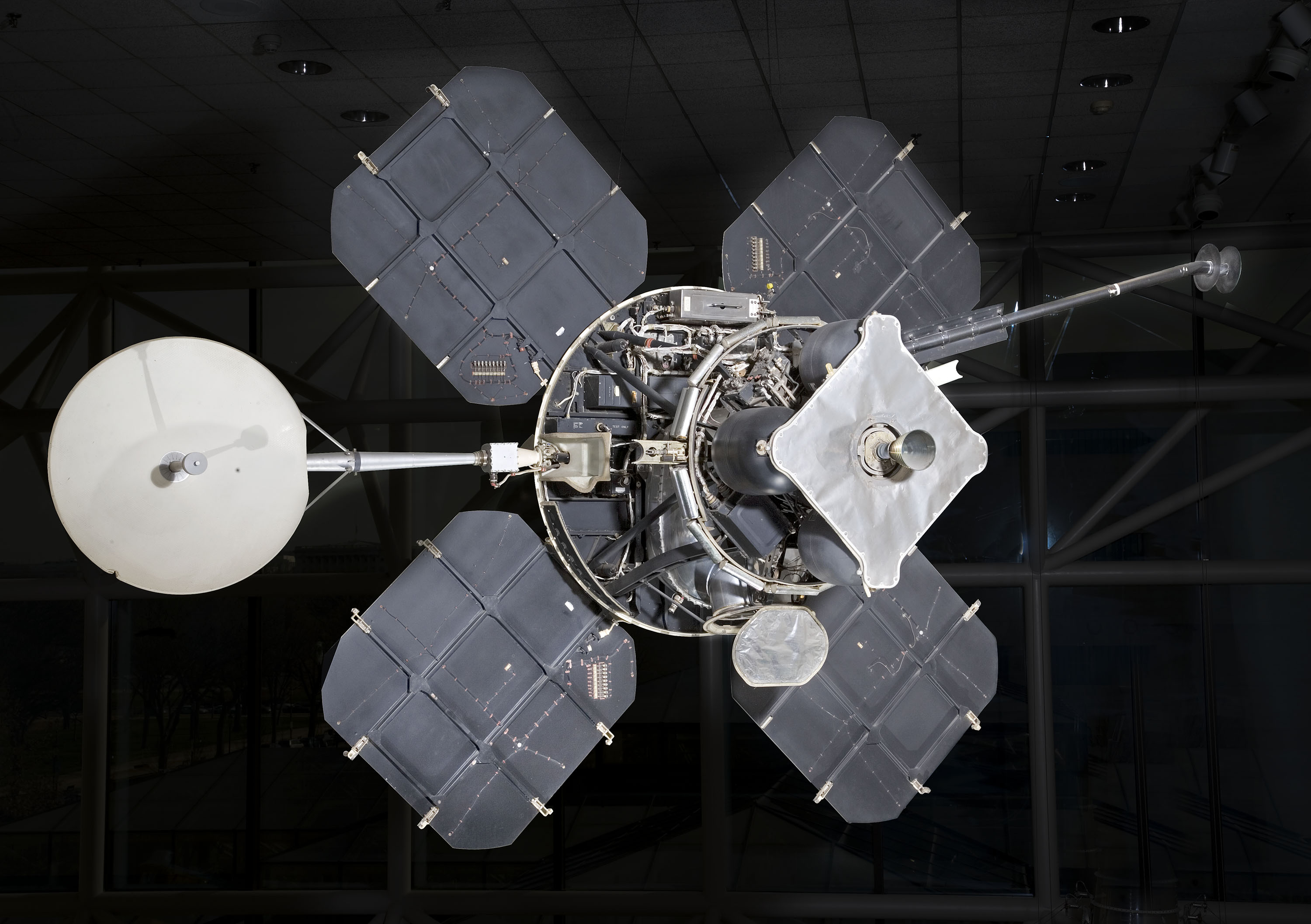
This is a refurbished backup of the Meteoroid Technology Satellite, Explorer 46. It was designed to provide data on the frequency and penetration energy of meteoroids and micrometeoroids in near-earth orbit. The original consisted of a hexi-cylindrical bus covered with solar cells. Meteoroid impacts were detected and measured using bumper panels that extended after launch and gave the satellite a windmill-like appearance. The central hub of the satellite carried the velocity and impact experiments. When the bumper targets were extended from the satellite, it had an overall width of 23 feet (7.015 m).
The satellite was launched on August 13, 1972 from Wallops Station in Virginia aboard a Scout rocket into an orbit that ranged from 302 to 494 miles. Twenty meteoroid impacts were recorded by the bumper panels through December 1972. A set of capacitor detectors recorded over two thousand micrometeoroid hits over the same period. This backup was rebuilt by technicians at NASA's Langley Research Center. It was transferred to NASM by NASA in July 1976.
Credit Line
Transferred from the National Aeronautics and Space Administration
Inventory Number
A19761737000
Restrictions & Rights
Usage conditions apply
Type
SPACECRAFT-Uncrewed
Materials
Mixed metals, solar cells
Dimensions
Overall: 3ft x 10ft, 198.4lb., 5ft (91.44 x 304.8cm, 90kg, 152.4cm) - NEEDS VERIFICATION (dhd/ 10/2007)
Country of Origin
United States of America
See more items in
National Air and Space Museum Collection
Data Source
National Air and Space Museum
Link to Original Record
Record ID
nasm_A19761737000