Skip to main content Skip to main navigation
heart-solid My Visit Donate
Home Smithsonian Institution IK development site for ODI
Press Enter to activate a submenu, down arrow to access the items and Escape to close the submenu.
    • Overview
    • Museums and Zoo
    • Entry and Guidelines
    • Museum Maps
    • Dine and Shop
    • Accessibility
    • Visiting with Kids
    • Group Visits
    • Overview
    • Exhibitions
    • Online Events
    • All Events
    • IMAX & Planetarium
    • Overview
    • Topics
    • Collections
    • Research Resources
    • Stories
    • Podcasts
    • Overview
    • For Caregivers
    • For Educators
    • For Students
    • For Academics
    • For Lifelong Learners
    • Overview
    • Become a Member
    • Renew Membership
    • Make a Gift
    • Volunteer
    • Overview
    • Our Organization
    • Our Leadership
    • Reports and Plans
    • Newsdesk
heart-solid My Visit Donate

Rolls-Royce Avon Mk 28-49 Turbojet Engine

Air and Space Museum

There are restrictions for re-using this image. For more information, visit the Smithsonian's Terms of Use page .
International media Interoperability Framework
IIIF provides researchers rich metadata and media viewing options for comparison of works across cultural heritage collections. Visit the IIIF page to learn more.
View manifest View in Mirador Viewer

    Object Details

    Manufacturer

    Rolls-Royce Ltd. (Derby, U.K.)

    Physical Description

    Type: Turbojet
    Thrust: 44,480 N (10,000 lb) at 8,000 rpm
    Compressor: 15-stage compound, 6-stage low pressure and 9-stage high pressure axial
    Combustor: Cannular
    Turbine: 2-stage axial
    Weight: 1,709 kg (3,768 lb) (Approximate)

    Summary

    In 1945, Rolls-Royce started the development of the AJ.65 (axial jet, 28,912 N (6,500 lb) thrust) Avon to replace the Nene, going through several design and test iterations. The first 100-series (RA.3) production engines were delivered in June 1950. For the Comet and Caravelle, the civil RA.29 was produced at 45,592 N (10,250 lb) thrust. The RB.146 300-series was later produced at 76,105 N (17,110 lb) thrust with afterburning.
    The Avon powered a variety of military and commercial aircraft: English Electric Canberra, Hawker Hunter, and Vickers-Armstrong Valiant, de Havilland Comet and S.N.C.A.S.E. Caravelle.
    This engine, a 44,480 N (10,000 lb) thrust RA.28-49, was manufactured in June 1955 specifically for the Ryan Aeronautical Company in San Diego, California. It powered the Ryan X-13 VTOL Vertijet between 1955 and 1957. In November 1956, the Vertijet, now in the museum's collection, was the first jet-powered VTOL aircraft to demonstrate transition from horizontal to vertical flight and return to horizontal flight.

    Credit Line

    Transferred from the U.S. Air Force via the contractor, Ryan Aeronautical Company

    Date

    1955

    Inventory Number

    A19670027000

    Restrictions & Rights

    Usage conditions apply

    Type

    PROPULSION-Turbines (Jet)

    Materials

    Steel, Aluminum, Magnesium, Preservative coating, Stainless Steel, Inconel, Rubber, Paint

    Dimensions

    Length 287.8 cm (113.3 in.), Diameter 105.4 cm (41.5 in.)

    Country of Origin

    United Kingdom

    See more items in

    National Air and Space Museum Collection

    Data Source

    National Air and Space Museum

    Metadata Usage

    Not determined

    Link to Original Record

    http://n2t.net/ark:/65665/nv95be9ffa0-5428-4ae1-8acb-c500838543e9

    Record ID

    nasm_A19670027000

    Discover More

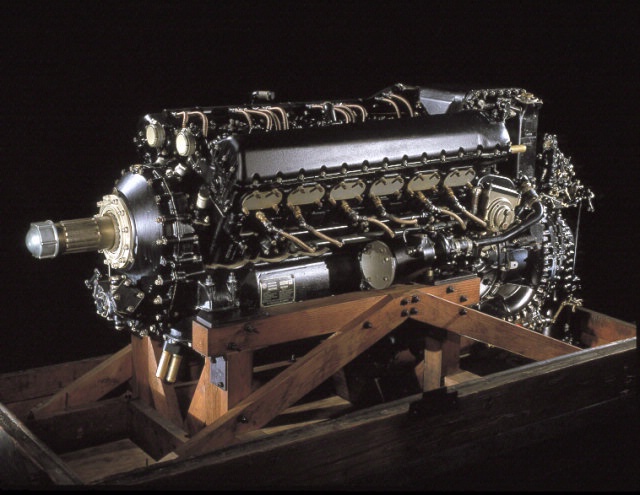
    Image of Packard Merlin V-1650-7 engine

    Propulsion

    Image of Packard Merlin V-1650-7 engine

    Propulsion

    arrow-up Back to top
    Home
    • Facebook facebook
    • Instagram instagram
    • LinkedIn linkedin
    • YouTube youtube

    • Contact Us
    • Get Involved
    • Shop Online
    • Job Opportunities
    • Equal Opportunity
    • Inspector General
    • Records Requests
    • Accessibility
    • Host Your Event
    • Press Room
    • Privacy
    • Terms of Use