Skip to main content Skip to main navigation
heart-solid My Visit Donate
Home Smithsonian Institution IK development site for ODI
Press Enter to activate a submenu, down arrow to access the items and Escape to close the submenu.
    • Overview
    • Museums and Zoo
    • Entry and Guidelines
    • Museum Maps
    • Dine and Shop
    • Accessibility
    • Visiting with Kids
    • Group Visits
    • Overview
    • Exhibitions
    • Online Events
    • All Events
    • IMAX & Planetarium
    • Overview
    • Topics
    • Collections
    • Research Resources
    • Stories
    • Podcasts
    • Overview
    • For Caregivers
    • For Educators
    • For Students
    • For Academics
    • For Lifelong Learners
    • Overview
    • Become a Member
    • Renew Membership
    • Make a Gift
    • Volunteer
    • Overview
    • Our Organization
    • Our Leadership
    • Reports and Plans
    • Newsdesk
heart-solid My Visit Donate

Requa Gibson Propeller Co. Propeller, fixed-pitch, two-blade, wood

Air and Space Museum

There are restrictions for re-using this image. For more information, visit the Smithsonian's Terms of Use page .
International media Interoperability Framework
IIIF provides researchers rich metadata and media viewing options for comparison of works across cultural heritage collections. Visit the IIIF page to learn more.
View manifest View in Mirador Viewer

    Object Details

    Manufacturer

    Requa Gibson Company

    Physical Description

    Type: Two-Blade, Fixed-Pitch, Wood
    Diameter: 213 cm (84 in.)
    Chord: 26.7 cm (10.5 in.)
    Engine Application: Unknown

    Summary

    In the United States, the Requa Gibson Company of New York City, led by Hugh C. Gibson, became the first American propeller manufacturer in 1909. The company began by crafting copies of Chauviére designs, but it then pioneered distinctively American designs by E.W. Bonson. The success of this pioneer propeller manufacturer was short-lived. The company went bankrupt in June 1911.
    This 1911 artifact was owned and used by William C. Miller, the donor's father and member of the Early Birds of Aviation, an organization of pioneers who flew solo before December 17, 1916. The son recalls that the aircraft was probably a pre-WWI Curtiss-type that was built by his father. With other flyers from his community, William Miller made numerous exhibition flights in the Erie County area of Pennsylvania. In 1914, Miller engaged in flights at Chicago's Grant Park.

    Credit Line

    Gift of Warren C. Miller

    Date

    1911

    Inventory Number

    A19670153000

    Restrictions & Rights

    Usage conditions apply

    Type

    PROPULSION-Propellers & Impellers

    Materials

    Wood
    Varnish
    Copper Alloy

    Dimensions

    Rotor/Propeller: 213.4 x 26.7 x 14 x 16.2 x 3.2cm (84 x 10 1/2 x 5 1/2 x 6 3/8 x 1 1/4 in.)

    Country of Origin

    United States of America

    See more items in

    National Air and Space Museum Collection

    Location

    National Air and Space Museum in Washington, DC

    Exhibition

    Early Flight

    Data Source

    National Air and Space Museum

    Metadata Usage

    Not determined

    Link to Original Record

    http://n2t.net/ark:/65665/nv9f17582a5-4526-4ffd-9c0c-1d8a00772762

    Record ID

    nasm_A19670153000

    Discover More

    An old biplane against a black background.

    Early Flight

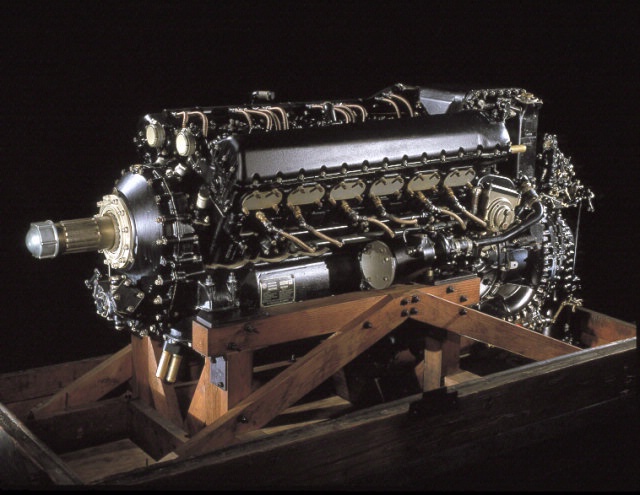
    Image of Packard Merlin V-1650-7 engine

    Propulsion

    Image of Packard Merlin V-1650-7 engine

    Propulsion

    arrow-up Back to top
    Home
    • Facebook facebook
    • Instagram instagram
    • LinkedIn linkedin
    • YouTube youtube

    • Contact Us
    • Get Involved
    • Shop Online
    • Job Opportunities
    • Equal Opportunity
    • Inspector General
    • Records Requests
    • Accessibility
    • Host Your Event
    • Press Room
    • Privacy
    • Terms of Use