Skip to main content Skip to main navigation
heart-solid My Visit Donate
Home Smithsonian Institution IK development site for ODI
Press Enter to activate a submenu, down arrow to access the items and Escape to close the submenu.
    • Overview
    • Museums and Zoo
    • Entry and Guidelines
    • Museum Maps
    • Dine and Shop
    • Accessibility
    • Visiting with Kids
    • Group Visits
    • Overview
    • Exhibitions
    • Online Events
    • All Events
    • IMAX & Planetarium
    • Overview
    • Topics
    • Collections
    • Research Resources
    • Stories
    • Podcasts
    • Overview
    • For Caregivers
    • For Educators
    • For Students
    • For Academics
    • For Lifelong Learners
    • Overview
    • Become a Member
    • Renew Membership
    • Make a Gift
    • Volunteer
    • Overview
    • Our Organization
    • Our Leadership
    • Reports and Plans
    • Newsdesk
heart-solid My Visit Donate

Receiver, Maser, Traveling Wave

Air and Space Museum

There are restrictions for re-using this image. For more information, visit the Smithsonian's Terms of Use page .
International media Interoperability Framework
IIIF provides researchers rich metadata and media viewing options for comparison of works across cultural heritage collections. Visit the IIIF page to learn more.
View manifest View in Mirador Viewer

Object Details

Manufacturer

Microwave Electronics, Teledyne Inc.

Summary

This maser element was part of experiments conducted in the 1960s at MIT's Haystack radio and radar facility to confirm Einstein's prediction of the slowing of radiation by a strong gravitational field. The development of masers in the early 1960's greatly enhanced the sensitivity of radar receivers, making it possible to measure signals reflected from distant planets. In 1964 Irwin Shapiro, then at MIT's Lincoln laboratory, made careful measurements of the transit time of 7.84 GHz radar signals reflected from Mercury when that planet was about to disappear behind the solar limb. He found that the sun's gravitational field had added about 200 microseconds to the signal's round trip travel time. This confirmation of the prediction, now known as the "Shapiro time delay" was at the time the most accurate evidence for Einstein's theory. The receiver was donated to NASM by MIT and Irwin Shapiro.

Credit Line

Gift of the Massachusetts Institute of Technology

Inventory Number

A19790168000

Restrictions & Rights

Usage conditions apply

Type

INSTRUMENTS-Scientific

Materials

Acrylic (Plexiglas), Aluminum, Cadmium Plating, Copper, Steel, Brass, Phenolic Resin, Plastic, Nylon, Foam

Dimensions

Storage (Rehoused on Aluminum Pallet with two other objects): 121.9 × 121.9 × 71.1cm, 132.5kg (48 × 48 × 28 in., 292lb.)

Country of Origin

United States of America

See more items in

National Air and Space Museum Collection

Data Source

National Air and Space Museum

Metadata Usage

Not determined

Link to Original Record

http://n2t.net/ark:/65665/nv95a092508-29d6-4728-a261-659b0931288f

Record ID

nasm_A19790168000

Discover More

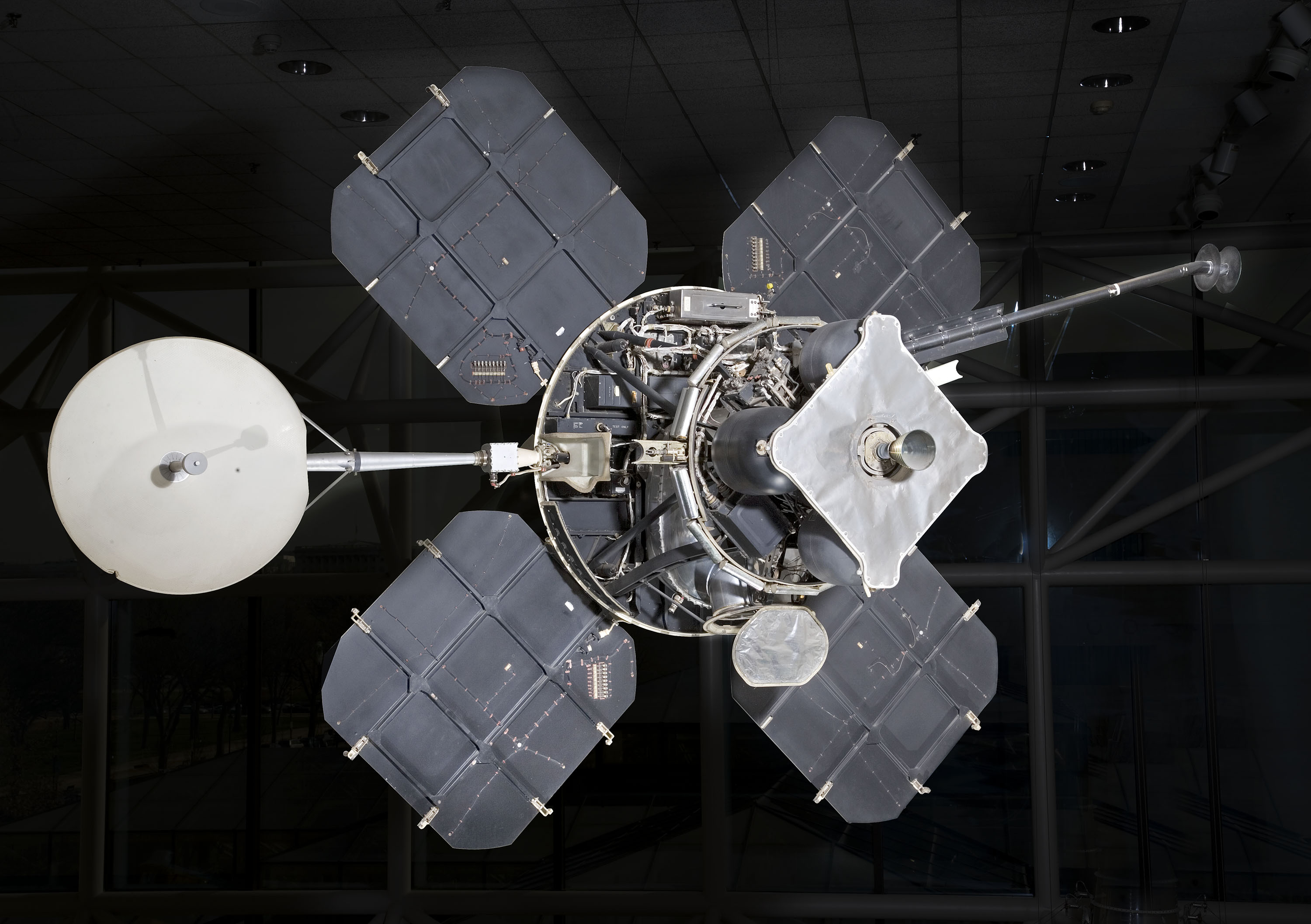
Lunar orbiter on display

Space Science

Lunar orbiter on display

Space Science

arrow-up Back to top
Home
  • Facebook facebook
  • Instagram instagram
  • LinkedIn linkedin
  • YouTube youtube

  • Contact Us
  • Get Involved
  • Shop Online
  • Job Opportunities
  • Equal Opportunity
  • Inspector General
  • Records Requests
  • Accessibility
  • Host Your Event
  • Press Room
  • Privacy
  • Terms of Use