
Object Details
Manufacturer
Bendix Corp.
Naval Research Laboratory
Summary
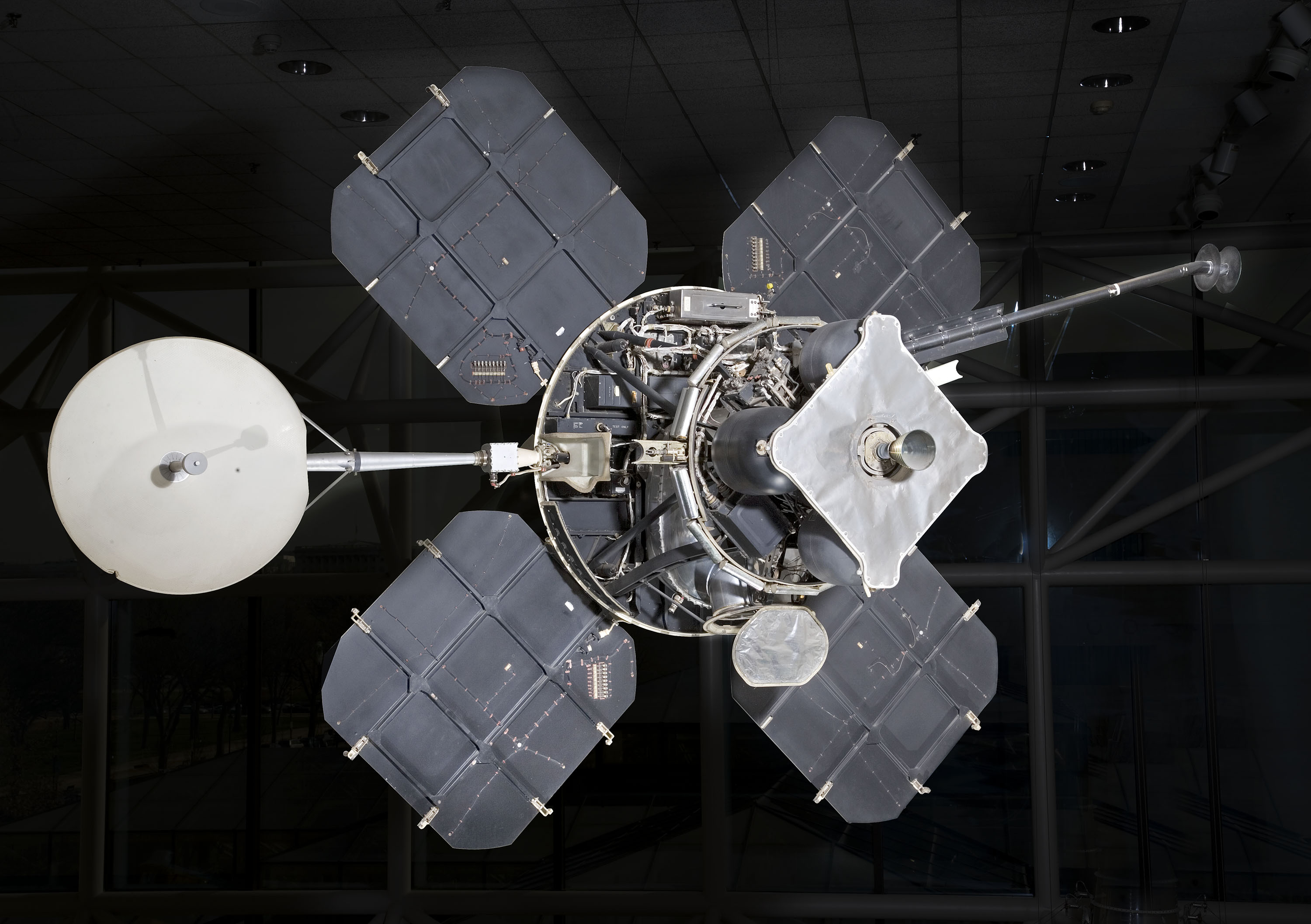
Unflown example of a far ultraviolet photometer and associated accessories of the type flown on Aerobee sounding rockets by the Aeronomy group at the Naval Research Laboratory (NRL )
As part of its studies of the upper atmosphere the NRL sent specialized instruments to extreme altitudes on Aerobee sounding rockets. Maximum altitude for the rockets was close to 230 kilometers. This far ultraviolet photometer is representative of those sent up in rockets in about 1969 for observations of the Earth's nightglow, called the geocorona. This photometer was designed to detect the ultraviolet radiation emitted by hydrogen at the Lyman beta wavelength. A collimator and an indium filter to exclude stray signals guard the aperture of the tube. The conventional photomultiplier used for amplify the signal in the earlier photometers (catalogue #19760162000) has been replaced in this detector by the more sensitive Bendix product called a Chaneltron electron mutliplier tube.
Credit Line
Transferred from the Naval Research Laboratory
Inventory Number
A19870163000
Restrictions & Rights
Usage conditions apply
Type
INSTRUMENTS-Scientific
Materials
Mixed metals, electronics
Dimensions
3-D: 30.5 x 22.9 x 15.2cm (12 x 9 x 6 in.)
Country of Origin
United States of America
See more items in
National Air and Space Museum Collection
Location
Steven F. Udvar-Hazy Center in Chantilly, VA
Exhibit Station
Rockets & Missiles
Data Source
National Air and Space Museum
Link to Original Record
Record ID
nasm_A19870163000