Skip to main content Skip to main navigation
heart-solid My Visit Donate
Home Smithsonian Institution IK development site for ODI
Press Enter to activate a submenu, down arrow to access the items and Escape to close the submenu.
    • Overview
    • Museums and Zoo
    • Entry and Guidelines
    • Museum Maps
    • Dine and Shop
    • Accessibility
    • Visiting with Kids
    • Group Visits
    • Overview
    • Exhibitions
    • Online Events
    • All Events
    • IMAX & Planetarium
    • Overview
    • Topics
    • Collections
    • Research Resources
    • Stories
    • Podcasts
    • Overview
    • For Caregivers
    • For Educators
    • For Students
    • For Academics
    • For Lifelong Learners
    • Overview
    • Become a Member
    • Renew Membership
    • Make a Gift
    • Volunteer
    • Overview
    • Our Organization
    • Our Leadership
    • Reports and Plans
    • Newsdesk
heart-solid My Visit Donate

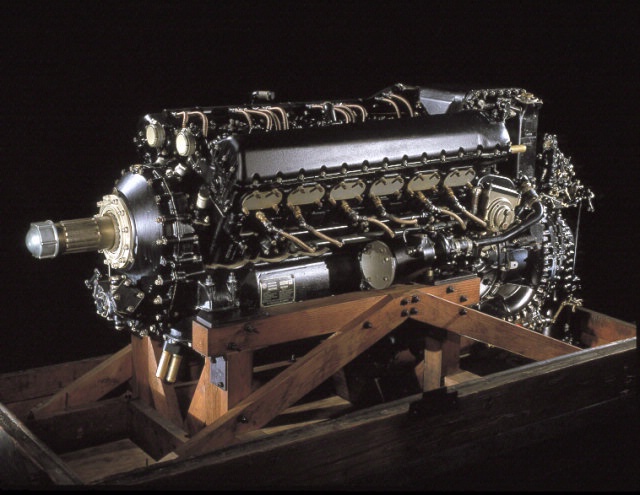
Napier Nomad Model E. 145 Horizontally-Opposed Diesel Engine

Air and Space Museum

There are restrictions for re-using this image. For more information, visit the Smithsonian's Terms of Use page .
International media Interoperability Framework
IIIF provides researchers rich metadata and media viewing options for comparison of works across cultural heritage collections. Visit the IIIF page to learn more.
View manifest View in Mirador Viewer
  • Side view of green and gray twelve cylinder engine. Gray crankshaft and pipes.
  • Front view of green and gray twelve cylinder engine. Gray crankshaft and pipes.

    Object Details

    Designer

    Ernest Chatterton

    Manufacturer

    Napier Aero Engines Ltd.

    Physical Description

    Type: Reciprocating, horizontally-opposed, diesel, 12 cylinder, liquid cooled
    Power rating: 2,271 kW (3,046 hp) at 2,050 rpm
    Displacement: 41.1 L (2,505 cu in.)
    Bore and Stroke: 152 mm (6 in.) x 187 mm (7.4 in.)
    Weight: 1,625 kg (3,580 lb)

    Summary

    D. Napier and Son began building aircraft engines in the World War I era. The Lion series was produced from 1917 until 1932 for military, commercial, and racing aircraft. Napier’s World War II era Sabre engines also powered a number of aircraft. Intended for use in long-range aircraft at the end of World War II, the Nomad was an engineering tour-de-force, although being one of the most complex aircraft engines ever built. Napier designed the Nomad to have the lowest possible fuel consumption by compounding a two-stroke diesel engine with a gas turbine and transmitting the power through a propeller.
    The Nomad II, a simplified version of the original design, appeared in 1951 and was intended for the four-engine Avro Shackleton long-range patrol bomber. However, a single Nomad II flew only briefly, in the nose of an Avro Lincoln bomber. Napier cancelled the program in 1955 because the Nomad could not compete with gas turbine engines.

    Credit Line

    Gift of Napier Aero Engines Ltd.

    Date

    1954

    Inventory Number

    A19640017000

    Restrictions & Rights

    Usage conditions apply

    Type

    PROPULSION-Reciprocating & Rotary

    Dimensions

    Length 302.9 cm (119.25 in.), Width 142.9 cm (56.25 in.), Height 101.6 cm (40.0 in.)

    Country of Origin

    United Kingdom

    See more items in

    National Air and Space Museum Collection

    Location

    Steven F. Udvar-Hazy Center in Chantilly, VA

    Hangar

    Boeing Aviation Hangar

    Data Source

    National Air and Space Museum

    Metadata Usage

    Not determined

    Link to Original Record

    http://n2t.net/ark:/65665/nv9ff2298d8-6116-4606-bcb1-7663f982c3f9

    Record ID

    nasm_A19640017000

    Discover More

    Image of Packard Merlin V-1650-7 engine

    Propulsion

    Image of Packard Merlin V-1650-7 engine

    Propulsion

    arrow-up Back to top
    Home
    • Facebook facebook
    • Instagram instagram
    • LinkedIn linkedin
    • YouTube youtube

    • Contact Us
    • Get Involved
    • Shop Online
    • Job Opportunities
    • Equal Opportunity
    • Inspector General
    • Records Requests
    • Accessibility
    • Host Your Event
    • Press Room
    • Privacy
    • Terms of Use