
Object Details
Manufacturer
Nakajima Hikoki K. K.
Physical Description
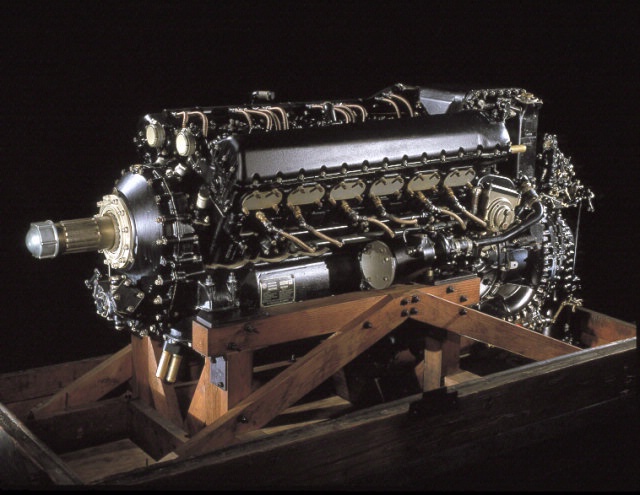
Type: Reciprocating, 14 cylinders, 2 rows, radial, air cooled
Power rating: 1,081 kW (1,450 hp) at 2,650 rpm
Displacement: 37.5 L (2,268 cu in.)
Bore and Stroke: 146 mm (5.75 in.) x 160 mm (5.3 in.)
Weight: 722 kg (1,590 lb)
Summary
Nakajima provided Japan with its first large radials by building Bristols beginning in the late 1920s. In 1936, Nakajima began building Gnome-Rhone engines under license. Its own World War II designs were apparently not considered very good. The principal feature of the Nakajima Type 2 engine was its compactness. It was slightly smaller in diameter than the equivalent Mitsubishi Kasei Model 10 series, yet it produced about the same power.
The Nakajima Type 2 engine was used on 617 Nakajima Ki-49-II Donryu (Storm Dragon) (Allied Code Name Helen), Japanese army twin-engine, heavy bombers, originally designed to operate without fighter escort. It was also installed in about 1,100 Nakajima Ki-44-II Shoki (Devil-Queller) (Allied Code Name Tojo), single-engine, army interceptor fighters, designed to defend Japan against bombing attacks in World War II. A total of 3,554 of all Ha 109 series engines were built between 1940 and 1944.
Credit Line
Transferred from Wright-Patterson AFB, Ohio
Date
Circa World War II
Inventory Number
A19670098000
Restrictions & Rights
Usage conditions apply
Type
PROPULSION-Reciprocating & Rotary
Materials
Non-Magnetic Metals
Ferrous Alloy
Copper Alloys
Wood
Paint
Ceramic
Fabric
Adhesive Tape
Dimensions
Overall: 4 ft. 1 3/4 in., 1587.3lb. (126.3cm, 720kg)
Other: 4 ft. 1 3/4 in. × 5 ft. 11/16 in. × 5 ft. 10 in. × 4 ft. 10 in. × 5 ft. (126.3 × 154.1 × 177.8 × 147.3 × 152.4cm)
Country of Origin
Japan
See more items in
National Air and Space Museum Collection
Data Source
National Air and Space Museum
Link to Original Record
Record ID
nasm_A19670098000