Skip to main content Skip to main navigation
heart-solid My Visit Donate
Home Smithsonian Institution IK development site for ODI
Press Enter to activate a submenu, down arrow to access the items and Escape to close the submenu.
    • Overview
    • Museums and Zoo
    • Entry and Guidelines
    • Museum Maps
    • Dine and Shop
    • Accessibility
    • Visiting with Kids
    • Group Visits
    • Overview
    • Exhibitions
    • Online Events
    • All Events
    • IMAX & Planetarium
    • Overview
    • Topics
    • Collections
    • Research Resources
    • Stories
    • Podcasts
    • Overview
    • For Caregivers
    • For Educators
    • For Students
    • For Academics
    • For Lifelong Learners
    • Overview
    • Become a Member
    • Renew Membership
    • Make a Gift
    • Volunteer
    • Overview
    • Our Organization
    • Our Leadership
    • Reports and Plans
    • Newsdesk
heart-solid My Visit Donate

Model, Rocket, Energia Launch Vehicle

Air and Space Museum

There are restrictions for re-using this image. For more information, visit the Smithsonian's Terms of Use page .
International media Interoperability Framework
IIIF provides researchers rich metadata and media viewing options for comparison of works across cultural heritage collections. Visit the IIIF page to learn more.
View manifest View in Mirador Viewer

    Object Details

    Summary

    In the Soviet Union interest in a reusable space plane began in the 1950s. After several incomplete design projects, the Soviets revived the effort in the 1980s. At the time of the early U.S. Space Shuttle launches, the Soviets were testing an unmanned scale model shuttle. Amid much speculation and after many delays, the Soviet Union launched its first full-scale reusable space shuttle, Buran (Snowstorm), on November 15, 1988. Although the Buran had been tested extensively in the Earth's atmosphere with trained pilots, its maiden, and only, orbital flight was without a pilot.
    The Buran was launched by the Energiia launch vehicle, the largest among Soviet launch vehicles, and resembles the American shuttle closely. Two Burans were manufactured and prepared for launch, but after a single unpiloted mission and the collapse of the Soviet Union, the program was cancelled.
    Boris Nikolaevich Yeltsin, the first democratically elected president of Russia, presented these models of the Soviet Buran spacecraft and Energia launch vehicle to the Smithsonian Institution in June 1992, during a summit in Washington D.C. with American President George H. W. Bush. These models commemorate the first launches of the Energia launch vehicle in May 1987 and the Buran shuttle in November 1988.

    Credit Line

    Gift of the Russian Federation

    Inventory Number

    A19940076000

    Restrictions & Rights

    Usage conditions apply

    Type

    MODELS-Missiles & Rockets

    Materials

    Plastic and Lacquered Metals, aluminium, copper, brass

    Dimensions

    Overall: 4 1/2 × 5 × 15 1/2 in. (11.4 × 12.7 × 39.4cm)
    Overall (With A19940076000 and 001 attached): 49.5 × 31.8 × 18.4cm (19 1/2 × 12 1/2 × 7 1/4 in.)

    Country of Origin

    Russian Federation

    See more items in

    National Air and Space Museum Collection

    Data Source

    National Air and Space Museum

    Metadata Usage

    Not determined

    Link to Original Record

    http://n2t.net/ark:/65665/nv98febe0b6-1eb5-4410-8822-6e5764fecc17

    Record ID

    nasm_A19940076000

    Discover More

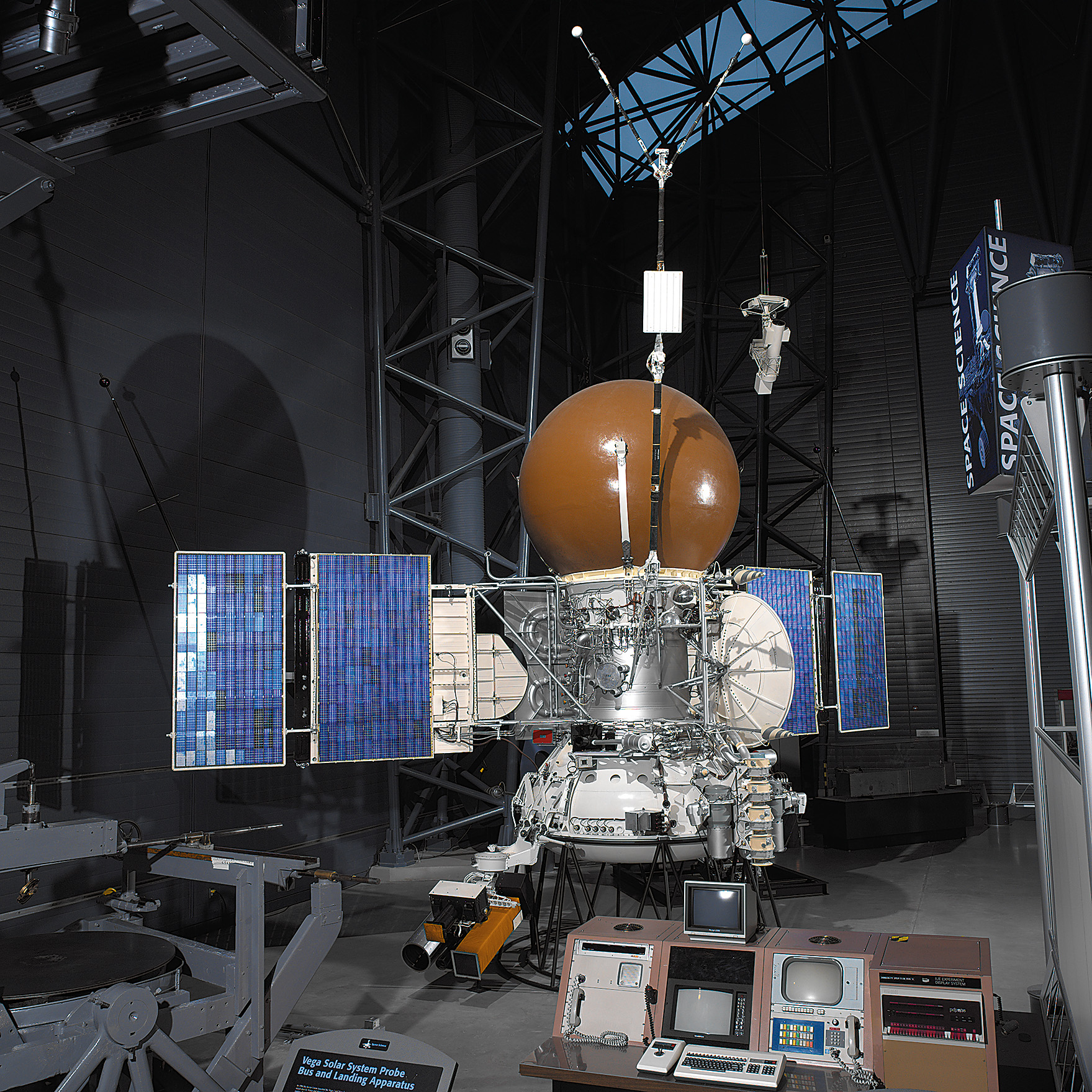
    Image of Vega solar system probe bus and landing apparatus

    International Space

    Image of Vega solar system probe bus and landing apparatus

    International Space

    arrow-up Back to top
    Home
    • Facebook facebook
    • Instagram instagram
    • LinkedIn linkedin
    • YouTube youtube

    • Contact Us
    • Get Involved
    • Shop Online
    • Job Opportunities
    • Equal Opportunity
    • Inspector General
    • Records Requests
    • Accessibility
    • Host Your Event
    • Press Room
    • Privacy
    • Terms of Use