Skip to main content Skip to main navigation
heart-solid My Visit Donate
Home Smithsonian Institution IK development site for ODI
Press Enter to activate a submenu, down arrow to access the items and Escape to close the submenu.
    • Overview
    • Museums and Zoo
    • Entry and Guidelines
    • Museum Maps
    • Dine and Shop
    • Accessibility
    • Visiting with Kids
    • Group Visits
    • Overview
    • Exhibitions
    • Online Events
    • All Events
    • IMAX & Planetarium
    • Overview
    • Topics
    • Collections
    • Research Resources
    • Stories
    • Podcasts
    • Overview
    • For Caregivers
    • For Educators
    • For Students
    • For Academics
    • For Lifelong Learners
    • Overview
    • Become a Member
    • Renew Membership
    • Make a Gift
    • Volunteer
    • Overview
    • Our Organization
    • Our Leadership
    • Reports and Plans
    • Newsdesk
heart-solid My Visit Donate

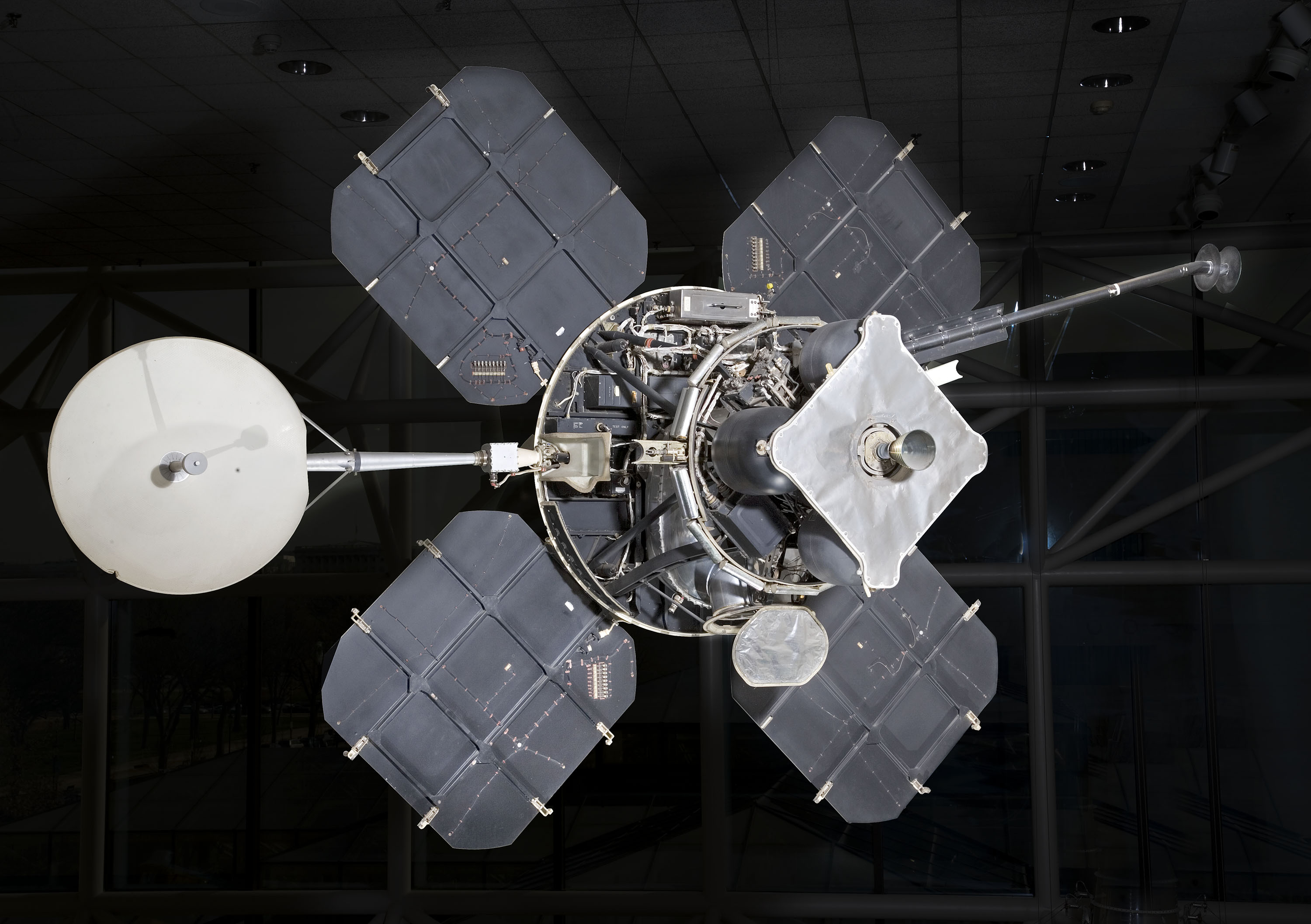
Model, Planetary Probe, Magellan Spacecraft, 1:25 scale

Air and Space Museum

There are restrictions for re-using this image. For more information, visit the Smithsonian's Terms of Use page .
International media Interoperability Framework
IIIF provides researchers rich metadata and media viewing options for comparison of works across cultural heritage collections. Visit the IIIF page to learn more.
View manifest View in Mirador Viewer

    Object Details

    Manufacturer

    NASA - Jet Propulsion Laboratory

    Summary

    This model of the Magellan space probe, with its Inertial Upper Stage booster, depicts the first dedicated U.S. mission to study the surface of Venus in detail. Magellan’s main goals were to take radar images of Venus’ surface, make a topographic map of Venus, acquire gravity field data, and develop an understanding of the geological structure of the planet, including its density distribution and dynamics. Magellan was launched on May 4, 1989, and began orbiting Venus on August 10, 1990. Magellan recorded data until it burned up in Venus’ atmosphere on October 13 or 14, 1994. By the end of the Magellan mission, the spacecraft had mapped over 99% of the planet’s surface, with a resolution ten times better than the earlier Soviet Venera 15 and 16 missions had obtained.
    The NASA Jet Propulsion Laboratory transferred this model to the Museum in June 1990.

    Credit Line

    Transferred from Jet Propulsion Laboratory, California Institute of Technology

    Inventory Number

    A19900259000

    Restrictions & Rights

    Usage conditions apply

    Type

    MODELS-Uncrewed Spacecraft & Parts

    Materials

    Plastic, Metal, wood, adhesive, paint

    Dimensions

    Other: 1ft 9in. x 10 1/2in. x 8in. (53.34 x 26.67 x 20.32cm)

    Country of Origin

    United States of America

    See more items in

    National Air and Space Museum Collection

    Data Source

    National Air and Space Museum

    Metadata Usage

    Not determined

    Link to Original Record

    http://n2t.net/ark:/65665/nv96b1dd14e-ba00-41eb-ae9d-2e41246e2b1b

    Record ID

    nasm_A19900259000

    Discover More

    Lunar orbiter on display

    Space Science

    Lunar orbiter on display

    Space Science

    arrow-up Back to top
    Home
    • Facebook facebook
    • Instagram instagram
    • LinkedIn linkedin
    • YouTube youtube

    • Contact Us
    • Get Involved
    • Shop Online
    • Job Opportunities
    • Equal Opportunity
    • Inspector General
    • Records Requests
    • Accessibility
    • Host Your Event
    • Press Room
    • Privacy
    • Terms of Use