
Object Details
Manufacturer
Mitsubishi Jukogyo K. K.
Physical Description
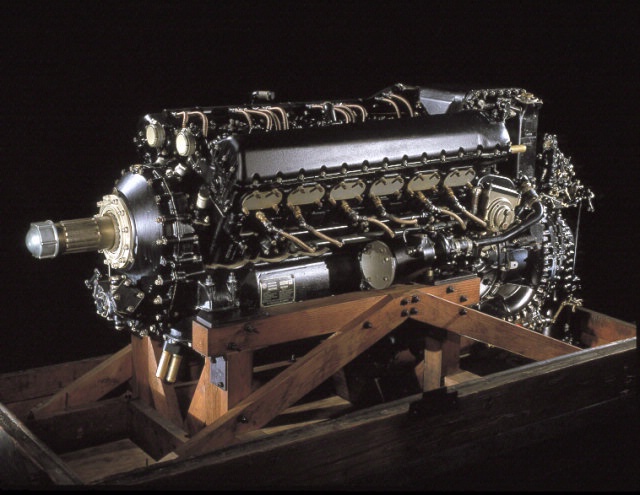
Type: Reciprocating, 14 cylinders, 2 rows, radial, two-speed supercharger, air-cooled
Power rating: 1,074 kW (1,440 hp) at 2,450 rpm
Displacement: 42.2 L (2,576 cu in.)
Bore and Stroke: 150 mm (5.91 in.) x 170 mm (6.69 in.)
Weight: 730 kg (1,609 lb)
Summary
Mitsubishi was the first and largest series producer of Japanese engines during World War II, with a 1937 Pratt & Whitney arrangement possibly contributing to this success. The Kasei (Mars) was the largest of the manufacturer’s original 14-cylinder radials, and was widely used in various models. Between 1941 and 1945, 9,323 engines of all models of Kasei 20 series were manufactured.
The Kasei 25 incorporated a two-speed supercharger, similar to earlier Kasei 21 and 22 models. It was used in a number of war time aircraft including: 1,133 B6N2 Nakajima Tenzan (Heavenly Mountain) (Allied Code Name Jill) single engine, torpedo-bombers; less than 100 of the night fighter version of the Yokosuka P1Y2 Ginga (Milky Way) (Allied Code Name Frances); two prototypes of the four-engine Kawanishi H8K4 maritime reconnaissance flying-boat; and 1,154 twin-engine Mitsubishi G4M2 (Allied Code Name Betty) attack bombers.
Credit Line
Transferred from the U.S. Army Air Forces
Date
Circa World War II
Inventory Number
A19670087000
Restrictions & Rights
Usage conditions apply
Type
PROPULSION-Reciprocating & Rotary
Materials
Ferrous Alloy
Unknown Coating
Synthetic Fabric
Non-Magnetic Metals
Wood
Plastic
Dimensions
Diameter 134.0 cm (52.75 in.), Length 156.2 cm (61.5 in.)
Country of Origin
Japan
See more items in
National Air and Space Museum Collection
Data Source
National Air and Space Museum
Link to Original Record
Record ID
nasm_A19670087000