
Object Details
Manufacturer
Mitsubishi Jukogyo K. K.
Physical Description
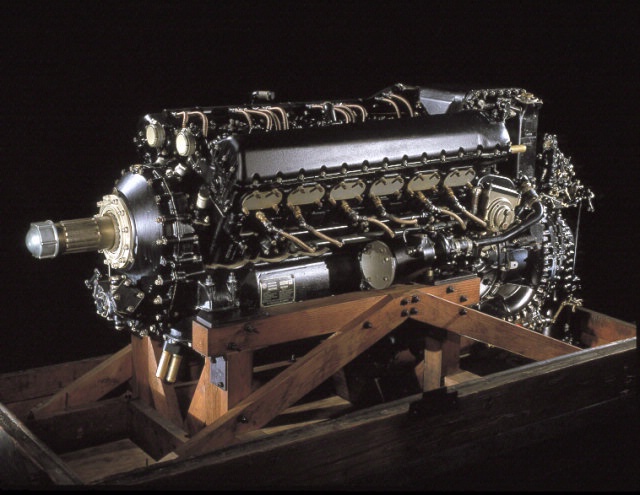
Type: Reciprocating, 14 cylinders, 2 rows, radial, air cooled
Power rating: 1,825 kW (1,825 hp) at 2,600 rpm
Displacement: 42.1 L (2,570 cu in)
Bore and Stroke: 150 mm (5.91 in.) x 170 mm (6.69 in.)
Weight: 780 kg (1,720 lb)
missing carburetor, spark plugs, exhaust collector ring, generator, starter; spark plug wires damaged; on stand.
Summary
Mitsubishi was the first and largest series producer of Japanese engines during World War II, with a 1937 Pratt & Whitney arrangement possibly contributing to this success. The Kasei (Mars) was the largest of the manufacturer’s original 14-cylinder radials, and was widely used in various models. It was geared, supercharged, and had optional water methanol injection. Between 1941 and 1945, a total of 9,323 engines of all models of Kasei 20 series were manufactured.
This Model 21 powered the Mitsubishi G4M twin engine attack bomber (Allied Code Name Betty) built in larger numbers than any other Japanese bomber; it was used from the beginning of the war and also transported the Japanese surrender delegation. A total of 2,446 G4M and the similar G6M1 aircraft were built.
Credit Line
Gift of the War Memorial Museum of Virginia
Date
Circa World War II
Inventory Number
A19721044000
Restrictions & Rights
Usage conditions apply
Type
PROPULSION-Reciprocating & Rotary
Materials
Steel
Aluminum
Rubber
Leather
Magnesium?
Cadmium Plating
Adhesive
Copper Alloy
Stainless Steel
Ceramic
Plastic
Paint
Dimensions
Overall: 175.3 × 134 × 134cm, 780kg (69 × 52 3/4 × 52 3/4 in., 1719 9/16lb.)
Storage (On Stand): 182.9 × 157.5 × 154.9cm (72 × 62 × 61 in.)
Country of Origin
Japan
See more items in
National Air and Space Museum Collection
Data Source
National Air and Space Museum
Link to Original Record
Record ID
nasm_A19721044000