Skip to main content Skip to main navigation
heart-solid My Visit Donate
Home Smithsonian Institution IK development site for ODI
Press Enter to activate a submenu, down arrow to access the items and Escape to close the submenu.
    • Overview
    • Museums and Zoo
    • Entry and Guidelines
    • Museum Maps
    • Dine and Shop
    • Accessibility
    • Visiting with Kids
    • Group Visits
    • Overview
    • Exhibitions
    • Online Events
    • All Events
    • IMAX & Planetarium
    • Overview
    • Topics
    • Collections
    • Research Resources
    • Stories
    • Podcasts
    • Overview
    • For Caregivers
    • For Educators
    • For Students
    • For Academics
    • For Lifelong Learners
    • Overview
    • Become a Member
    • Renew Membership
    • Make a Gift
    • Volunteer
    • Overview
    • Our Organization
    • Our Leadership
    • Reports and Plans
    • Newsdesk
heart-solid My Visit Donate

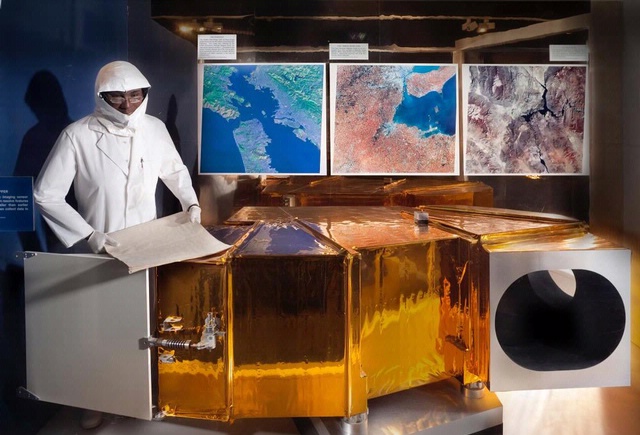
Meteorological Satellite, Microwave Sounding Unit, Tiros N

Air and Space Museum

There are restrictions for re-using this image. For more information, visit the Smithsonian's Terms of Use page .
International media Interoperability Framework
IIIF provides researchers rich metadata and media viewing options for comparison of works across cultural heritage collections. Visit the IIIF page to learn more.
View manifest View in Mirador Viewer

Object Details

Manufacturer

NASA - Jet Propulsion Laboratory

Summary

This is a flight spare of the Microwave Sounding Unit (MSU), an instrument flown on Tiros meteorological satellites beginning with Tiros-N in 1978. This MSU (designated Flight Model 8) was built in 1984 by the Jet Propulsion Laboratory, but never flew.
The MSU's purpose was to measure the temperature profile of the Earth's atmosphere from the planet's surface to a height of 20 km (12.4 miles). The MSU and other instruments on the Tiros series of satellites data are part of on-going program to gather a range of data on the characteristics of and changes to the Earth's atmosphere over a period of years. MSU data on atmospheric temperatures has contributed to scientific discussions of whether the Earth is experiencing a warming trend.
The last MSU flown in space, launched on the NOAA-14 satellite (part of the Tiros program), in 1994, is still gathering data as of 2007.
The National Oceanic and Atmospheric Administration transferred this artifact to the Museum in 2004.

Credit Line

Transferred from National Oceanic & Atmospheric Administration

Inventory Number

A20040176000

Restrictions & Rights

Usage conditions apply

Type

SPACECRAFT-Uncrewed-Test Vehicles

Materials

HAZ MAT: Thoriated Magnesium
Aluminum Alloy
Fiberglass or other Reinforced Resin
Adhesive
Uncharacterized Coatings and Metals
Plastics and Epoxy Resin
Electrical Wiring
Copper Alloys
Synthetic Fabrics

Dimensions

3-D: 72.4 × 54 × 40.3cm (2 ft. 4 1/2 in. × 1 ft. 9 1/4 in. × 1 ft. 3 7/8 in.)

Country of Origin

United States of America

See more items in

National Air and Space Museum Collection

Location

National Air and Space Museum in Washington, DC

Exhibition

One World Connected

Data Source

National Air and Space Museum

Metadata Usage

Not determined

Link to Original Record

http://n2t.net/ark:/65665/nv96e29e291-5ada-4894-8138-0e4aa8262fd3

Record ID

nasm_A20040176000

Discover More

Civilian Application Satellites Object Group

Civilian Application Satellites

Civilian Application Satellites Object Group

Civilian Application Satellites

A metallic looking communications satellite against a black background.

One World Connected

arrow-up Back to top
Home
  • Facebook facebook
  • Instagram instagram
  • LinkedIn linkedin
  • YouTube youtube

  • Contact Us
  • Get Involved
  • Shop Online
  • Job Opportunities
  • Equal Opportunity
  • Inspector General
  • Records Requests
  • Accessibility
  • Host Your Event
  • Press Room
  • Privacy
  • Terms of Use