Skip to main content Skip to main navigation
heart-solid My Visit Donate
Home Smithsonian Institution IK development site for ODI
Press Enter to activate a submenu, down arrow to access the items and Escape to close the submenu.
    • Overview
    • Museums and Zoo
    • Entry and Guidelines
    • Museum Maps
    • Dine and Shop
    • Accessibility
    • Visiting with Kids
    • Group Visits
    • Overview
    • Exhibitions
    • Online Events
    • All Events
    • IMAX & Planetarium
    • Overview
    • Topics
    • Collections
    • Research Resources
    • Stories
    • Podcasts
    • Overview
    • For Caregivers
    • For Educators
    • For Students
    • For Academics
    • For Lifelong Learners
    • Overview
    • Become a Member
    • Renew Membership
    • Make a Gift
    • Volunteer
    • Overview
    • Our Organization
    • Our Leadership
    • Reports and Plans
    • Newsdesk
heart-solid My Visit Donate

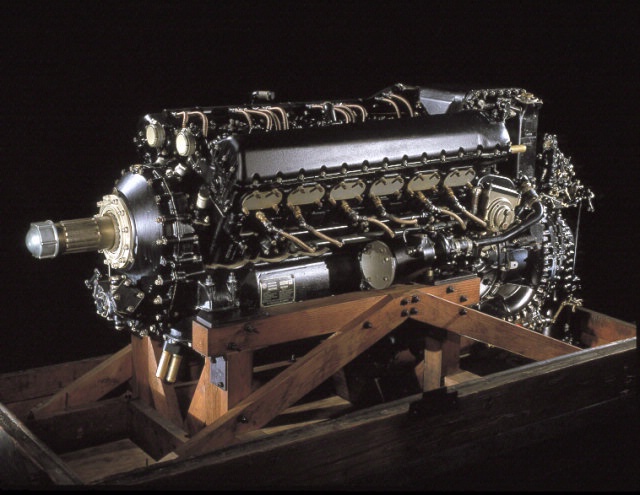
Lycoming XH-2470-7, H-24 Engine

Air and Space Museum

There are restrictions for re-using this image. For more information, visit the Smithsonian's Terms of Use page .
International media Interoperability Framework
IIIF provides researchers rich metadata and media viewing options for comparison of works across cultural heritage collections. Visit the IIIF page to learn more.
View manifest View in Mirador Viewer

    Object Details

    Manufacturer

    Lycoming (Williamsport, Pennsylvania)

    Physical Description

    Type: Reciprocating, 24 cylinders, H-type, Liquid-cooled
    Power rating: 1,491 kW (2,000 hp) at 3,100 rpm
    Displacement: 40.5 L (2,470 cu in)
    Bore and Stroke: 133 mm (5.3 in.) x 121 mm (4.8 in.)
    Weight: 1,281 kg (2,824 lb)

    Summary

    In 1939, the Air Corps identified a need for flat, H-type engines for installation in bomber wings. Lycoming had already begun Navy studies for the 24-cylinder H-2470 engine, and the Army arranged to buy two engines under that contract. In 1942, the Navy, proposing the H-2470 for the Curtiss F14C fighter, sent a letter of intent ordering 100 engines, 50 of which were for the Army. A new Lycoming factory was set up in Toledo, Ohio, exclusively for H-2470 production. However, before the factory went into production, the Navy decided that it would not be available for the war and canceled its contract.
    With limited Army support, the engine was flight tested in the Vultee XP-54. But again it was clear that the H-2470 could not be ready for use in the war, and the Army dropped the project before the end of 1943. This XH-2470-7 artifact was equipped with a dual rotation propeller shaft.

    Credit Line

    Transferred from the U.S. Navy, Naval Supply Center, Cheatham Annex, Williamsburg, Virginia

    Date

    Circa 1944

    Inventory Number

    A19731557000

    Restrictions & Rights

    Usage conditions apply

    Type

    PROPULSION-Reciprocating & Rotary

    Materials

    Steel, Aluminum, Copper, Ceramic, Rubber, Paint, Preservative coating, Textile

    Dimensions

    Storage: 309.9 × 104.1 × 178.4cm, 1635.7kg (10 ft. 2 in. × 3 ft. 5 in. × 5 ft. 10 1/4 in., 3606lb.)

    Country of Origin

    United States of America

    See more items in

    National Air and Space Museum Collection

    Data Source

    National Air and Space Museum

    Metadata Usage

    Not determined

    Link to Original Record

    http://n2t.net/ark:/65665/nv91316eb70-260c-4706-aa74-071fdcbbc703

    Record ID

    nasm_A19731557000

    Discover More

    Image of Packard Merlin V-1650-7 engine

    Propulsion

    Image of Packard Merlin V-1650-7 engine

    Propulsion

    arrow-up Back to top
    Home
    • Facebook facebook
    • Instagram instagram
    • LinkedIn linkedin
    • YouTube youtube

    • Contact Us
    • Get Involved
    • Shop Online
    • Job Opportunities
    • Equal Opportunity
    • Inspector General
    • Records Requests
    • Accessibility
    • Host Your Event
    • Press Room
    • Privacy
    • Terms of Use