Skip to main content Skip to main navigation
heart-solid My Visit Donate
Home Smithsonian Institution IK development site for ODI
Press Enter to activate a submenu, down arrow to access the items and Escape to close the submenu.
    • Overview
    • Museums and Zoo
    • Entry and Guidelines
    • Museum Maps
    • Dine and Shop
    • Accessibility
    • Visiting with Kids
    • Group Visits
    • Overview
    • Exhibitions
    • Online Events
    • All Events
    • IMAX & Planetarium
    • Overview
    • Topics
    • Collections
    • Research Resources
    • Stories
    • Podcasts
    • Overview
    • For Caregivers
    • For Educators
    • For Students
    • For Academics
    • For Lifelong Learners
    • Overview
    • Become a Member
    • Renew Membership
    • Make a Gift
    • Volunteer
    • Overview
    • Our Organization
    • Our Leadership
    • Reports and Plans
    • Newsdesk
heart-solid My Visit Donate

Light Table, Cutler-Hammer AIL 1540

Air and Space Museum

There are restrictions for re-using this image. For more information, visit the Smithsonian's Terms of Use page .
International media Interoperability Framework
IIIF provides researchers rich metadata and media viewing options for comparison of works across cultural heritage collections. Visit the IIIF page to learn more.
View manifest View in Mirador Viewer

    Object Details

    Manufacturer

    Cutler Hammer

    Summary

    U.S. intelligence agencies began using the AIL Information Systems 1540 Multi-Form light tables (MLT 1540s) in 1971 to analyze film returned from U-2s, SR-71s; CORONA, GAMBIT, and HEXAGON satellites; and other photoreconnaissance vehicles. The MLT 1540 improved upon previous light tables. It had motorized features, could handle up to four film rolls of various widths, and enabled analysts to view two rolls stereoscopically. The MLT 1540 also accomodated improved optics, including the Bausch and Lomb Zoom 240 stereoscope displayed here.
    Light tables such as the MLT 1540 continued to be used into the 1980s to analyze film returned from satellites and aircraft. Despite the introduction of computerized systems in 1981 to process imagery returned digitally from photoreconnaissance satellites and aircraft, they were also used for over 20 years to analyze some digital imagery that was run off in hard copy because the computerized systems could not process all of it.
    The National Geospatial-Intelligence Agency transferred the MLT 1540 to the Museum in 2004.

    Alternate Name

    Cutler-Hammer AIL 1540 Light Table

    Credit Line

    Transferred from the National Geospatial-Intelligence Agency

    Inventory Number

    A20050091000

    Restrictions & Rights

    Usage conditions apply

    Type

    EQUIPMENT-Photographic

    Materials

    Metal, plastic, and glass
    Cover: synthetic fabric

    Dimensions

    Other: 4ft 2in. x 5ft 2in. x 2ft 6in. (127 x 157.48 x 76.2cm)
    152.4 x 101.6cm (5ft x 3ft 4in.) (Approximate, cover, laid flat)

    Country of Origin

    United States of America

    See more items in

    National Air and Space Museum Collection

    Location

    Steven F. Udvar-Hazy Center in Chantilly, VA

    Hangar

    James S. McDonnell Space Hangar

    Data Source

    National Air and Space Museum

    Metadata Usage

    Not determined

    Link to Original Record

    http://n2t.net/ark:/65665/nv94360097c-a902-447c-8e7e-c6f7e3b9269a

    Record ID

    nasm_A20050091000

    Discover More

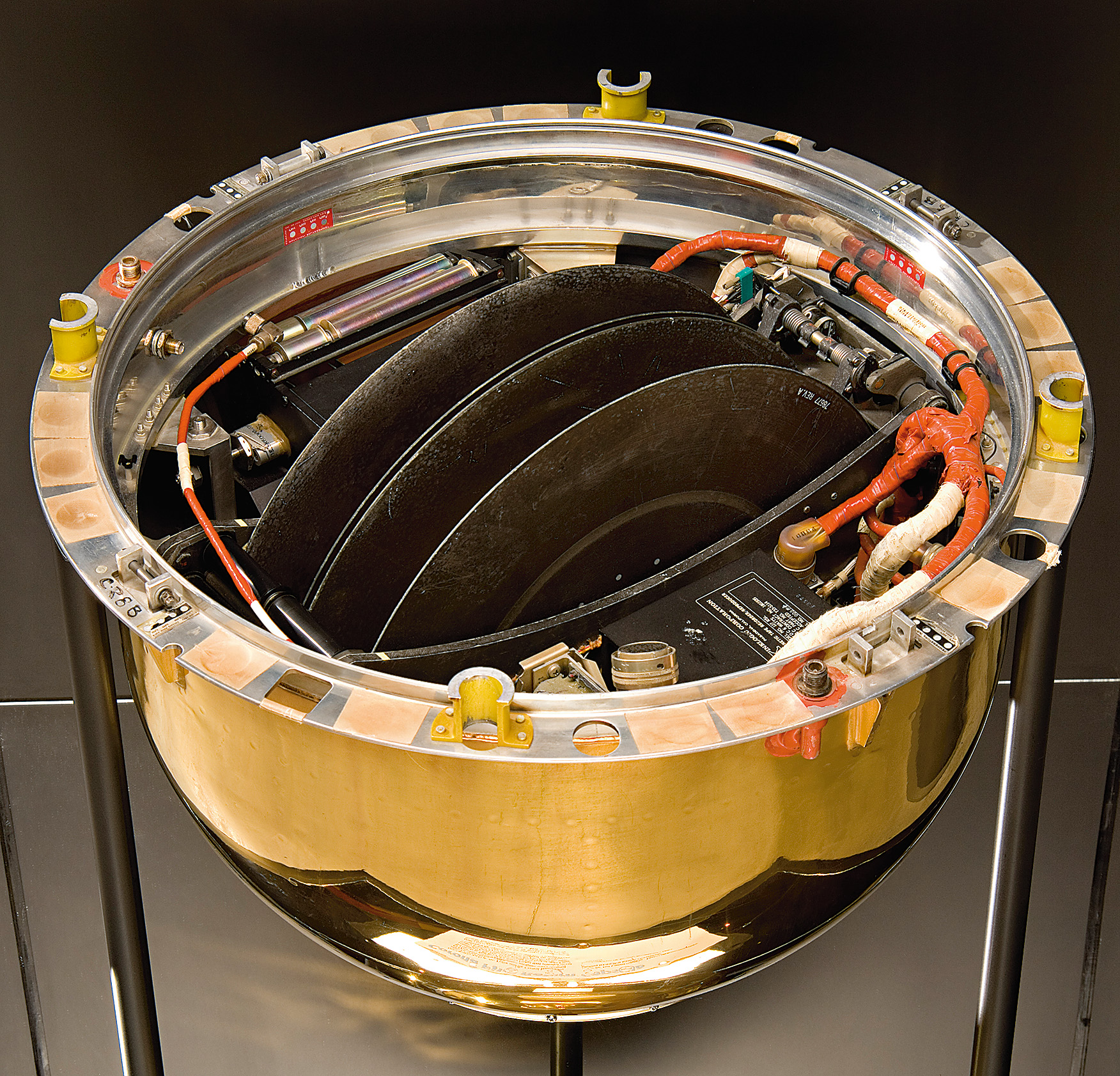
    Image of Discoverer XIII film return capsule

    National Security Space

    Image of Discoverer XIII film return capsule

    National Security Space

    arrow-up Back to top
    Home
    • Facebook facebook
    • Instagram instagram
    • LinkedIn linkedin
    • YouTube youtube

    • Contact Us
    • Get Involved
    • Shop Online
    • Job Opportunities
    • Equal Opportunity
    • Inspector General
    • Records Requests
    • Accessibility
    • Host Your Event
    • Press Room
    • Privacy
    • Terms of Use