Skip to main content Skip to main navigation
heart-solid My Visit Donate
Home Smithsonian Institution IK development site for ODI
Press Enter to activate a submenu, down arrow to access the items and Escape to close the submenu.
    • Overview
    • Museums and Zoo
    • Entry and Guidelines
    • Museum Maps
    • Dine and Shop
    • Accessibility
    • Visiting with Kids
    • Group Visits
    • Overview
    • Exhibitions
    • Online Events
    • All Events
    • IMAX & Planetarium
    • Overview
    • Topics
    • Collections
    • Research Resources
    • Stories
    • Podcasts
    • Overview
    • For Caregivers
    • For Educators
    • For Students
    • For Academics
    • For Lifelong Learners
    • Overview
    • Become a Member
    • Renew Membership
    • Make a Gift
    • Volunteer
    • Overview
    • Our Organization
    • Our Leadership
    • Reports and Plans
    • Newsdesk
heart-solid My Visit Donate

Liberty Loan of 1917 Button

American History Museum

There are restrictions for re-using this image. For more information, visit the Smithsonian's Terms of Use page .
International media Interoperability Framework
IIIF provides researchers rich metadata and media viewing options for comparison of works across cultural heritage collections. Visit the IIIF page to learn more.
View manifest View in Mirador Viewer

    Object Details

    Description (Brief)

    Round Liberty Loan button. The button is red with a blue border. White print on the border reads “Get Behind The Government.” White print on the red portion reads “Liberty Loan of 1917” and is cut across by a blue and white image of the Statue of Liberty.
    Liberty Loans were part of the U.S. government’s effort to sell war bonds (also known as Liberty Bonds) during World War I to defray the expense of war. These bonds were issued by the U.S. Treasury. The First Liberty Bond Act was passed by Congress on April 24, 1917, and the bonds began issuance shortly thereafter.
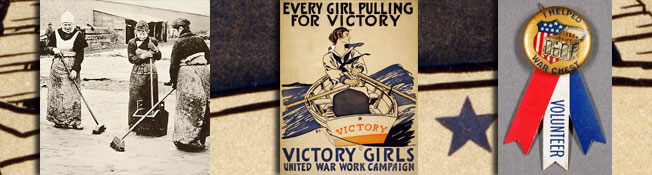
    Much like the use of military insignia to identify its wearer (by association with an organization) and his/her achievements, these pins and buttons were meant to be worn by Americans on the home front during World War I to show their membership in an organization and/or their contribution to a particular war effort, such as the United War Work Campaign. The pins and buttons displayed the wearer’s patriotism and generosity and undoubtedly also served to prompt others to become similarly involved in the various war efforts.
    SOURCE:
    Treasury Department, Liberty Loan Acts (Washington, D.C.: Government Printing Office, 1921). books.google.com/books?id=4qFAAAAAYAAJ.

    Location

    Currently not on view

    date made

    1917

    ID Number

    2006.0098.0311

    accession number

    2006.0098

    catalog number

    2006.0098.0311

    Object Name

    button

    Physical Description

    cellulose nitrate (overall material)

    Measurements

    overall: 2 cm; 13/16 in
    overall: 3/16 in x 7/8 in; .47625 cm x 2.2225 cm

    See more items in

    Medicine and Science: Chemistry
    Clothing & Accessories
    Military
    Advertising
    World War I Pins & Buttons

    Data Source

    National Museum of American History

    Metadata Usage

    CC0

    Link to Original Record

    https://n2t.net/ark:/65665/ng49ca746ab-f5f0-704b-e053-15f76fa0b4fa

    Record ID

    nmah_1317532

    Discover More

    Curtiss JN-4D Jenny

    World War I Collections Sampler

    Liberty Across America

    Suffrage Procession of women holding American flags.

    1917: A Year in the Collections

    Women in World War I

    Pins & Buttons

    Statue of Liberty graphic by Roy Lichtenstein.

    The Statue of Liberty: Symbol for a Nation

    arrow-up Back to top
    Home
    • Facebook facebook
    • Instagram instagram
    • LinkedIn linkedin
    • YouTube youtube

    • Contact Us
    • Get Involved
    • Shop Online
    • Job Opportunities
    • Equal Opportunity
    • Inspector General
    • Records Requests
    • Accessibility
    • Host Your Event
    • Press Room
    • Privacy
    • Terms of Use