Skip to main content Skip to main navigation
heart-solid My Visit Donate
Home Smithsonian Institution IK development site for ODI
Press Enter to activate a submenu, down arrow to access the items and Escape to close the submenu.
    • Overview
    • Museums and Zoo
    • Entry and Guidelines
    • Museum Maps
    • Dine and Shop
    • Accessibility
    • Visiting with Kids
    • Group Visits
    • Overview
    • Exhibitions
    • Online Events
    • All Events
    • IMAX & Planetarium
    • Overview
    • Topics
    • Collections
    • Research Resources
    • Stories
    • Podcasts
    • Overview
    • For Caregivers
    • For Educators
    • For Students
    • For Academics
    • For Lifelong Learners
    • Overview
    • Become a Member
    • Renew Membership
    • Make a Gift
    • Volunteer
    • Overview
    • Our Organization
    • Our Leadership
    • Reports and Plans
    • Newsdesk
heart-solid My Visit Donate

Langley Propeller, fixed-pitch, two-blade, wood and fabric

Air and Space Museum

There are restrictions for re-using this image. For more information, visit the Smithsonian's Terms of Use page .
International media Interoperability Framework
IIIF provides researchers rich metadata and media viewing options for comparison of works across cultural heritage collections. Visit the IIIF page to learn more.
View manifest View in Mirador Viewer

    Object Details

    Designer

    Samuel P. Langley

    Physical Description

    Type: Two-Blade, Fixed-Pitch, Wood and Fabric
    Diameter: 251.5 cm (99 in.)
    Chord: 83.8 cm (33 in.)
    Engine Application: Gasoline, 4.5 kw (6 hp)

    Summary

    This pusher propeller was built by Professor Samuel P. Langley in 1897, and used in unsuccessful experiments mounted on a special rail hand car to determine the effectiveness of the device. Charles Manley, Langley's colleague, described this experiment in 1911 memoirs. A gasoline engine "said to have furnished over six horse-power on Prony-brake tests, evidently did not furnish anything like this amount of power at this time." Furthermore, the railroad car was very heavy, offering too "strong a tractive resistance," and "the propeller was evidently far too large to permit the engine to run at the speed at which it would develop a reasonable amount of power."
    Langley's famous Aerodrome experiments were not successful in developing a piloted aircraft before his death in 1906; however, a later experiment conducted by Glenn Curtiss and sponsored by the Smithsonian, extensively modified the Aerodrome and made a few short flights in it in 1914.

    Credit Line

    Found in the collection

    Date

    1897

    Inventory Number

    A19320020000

    Restrictions & Rights

    Usage conditions apply

    Type

    PROPULSION-Propellers & Impellers

    Materials

    Wood and Fabric

    Dimensions

    Rotor/Propeller: 251.5 x 83.8 x 6 x 14cm (99 x 33 x 2 3/8 x 5 1/2 in.)

    Country of Origin

    United States of America

    See more items in

    National Air and Space Museum Collection

    Location

    National Air and Space Museum in Washington, DC

    Exhibition

    Early Flight

    Data Source

    National Air and Space Museum

    Metadata Usage

    Not determined

    Link to Original Record

    http://n2t.net/ark:/65665/nv9ffe9bcd5-a63e-4e65-b7c9-a9098dda9a7a

    Record ID

    nasm_A19320020000

    Discover More

    An old biplane against a black background.

    Early Flight

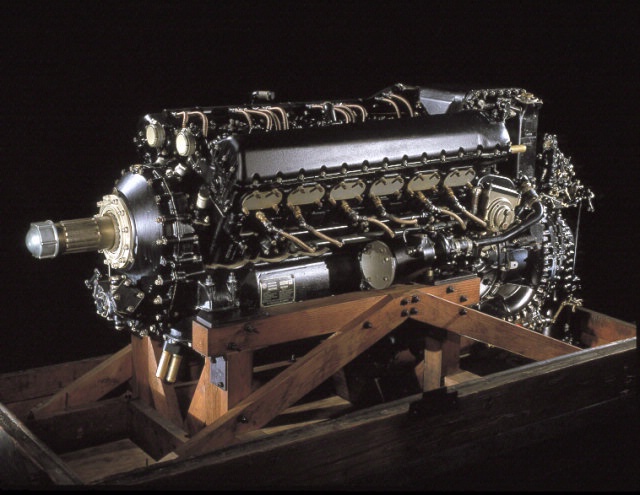
    Image of Packard Merlin V-1650-7 engine

    Propulsion

    Image of Packard Merlin V-1650-7 engine

    Propulsion

    arrow-up Back to top
    Home
    • Facebook facebook
    • Instagram instagram
    • LinkedIn linkedin
    • YouTube youtube

    • Contact Us
    • Get Involved
    • Shop Online
    • Job Opportunities
    • Equal Opportunity
    • Inspector General
    • Records Requests
    • Accessibility
    • Host Your Event
    • Press Room
    • Privacy
    • Terms of Use