Skip to main content Skip to main navigation
heart-solid My Visit Donate
Home Smithsonian Institution IK development site for ODI
Press Enter to activate a submenu, down arrow to access the items and Escape to close the submenu.
    • Overview
    • Museums and Zoo
    • Entry and Guidelines
    • Museum Maps
    • Dine and Shop
    • Accessibility
    • Visiting with Kids
    • Group Visits
    • Overview
    • Exhibitions
    • Online Events
    • All Events
    • IMAX & Planetarium
    • Overview
    • Topics
    • Collections
    • Research Resources
    • Stories
    • Podcasts
    • Overview
    • For Caregivers
    • For Educators
    • For Students
    • For Academics
    • For Lifelong Learners
    • Overview
    • Become a Member
    • Renew Membership
    • Make a Gift
    • Volunteer
    • Overview
    • Our Organization
    • Our Leadership
    • Reports and Plans
    • Newsdesk
heart-solid My Visit Donate

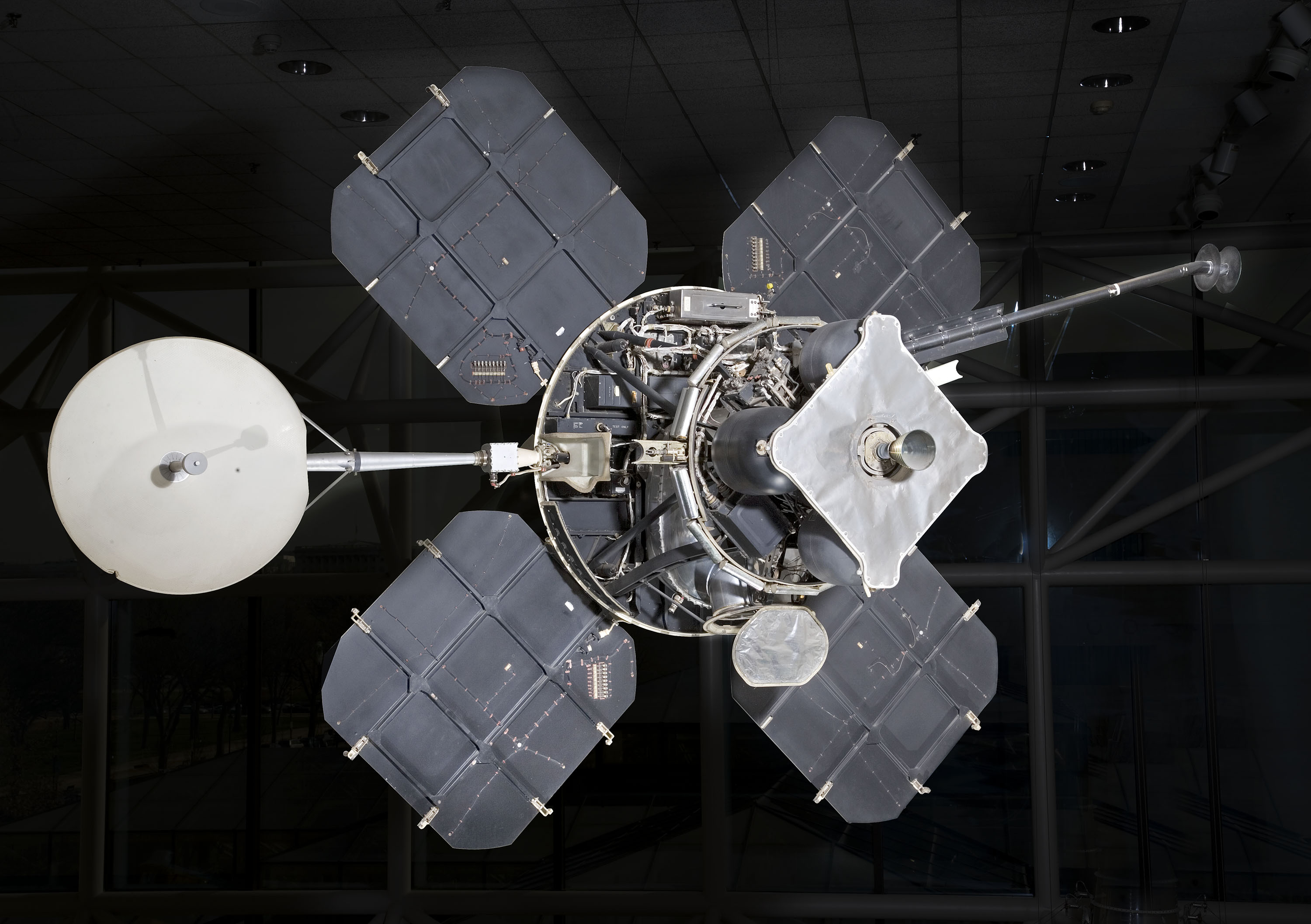
Interstage Adapter, Engineering Model, Clementine

Air and Space Museum

There are restrictions for re-using this image. For more information, visit the Smithsonian's Terms of Use page .
International media Interoperability Framework
IIIF provides researchers rich metadata and media viewing options for comparison of works across cultural heritage collections. Visit the IIIF page to learn more.
View manifest View in Mirador Viewer

    Object Details

    Summary

    Clementine was built by the Naval Research Laboratory in Washington, D.C. to test lightweight instruments and components for the next generation of spacecraft. It was designed to complete a two-month mapping mission in orbit around the Moon and then fly past an asteroid. Like the miner's daughter in the song, "My Darlin' Clementine," its instruments would help determine the mineral content of these objects and then be "lost and gone forever." Remarkably, Clementine went from the drawing board and into space in less than two years with a cost of under 100 million dollars, thus introducing the era of "faster, better, cheaper" spacecraft. Although its attempt at flying past an asteroid failed, Clementine provided answers to many of the questions about the Moon that remained from the Apollo era of lunar exploration.
    The Clementine Interstage Adapter Satellite (ISAS) was the booster that propelled the Clementine spacecraft to the Moon from Earth orbit. After performing this function, the ISAS was left in a highly elliptical Earth orbit, in which it passed regularly through the Van Allen radiation belts and interplanetary radiation and micrometeorite environments. The ISAS carried an instrument payload containing three experiments to study these regions: a radiation monitor, an instrument to determine damage coefficients of radiation-hard and -soft complemetary metal-oxide-semiconductor devices, and a dosimeter.
    This engineering model was transferred from the Naval Research Laboratory to the Museum in 2002.

    Credit Line

    Transferred from The Naval Research Laboratory

    Inventory Number

    A20020261000

    Restrictions & Rights

    Usage conditions apply

    Type

    SPACECRAFT-Uncrewed-Parts & Structural Components

    Materials

    Aluminum and mixed metals; silicone and plastic.

    Dimensions

    Approximate: 113.4kg (250lb.)--ISA only

    Country of Origin

    United States of America

    See more items in

    National Air and Space Museum Collection

    Data Source

    National Air and Space Museum

    Metadata Usage

    Not determined

    Link to Original Record

    http://n2t.net/ark:/65665/nv91e3dfbca-ddd4-41c8-9638-47b07451a8ed

    Record ID

    nasm_A20020261000

    Discover More

    Lunar orbiter on display

    Space Science

    Lunar orbiter on display

    Space Science

    arrow-up Back to top
    Home
    • Facebook facebook
    • Instagram instagram
    • LinkedIn linkedin
    • YouTube youtube

    • Contact Us
    • Get Involved
    • Shop Online
    • Job Opportunities
    • Equal Opportunity
    • Inspector General
    • Records Requests
    • Accessibility
    • Host Your Event
    • Press Room
    • Privacy
    • Terms of Use