Skip to main content Skip to main navigation
heart-solid My Visit Donate
Home Smithsonian Institution IK development site for ODI
Press Enter to activate a submenu, down arrow to access the items and Escape to close the submenu.
    • Overview
    • Museums and Zoo
    • Entry and Guidelines
    • Museum Maps
    • Dine and Shop
    • Accessibility
    • Visiting with Kids
    • Group Visits
    • Overview
    • Exhibitions
    • Online Events
    • All Events
    • IMAX & Planetarium
    • Overview
    • Topics
    • Collections
    • Research Resources
    • Stories
    • Podcasts
    • Overview
    • For Caregivers
    • For Educators
    • For Students
    • For Academics
    • For Lifelong Learners
    • Overview
    • Become a Member
    • Renew Membership
    • Make a Gift
    • Volunteer
    • Overview
    • Our Organization
    • Our Leadership
    • Reports and Plans
    • Newsdesk
heart-solid My Visit Donate

Integrale Propeller, fixed-pitch, two-blade, wood

Air and Space Museum

There are restrictions for re-using this image. For more information, visit the Smithsonian's Terms of Use page .
International media Interoperability Framework
IIIF provides researchers rich metadata and media viewing options for comparison of works across cultural heritage collections. Visit the IIIF page to learn more.
View manifest View in Mirador Viewer

    Object Details

    Manufacturer

    Integrale (Chauviére) France

    Physical Description

    Type: Two-Blade, Fixed-Pitch, Wood
    Engine Application: Le Rhone Model C Rotary, 60 kw (80 hp)

    Summary

    The Wright Brothers created the world's first practical, efficient, and purpose-built aerial propellers, and a design theory to support them. A specialized sub-industry emerged in Europe and the United States based upon their basic design. Experimental work in England, France, Germany, Italy and Russia led to criteria that engineers used to design propellers with better performance and structural reliability.
    One of them was Frenchman Lucien Chauviére's Integrale, the world's first propeller manufacturer, who used alternating layers of maple and birch according to the de Grandeville system of laminated propeller construction. These products became the standard of excellence in the nascent aviation industry. Chauviére constructed the propeller on Louis Blériot's channel-crossing monoplane in 1909, and pioneered the conventional scimitar form of the wood propeller. In the United States, the Requa Gibson Company of New York City became the first American propeller manufacturer in 1909 by crafting copies of Chauviére designs.

    Credit Line

    Gift of Fred S. Rothfuss

    Inventory Number

    A19810689000

    Restrictions & Rights

    Usage conditions apply

    Type

    PROPULSION-Propellers & Impellers

    Materials

    Wood, Varnish

    Dimensions

    3-D (Propeller): 250.8 × 27.9 × 10.2cm, 8.6kg (8 ft. 2 3/4 in. × 11 in. × 4 in., 19lb.)

    Country of Origin

    France

    See more items in

    National Air and Space Museum Collection

    Location

    National Air and Space Museum in Washington, DC

    Exhibition

    World War I: The Birth of Military Aviation

    Data Source

    National Air and Space Museum

    Metadata Usage

    Not determined

    Link to Original Record

    http://n2t.net/ark:/65665/nv926fd2530-c654-4ccc-9e22-ba06a404a516

    Record ID

    nasm_A19810689000

    Discover More

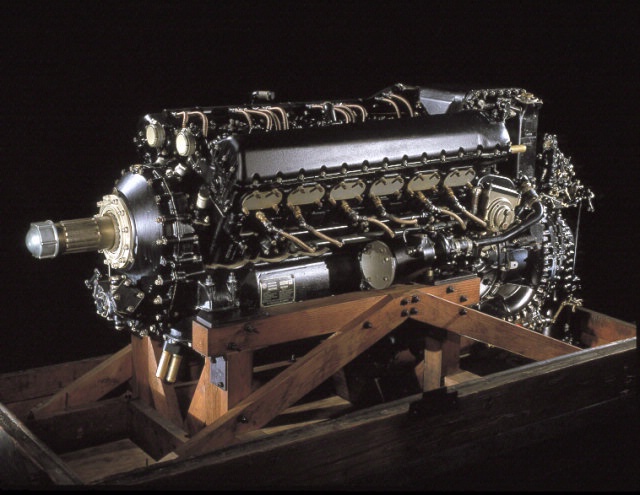
    Image of Packard Merlin V-1650-7 engine

    Propulsion

    Image of Packard Merlin V-1650-7 engine

    Propulsion

    arrow-up Back to top
    Home
    • Facebook facebook
    • Instagram instagram
    • LinkedIn linkedin
    • YouTube youtube

    • Contact Us
    • Get Involved
    • Shop Online
    • Job Opportunities
    • Equal Opportunity
    • Inspector General
    • Records Requests
    • Accessibility
    • Host Your Event
    • Press Room
    • Privacy
    • Terms of Use