
Object Details
Designer
Hirth-Motoren G.m.b.H.
Manufacturer
Hitachi
Physical Description
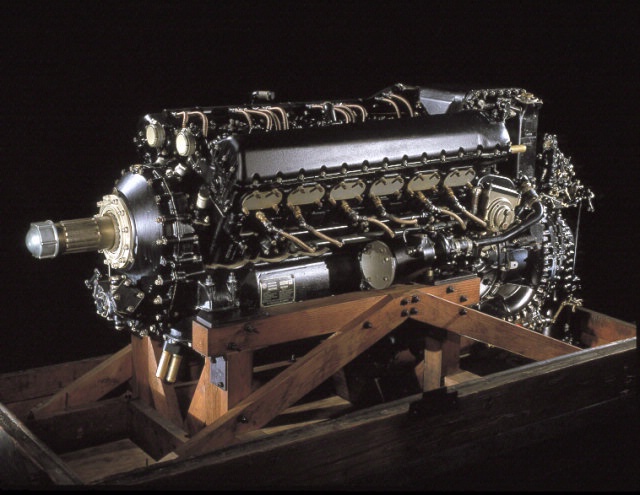
Type: Reciprocating, 4 cylinders, inverted, in-line, air-cooled
Power rating: 82 kW (110 hp) at rpm
Displacement: 3.97 L (242.44 cu in)
Bore and Stroke: 105 mm (4.13 in.) x 115 mm (4.53 in.)
Weight (dry): 116 kg (256 lb)
Note: Description for Hirth HM4/HM-504A.
Summary
The Japanese conglomerate Hitachi manufactured aircraft engines from about 1929 until the end of World War II, with a concentration on low-power seven and nine cylinder radials and inverted inline fours. The Hitachi Aircraft Company was formed in 1939 to take over the aircraft and aero-engine branches of the Tokyo Gasu Denki K.K. or Tokyo Gas & Electric Co., Ltd. Many, if not most, Japanese military trainers were powered by Hitachi copies of German designed Hirth air-cooled inline engines.
The Hitachi Hatsukaze powered the Kyushu K9W1 (Allied Code Name Cypress) Navy Type 2 Primary Trainer Model 11, and the similar Army version Kokusai Ki-86, Type 4 Primary Trainer aircraft. The engine was a derivative, licensed copy of the Hirth HM-504A, which powered the Bucker Bu 131 Jungmann aircraft. There were 541 Hatsukaze engines built during World War II between 1941 and 1943.
Credit Line
Gift of Major Thomas L. Walker
Date
1941
Inventory Number
A19480175000
Restrictions & Rights
CC0
Type
PROPULSION-Reciprocating & Rotary
Materials
HAZMAT: Magnesium
Aluminum, Paint, Steel, Brass, Rubber, Phenolic, Copper, Textile
Dimensions
Length 118.0 cm (46.44 in.), Width 44.2 cm (17.38 in.), Height 66.4 cm (26.13 in.)
Approximate (Weight on Stand): 234.1kg (516lb.)
Country of Origin
Japan
See more items in
National Air and Space Museum Collection
Data Source
National Air and Space Museum
Link to Original Record
Record ID
nasm_A19480175000