Skip to main content Skip to main navigation
heart-solid My Visit Donate
Home Smithsonian Institution IK development site for ODI
Press Enter to activate a submenu, down arrow to access the items and Escape to close the submenu.
    • Overview
    • Museums and Zoo
    • Entry and Guidelines
    • Museum Maps
    • Dine and Shop
    • Accessibility
    • Visiting with Kids
    • Group Visits
    • Overview
    • Exhibitions
    • Online Events
    • All Events
    • IMAX & Planetarium
    • Overview
    • Topics
    • Collections
    • Research Resources
    • Stories
    • Podcasts
    • Overview
    • For Caregivers
    • For Educators
    • For Students
    • For Academics
    • For Lifelong Learners
    • Overview
    • Become a Member
    • Renew Membership
    • Make a Gift
    • Volunteer
    • Overview
    • Our Organization
    • Our Leadership
    • Reports and Plans
    • Newsdesk
heart-solid My Visit Donate

Heat Shield, Fragment, Ablated, Apollo CM 009

Air and Space Museum

There are restrictions for re-using this image. For more information, visit the Smithsonian's Terms of Use page .
International media Interoperability Framework
IIIF provides researchers rich metadata and media viewing options for comparison of works across cultural heritage collections. Visit the IIIF page to learn more.
View manifest View in Mirador Viewer

    Object Details

    Manufactured for

    North American Rockwell Corp., Space Division

    Summary

    To protect the Apollo Command Module from the extreme heat of reentry, NASA chose an ablative heat shield composed of a brazed steel honeycomb structure impregnated with phenolic epoxy resin. The earliest test flights of Apollo command modules were designed in large part to test the performance of the heat shield. This heat shield section is from the aft (blunt end) shield from Apollo Command Module 009, which was flown on the unmanned AS 201 test mission on February 26, 1966. Although the sensors intended to monitor heating and behavior of the heat shield failed to operate properly, the command module and heat shield were recovered and the latter subsequently subject to careful examination and testing.
    Following completion of the tests (which were destructive in many cases), the heat shield was offered to the Smithsonian. In 1972, prior to shipping, it was cut up into small displayable pieces at the Smithsonian's request.

    Credit Line

    Transferred from the National Aeronautics and Space Administration

    Inventory Number

    A19731423003

    Restrictions & Rights

    Usage conditions apply

    Type

    SPACECRAFT-Crewed-Parts & Structural Components

    Materials

    Honeycomb: brazed stainless steel
    Fill: phenolic epoxy resin

    Dimensions

    Approximate: 2 in. deep x 8 in. long x 6 in. wide (5.08 x 20.32 x 15.24cm)

    Country of Origin

    United States of America

    See more items in

    National Air and Space Museum Collection

    Data Source

    National Air and Space Museum

    Metadata Usage

    Not determined

    Link to Original Record

    http://n2t.net/ark:/65665/nv9beda6f75-aad3-48de-9067-da6c69967157

    Record ID

    nasm_A19731423003

    Discover More

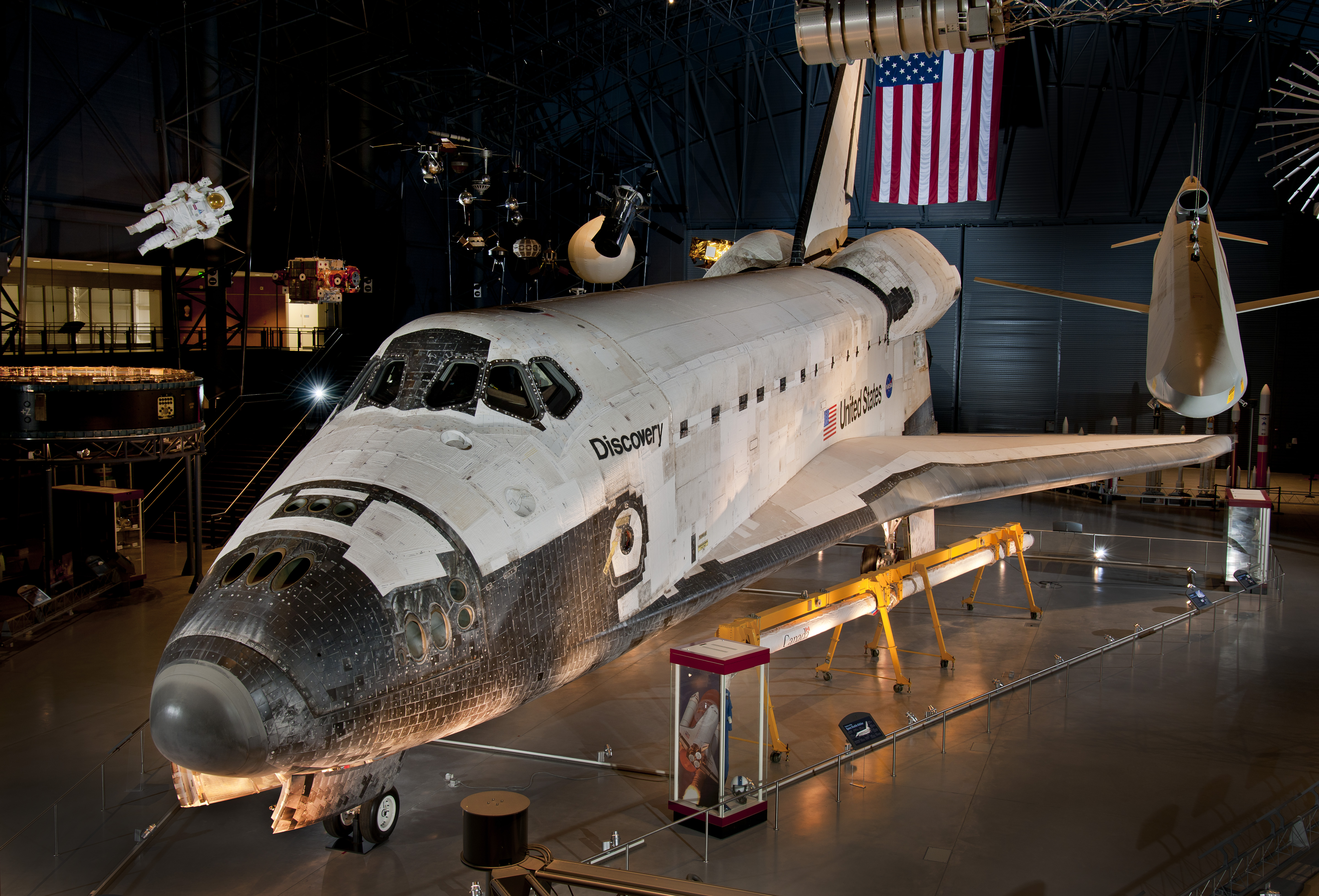
    Space Shuttle orbiter Discovery on display in the McDonnell Space Hangar at the Steven F. Udvar-Hazy Center

    Human Spaceflight

    Space Shuttle orbiter Discovery on display in the McDonnell Space Hangar at the Steven F. Udvar-Hazy Center

    Human Spaceflight

    arrow-up Back to top
    Home
    • Facebook facebook
    • Instagram instagram
    • LinkedIn linkedin
    • YouTube youtube

    • Contact Us
    • Get Involved
    • Shop Online
    • Job Opportunities
    • Equal Opportunity
    • Inspector General
    • Records Requests
    • Accessibility
    • Host Your Event
    • Press Room
    • Privacy
    • Terms of Use