Skip to main content Skip to main navigation
heart-solid My Visit Donate
Home Smithsonian Institution IK development site for ODI
Press Enter to activate a submenu, down arrow to access the items and Escape to close the submenu.
    • Overview
    • Museums and Zoo
    • Entry and Guidelines
    • Museum Maps
    • Dine and Shop
    • Accessibility
    • Visiting with Kids
    • Group Visits
    • Overview
    • Exhibitions
    • Online Events
    • All Events
    • IMAX & Planetarium
    • Overview
    • Topics
    • Collections
    • Research Resources
    • Stories
    • Podcasts
    • Overview
    • For Caregivers
    • For Educators
    • For Students
    • For Academics
    • For Lifelong Learners
    • Overview
    • Become a Member
    • Renew Membership
    • Make a Gift
    • Volunteer
    • Overview
    • Our Organization
    • Our Leadership
    • Reports and Plans
    • Newsdesk
heart-solid My Visit Donate

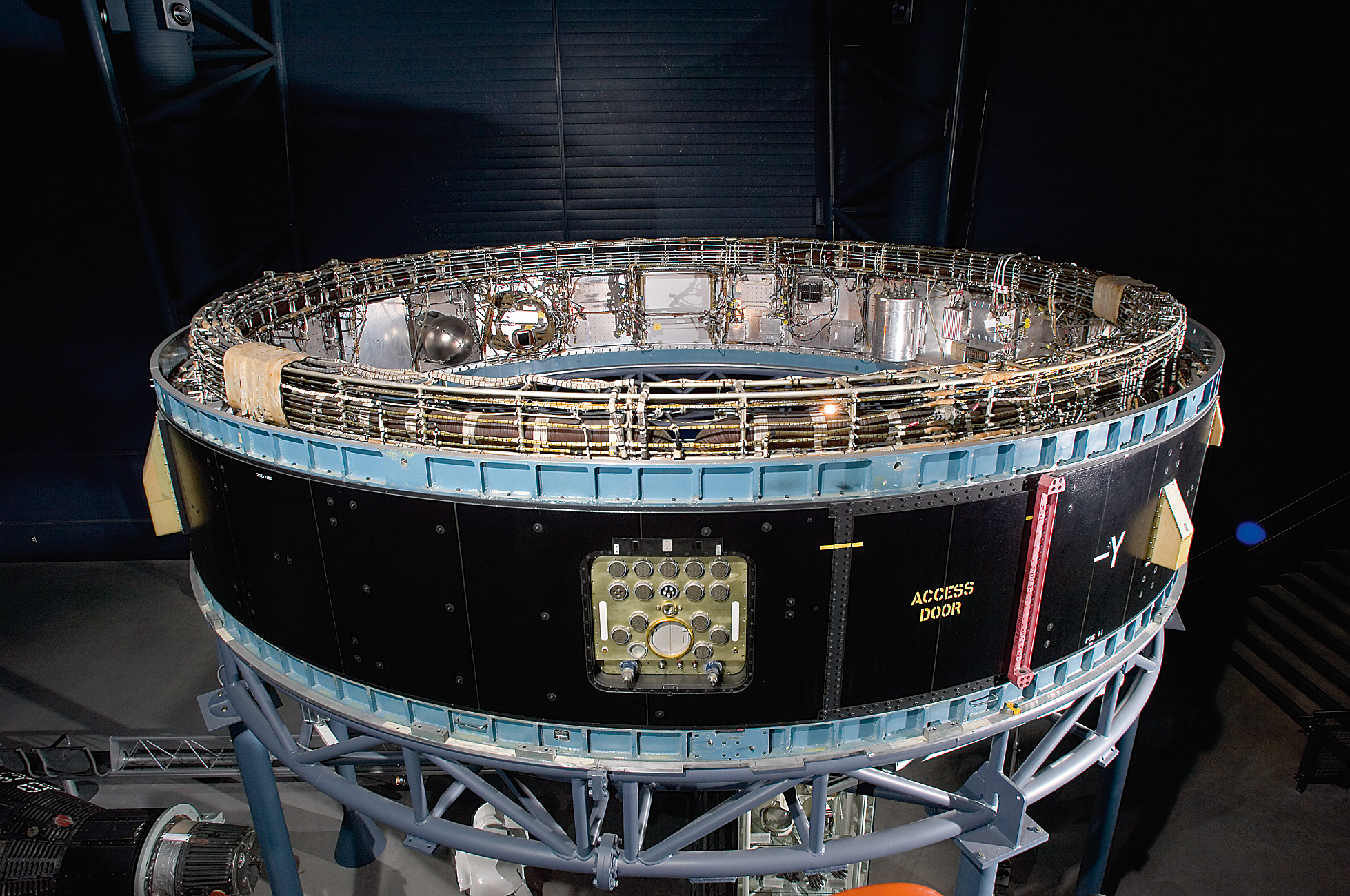
Guidance System, Minuteman III

Air and Space Museum

There are restrictions for re-using this image. For more information, visit the Smithsonian's Terms of Use page .
International media Interoperability Framework
IIIF provides researchers rich metadata and media viewing options for comparison of works across cultural heritage collections. Visit the IIIF page to learn more.
View manifest View in Mirador Viewer

    Object Details

    Manufacturer

    Rockwell International Corporation (Huntington and Downey, CA)

    Summary

    The Minuteman III is a solid-fueled, intercontinental ballistic missile (ICBM), which the U.S. Air Force first deployed in the 1960s. The guidance system, contained in a ring between the upper stage and the re-entry vehicle, was a key to the Minuteman's success as a weapon. Signals from this system controlled the direction, cut-off of thrust, and the separation of the stages, to direct the three warheads to their targets.
    The Minuteman used an inertial guidance system, which relied completely on internal measurements of acceleration. By combining acceleration data with knowledge of the Earth's gravitational field, and of the missile's exact position at launch, the Minuteman was able to achieve remarkable accuracy. An onboard digital computer, built of early production integrated circuits, stored data and performed the necessary calculations. It also allowed the missile to be retargeted quickly prior to launch.
    Transferred by the U.S. Air Force to the Museum in 1977.

    Alternate Name

    Minuteman Guidance System

    Credit Line

    Transferred from the United States Air Force

    Inventory Number

    A19770995000

    Restrictions & Rights

    Usage conditions apply

    Type

    INSTRUMENTS-Navigational

    Materials

    Ring: metal, probably aluminum. Interior structures: various metals, including beryllium. Electrical components and wire.

    Dimensions

    3-D: 48.3 x 132.1cm (19 x 52 in.)

    Country of Origin

    United States of America

    See more items in

    National Air and Space Museum Collection

    Data Source

    National Air and Space Museum

    Metadata Usage

    Not determined

    Link to Original Record

    http://n2t.net/ark:/65665/nv977f88641-87b4-4bc2-830f-6c43502cf07d

    Record ID

    nasm_A19770995000

    Discover More

    Image of Saturn 5 guidance and control ring

    Guidance, Navigation, and Control

    Image of Saturn 5 guidance and control ring

    Guidance, Navigation, and Control

    arrow-up Back to top
    Home
    • Facebook facebook
    • Instagram instagram
    • LinkedIn linkedin
    • YouTube youtube

    • Contact Us
    • Get Involved
    • Shop Online
    • Job Opportunities
    • Equal Opportunity
    • Inspector General
    • Records Requests
    • Accessibility
    • Host Your Event
    • Press Room
    • Privacy
    • Terms of Use