
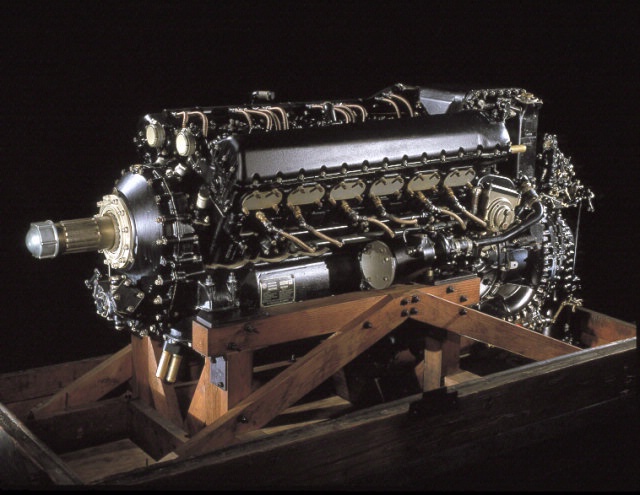
Object Details
Manufacturer
General Electric Aircraft Engines
Physical Description
Type: Turbojet
Thrust: 305,133 N (68,600 lb.) with afterburning at 5,200 rpm
Compressor: 9-stage axial
Combustor: Annular
Turbine: 2-stage axial
Summary
In the 1960s, the United States began developing a supersonic transport (SST), the Boeing 2707. General Electric’s GE4 was intended to power the 300-seat airliner to a speed of Mach 2.7. Based on previous military engines, the GE4 was the largest straight turbojet engine ever built. Besides its powerful thrust and ability to withstand high temperatures associated with supersonic flight, it had a variable area exhaust nozzle with an integral thrust reverser.
Ground tests began in 1968. However, mainly because of economic and environmental concerns, the U.S. Senate canceled the American SST in 1971 by a 49 to 48 vote. The smaller Mach 2 Anglo-French Concorde, with its Rolls-Royce Olympus engines, was the only SST that achieved sustained commercial operation.
Credit Line
Gift of the General Electric Company and the National Aeronautics and Space Administration
Date
Circa 1968
Inventory Number
A19720761000
Restrictions & Rights
Usage conditions apply
Type
PROPULSION-Turbines (Jet)
Materials
Aluminum, Steel, Stainless steel, Paint, Inconel, Plastic, Copper, Titanium
Dimensions
Length 752 cm (296.0 in.), Diameter 154 cm (60.6 in.)
Country of Origin
United States of America
See more items in
National Air and Space Museum Collection
Data Source
National Air and Space Museum
Link to Original Record
Record ID
nasm_A19720761000