Skip to main content Skip to main navigation
heart-solid My Visit Donate
Home Smithsonian Institution IK development site for ODI
Press Enter to activate a submenu, down arrow to access the items and Escape to close the submenu.
    • Overview
    • Museums and Zoo
    • Entry and Guidelines
    • Museum Maps
    • Dine and Shop
    • Accessibility
    • Visiting with Kids
    • Group Visits
    • Overview
    • Exhibitions
    • Online Events
    • All Events
    • IMAX & Planetarium
    • Overview
    • Topics
    • Collections
    • Research Resources
    • Stories
    • Podcasts
    • Overview
    • For Caregivers
    • For Educators
    • For Students
    • For Academics
    • For Lifelong Learners
    • Overview
    • Become a Member
    • Renew Membership
    • Make a Gift
    • Volunteer
    • Overview
    • Our Organization
    • Our Leadership
    • Reports and Plans
    • Newsdesk
heart-solid My Visit Donate

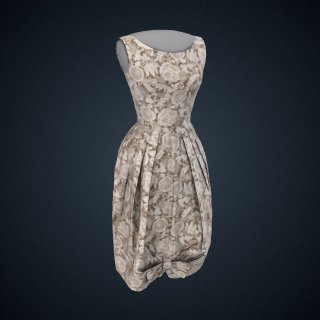
Feedsack Dress

American History Museum

This media is in the public domain (free of copyright restrictions). You can copy, modify, and distribute this work without contacting the Smithsonian. For more information, visit the Smithsonian's Open Access page.
We also suggest that users: <ul> <li>Give attribution to the Smithsonian.</li> <li>Contribute back any modifications or improvements.</li> <li>Do not mislead others or misrepresent the datasets or its sources. </li> <li>Be responsible.</li> </ul>
International media Interoperability Framework
IIIF provides researchers rich metadata and media viewing options for comparison of works across cultural heritage collections. Visit the IIIF page to learn more.
View manifest View in Mirador Viewer
  • 3d model of Feedsack Dress
    3D Model

    Object Details

    maker

    Overall, Mrs. Dorothy

    Description

    Life on America's farms in the 1920s and 1930s meant hard work and frugal habits. Farm families were used to "making do" with what they had, wasting nothing that could be recycled or reused. With feed sacks and flour bags, farmwomen took thriftiness to new heights of creativity, transforming the humble bags into dresses, underwear, towels, curtains, quilts, and other household necessities.
    By the 1940s the bag manufacturers were turning out bags in bright colors and printed designs. It was felt that these designs and colors would boost sales, because the woman of the house would always select the brand with the most attractive fabric. During World War II, there was a shortage of cotton fabric for the civilian population, and the recycling of bags became a necessity, encouraged by the government.
    After the war, the bags were not only a sign of domestic thrift; they also gave rural women a sense of fashion. National sewing contests were organized as a way for women to show off their skills, and manufacturers to show off their designs. Women frequently sold their surplus bags to others as a way of picking up cash to aid in running the home.
    This dress was made by Mrs. G. R. (Dorothy) Overall of Caldwell, Kansas, in 1959 for the Cotton Bag Sewing Contest sponsored by the National Cotton Council and the Textile Bag Manufactureres Association. The dress is made of cotton bag fabric, with an overall design of white flowers on a brown (originally black) ground. The dress is lined with black organdy, and machine quilted with a synthetic silver sewing thread. Mrs. Overall was awarded 2nd place in the Mid-South section of the contest.

    Location

    Currently not on view

    Credit Line

    Gift of Dorothy Overall

    Date made

    1959

    ID Number

    1992.0102.04

    catalog number

    1992.0102.04

    accession number

    1992.0102

    Object Name

    dress, women
    woman's dress

    Object Type

    Dress
    Woman

    Physical Description

    cotton fabric and thread (overall material)
    synthetic metallic thread (overall material)
    plain weave; printed (overall production method/technique)

    Measurements

    overall, unmounted: 42 1/2 in x 25 in; 107.95 cm x 63.5 cm
    overall, mounted: 41 in x 17 in x 15 in; 104.14 cm x 43.18 cm x 38.1 cm

    Place Made

    United States: Kansas, Caldwell

    See more items in

    Home and Community Life: Textiles
    Agriculture
    Textiles

    Data Source

    National Museum of American History

    Subject

    Costume

    Metadata Usage

    CC0

    Link to Original Record

    https://n2t.net/ark:/65665/ng49ca746ab-62b5-704b-e053-15f76fa0b4fa

    Record ID

    nmah_1105750

    Discover More

    Becky Sharp's gown from the play Hamilton.

    Best Dressed: Fashion Trends and Famous Wearers

    arrow-up Back to top
    Home
    • Facebook facebook
    • Instagram instagram
    • LinkedIn linkedin
    • YouTube youtube

    • Contact Us
    • Get Involved
    • Shop Online
    • Job Opportunities
    • Equal Opportunity
    • Inspector General
    • Records Requests
    • Accessibility
    • Host Your Event
    • Press Room
    • Privacy
    • Terms of Use