
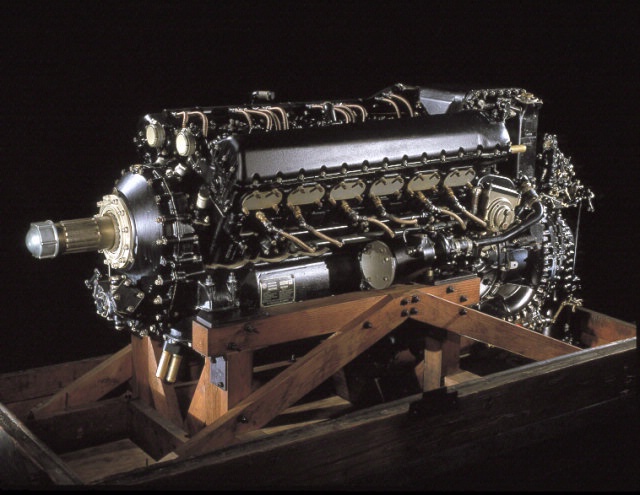
Object Details
Manufacturer
Aviation Gas Turbine Div., Westinghouse Electric Corp., Philadelphia, PA
Physical Description
Type: Turbojet
Thrust: 6,939 N (1,560 lb) at 17,000 rpm (Military Rating)
Compressor: 10-stage axial
Combustor: Single annular
Turbine: Single-stage axial
Weight: 324 kg (692 lb)
Summary
In response to an Army Air Corps request on February 25, 1941, the National Advisory Committee for Aeronautics established a Special Committee on Jet Propulsion. Westinghouse's proposal for development of a turbojet was followed on November 5, 1941 by a Navy request for a proposal for a design study. On December 8, 1941, the day after Japan attacked Pearl Harbor, Westinghouse seized the initiative and started development of its engine without an official contract. On January 7, 1942, the Navy issued Westinghouse a letter of intent to proceed with a study of its turbojet, and development of the 19A began at the Westinghouse Steam Division.
The 19A Yankee (military designation J30), the first all-American-designed turbojet engine, ran for the first time on March 19, 1943. This, the Navy Bureau of Aeronautics No. 2 Westinghouse 19A engine, was flown on a Chance Vought FG-1 Corsair test-bed aircraft on January 21, 1944 in its original function as a booster engine.
Credit Line
Transferred from the U.S. Navy
Date
Circa 1943
Inventory Number
A19710928000
Restrictions & Rights
Usage conditions apply
Type
PROPULSION-Turbines (Jet)
Materials
Aluminum
Anodized Aluminum
Copper Alloy
Steel
Cadmium Plating
Plastic
Natural Fabric
Rubber
Phenolic Resin
Wood
Dimensions
Length 238.8 cm (94.0 in.), Diameter 48.3 cm (19.0 in.)
Country of Origin
United States of America
See more items in
National Air and Space Museum Collection
Data Source
National Air and Space Museum
Link to Original Record
Record ID
nasm_A19710928000