Skip to main content Skip to main navigation
heart-solid My Visit Donate
Home Smithsonian Institution IK development site for ODI
Press Enter to activate a submenu, down arrow to access the items and Escape to close the submenu.
    • Overview
    • Museums and Zoo
    • Entry and Guidelines
    • Museum Maps
    • Dine and Shop
    • Accessibility
    • Visiting with Kids
    • Group Visits
    • Overview
    • Exhibitions
    • Online Events
    • All Events
    • IMAX & Planetarium
    • Overview
    • Topics
    • Collections
    • Research Resources
    • Stories
    • Podcasts
    • Overview
    • For Caregivers
    • For Educators
    • For Students
    • For Academics
    • For Lifelong Learners
    • Overview
    • Become a Member
    • Renew Membership
    • Make a Gift
    • Volunteer
    • Overview
    • Our Organization
    • Our Leadership
    • Reports and Plans
    • Newsdesk
heart-solid My Visit Donate

Electronic Assembly, High Resolution Imaging, ROSAT

Air and Space Museum

There are restrictions for re-using this image. For more information, visit the Smithsonian's Terms of Use page .
International media Interoperability Framework
IIIF provides researchers rich metadata and media viewing options for comparison of works across cultural heritage collections. Visit the IIIF page to learn more.
View manifest View in Mirador Viewer

Object Details

Manufacturer

Smithsonian Astrophysical Observatory

Summary

This is a part of the electronics box from the engineering model for the high-resolution imager (HRI) flown on the ROSAT (Roentgen Satellite) spacecraft. This imager consists of a pair of stacked microchannel plates backed by a grid of crossed wires. This HRI was developed for NASA by the Harvard-Smithsonian Center for Astrophysics. It provided improved sensitivity over an imager used on the earlier Einstein Observatory. ROSAT, named after the discoverer of X-rays, Wilhelm Roentgen, was an international mission aimed at exploring the high-energy universe. It was a cooperative effort between Germany, the United States and Great Britain.
The satellite, which was designed and operated by Germany, was placed in orbit board a Delta II launch vehicle in June 1990. It collected data until February 1999. During that time ROSAT obtained an all sky survey in the X-ray region as well as detailed observations of many galaxies.
The Smithsonian Astrophysical Observatory transferred this object to the Museum in 2002.

Credit Line

Transferred from the Smithsonian Astrophysical Observatory

Inventory Number

A20020291000

Restrictions & Rights

Usage conditions apply

Type

INSTRUMENTS-Scientific

Materials

Non-Magnetic White Metals
Ferrous Alloys
Plastics
Rubber
Paints and Coatings
Glass
Adhesive
Possible Gold Plating
Paper
Ink
Synthetic Fiber Fabric
Natural Fiber Fabric

Dimensions

3-D (Electronic Assembly, High Resolution Imaging, ROSAT): 124.5 × 68.6 × 67.3cm, 67.1kg (4 ft. 1 in. × 2 ft. 3 in. × 2 ft. 2 1/2 in., 148lb.)
3-D (Aluminum Pallet Storage): 152.4 × 121.9 × 96.5cm, 108.9kg (5 ft. × 4 ft. × 3 ft. 2 in., 240lb.)

Country of Origin

United States of America

See more items in

National Air and Space Museum Collection

Data Source

National Air and Space Museum

Metadata Usage

Not determined

Link to Original Record

http://n2t.net/ark:/65665/nv99df23785-0787-46a7-bb82-5d8c2249bdf0

Record ID

nasm_A20020291000

Discover More

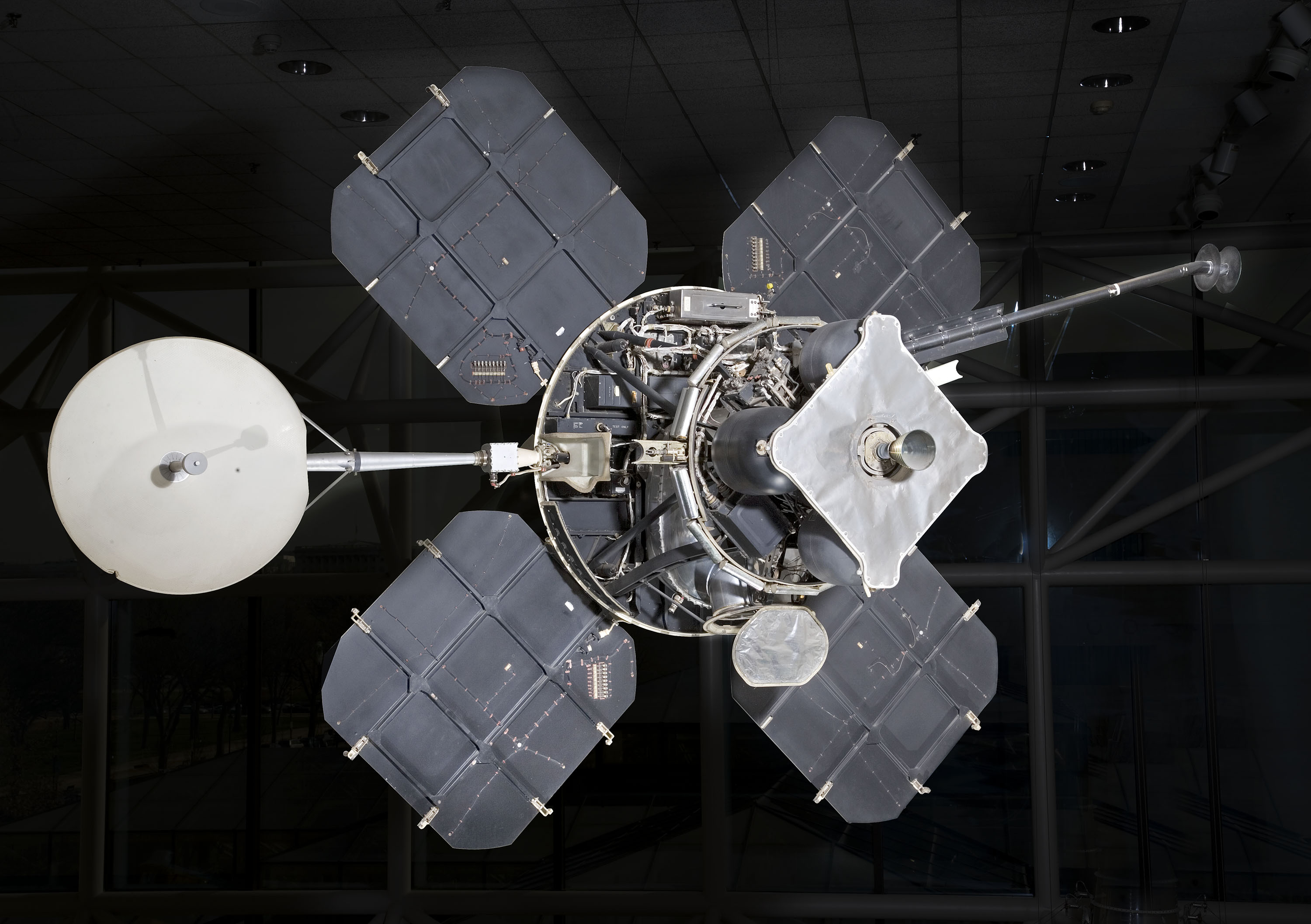
Lunar orbiter on display

Space Science

Lunar orbiter on display

Space Science

arrow-up Back to top
Home
  • Facebook facebook
  • Instagram instagram
  • LinkedIn linkedin
  • YouTube youtube

  • Contact Us
  • Get Involved
  • Shop Online
  • Job Opportunities
  • Equal Opportunity
  • Inspector General
  • Records Requests
  • Accessibility
  • Host Your Event
  • Press Room
  • Privacy
  • Terms of Use