Skip to main content Skip to main navigation
heart-solid My Visit Donate
Home Smithsonian Institution IK development site for ODI
Press Enter to activate a submenu, down arrow to access the items and Escape to close the submenu.
    • Overview
    • Museums and Zoo
    • Entry and Guidelines
    • Museum Maps
    • Dine and Shop
    • Accessibility
    • Visiting with Kids
    • Group Visits
    • Overview
    • Exhibitions
    • Online Events
    • All Events
    • IMAX & Planetarium
    • Overview
    • Topics
    • Collections
    • Research Resources
    • Stories
    • Podcasts
    • Overview
    • For Caregivers
    • For Educators
    • For Students
    • For Academics
    • For Lifelong Learners
    • Overview
    • Become a Member
    • Renew Membership
    • Make a Gift
    • Volunteer
    • Overview
    • Our Organization
    • Our Leadership
    • Reports and Plans
    • Newsdesk
heart-solid My Visit Donate

Detector, Gamma-ray, OSO-I

Air and Space Museum

There are restrictions for re-using this image. For more information, visit the Smithsonian's Terms of Use page .
International media Interoperability Framework
IIIF provides researchers rich metadata and media viewing options for comparison of works across cultural heritage collections. Visit the IIIF page to learn more.
View manifest View in Mirador Viewer

    Object Details

    Manufacturer

    University of Rochester

    Summary

    Backup for the gamma-ray detector installed in the "wheel" section on the OSO-1 satellite launched on 7 March 1962. The detector, built at the University of Rochester, includes two scintillators and a Cerenkov counter. Entering gamma-rays impinge on a thin lead sheet in the instrument; the collision converts the high energy photon to an electron-positron pair. Those charged particles then lead to a flash of light in the Lucite Cerenkov counter. The resulting flashes are amplified and counted by a photomultiplier tube. The scintillators form part of the anti-coincidence circuit that accepts only those signals that enter the detector from the front. The instrument on OSO-1 detected the cosmic ray background but did not provide clear evidence for high energy solar events. The detector was transferred to NASM from the Smithsonian Astrophysical Observatory in December 1982.

    Credit Line

    Transferred from the Smithsonian Astrophysical Observatory

    Inventory Number

    A19830087000

    Restrictions & Rights

    Usage conditions apply

    Type

    INSTRUMENTS-Scientific

    Materials

    Mixed metals
    Lucite
    Glass photomultipliers
    Electronics

    Dimensions

    3-D: 27.9 x 35.6 x 19.7cm (11 x 14 x 7 3/4 in.)

    Country of Origin

    United States of America

    See more items in

    National Air and Space Museum Collection

    Location

    Steven F. Udvar-Hazy Center in Chantilly, VA

    Hangar

    Boeing Aviation Hangar

    Data Source

    National Air and Space Museum

    Metadata Usage

    Not determined

    Link to Original Record

    http://n2t.net/ark:/65665/nv916ae3214-365a-4e90-83c8-4904af4541ef

    Record ID

    nasm_A19830087000

    Discover More

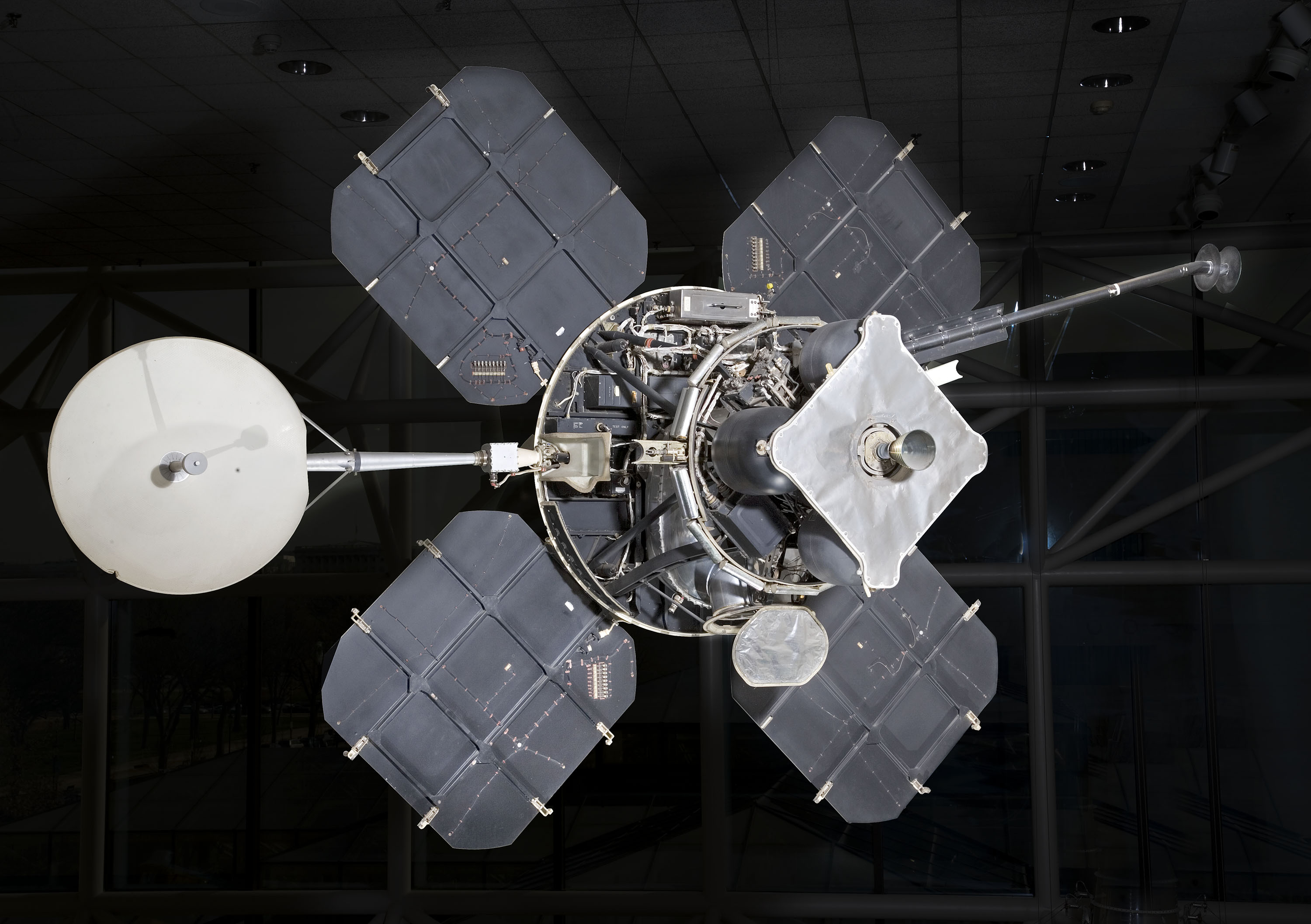
    Lunar orbiter on display

    Space Science

    Lunar orbiter on display

    Space Science

    arrow-up Back to top
    Home
    • Facebook facebook
    • Instagram instagram
    • LinkedIn linkedin
    • YouTube youtube

    • Contact Us
    • Get Involved
    • Shop Online
    • Job Opportunities
    • Equal Opportunity
    • Inspector General
    • Records Requests
    • Accessibility
    • Host Your Event
    • Press Room
    • Privacy
    • Terms of Use