Skip to main content Skip to main navigation
heart-solid My Visit Donate
Home Smithsonian Institution IK development site for ODI
Press Enter to activate a submenu, down arrow to access the items and Escape to close the submenu.
    • Overview
    • Museums and Zoo
    • Entry and Guidelines
    • Museum Maps
    • Dine and Shop
    • Accessibility
    • Visiting with Kids
    • Group Visits
    • Overview
    • Exhibitions
    • Online Events
    • All Events
    • IMAX & Planetarium
    • Overview
    • Topics
    • Collections
    • Research Resources
    • Stories
    • Podcasts
    • Overview
    • For Caregivers
    • For Educators
    • For Students
    • For Academics
    • For Lifelong Learners
    • Overview
    • Become a Member
    • Renew Membership
    • Make a Gift
    • Volunteer
    • Overview
    • Our Organization
    • Our Leadership
    • Reports and Plans
    • Newsdesk
heart-solid My Visit Donate

Detector, AXAF, Microchannel Plate

Air and Space Museum

There are restrictions for re-using this image. For more information, visit the Smithsonian's Terms of Use page .
International media Interoperability Framework
IIIF provides researchers rich metadata and media viewing options for comparison of works across cultural heritage collections. Visit the IIIF page to learn more.
View manifest View in Mirador Viewer

Object Details

Manufacturer

Phillips Electro-optics

Summary

This is a microchannel plate array from an interim version of the X-ray detector intended for the Advanced X-ray Astrophysics Facilty (AXAF). The Einstein X-ray telescope satellite (HEAO-2), launched in 1978, was the first to be equipped with a high resolution imager (HRI) to visualize the structure of astronomical X-sources. The overall detector included this microchannel plate backed by a cross-grid detector. The plate converted incident X-ray photons to electrons and amplified them by orders of magnitude. The signal was picked up by the cross grid detector and its strength and location used to build an image of the source. The X-Ray Astronomy group at the Smithsonian Astrophysical Observatory designed and built this scaled-up version of the HRI on the way to building the imager that was installed on the final version of the AXAF which was named Chandra just before its launch. This microchannel plate is a model closely related to those used in military night vision devices. SAO transferred it to NASM in 2002.

Credit Line

Transferred from the Smithsonian Astrophysical Observatory, Harvard University

Inventory Number

A20020290001

Restrictions & Rights

Usage conditions apply

Type

INSTRUMENTS-Scientific

Materials

Ceramic
Aluminum
Glass
Copper Alloy
Plastic

Dimensions

3-D: 13.3 × 10.8 × 2.2cm (5 1/4 × 4 1/4 × 7/8 in.)

Country of Origin

United States of America

See more items in

National Air and Space Museum Collection

Data Source

National Air and Space Museum

Metadata Usage

Not determined

Link to Original Record

http://n2t.net/ark:/65665/nv94df3185d-8d18-4e05-81cc-b5bd910bf35a

Record ID

nasm_A20020290001

Discover More

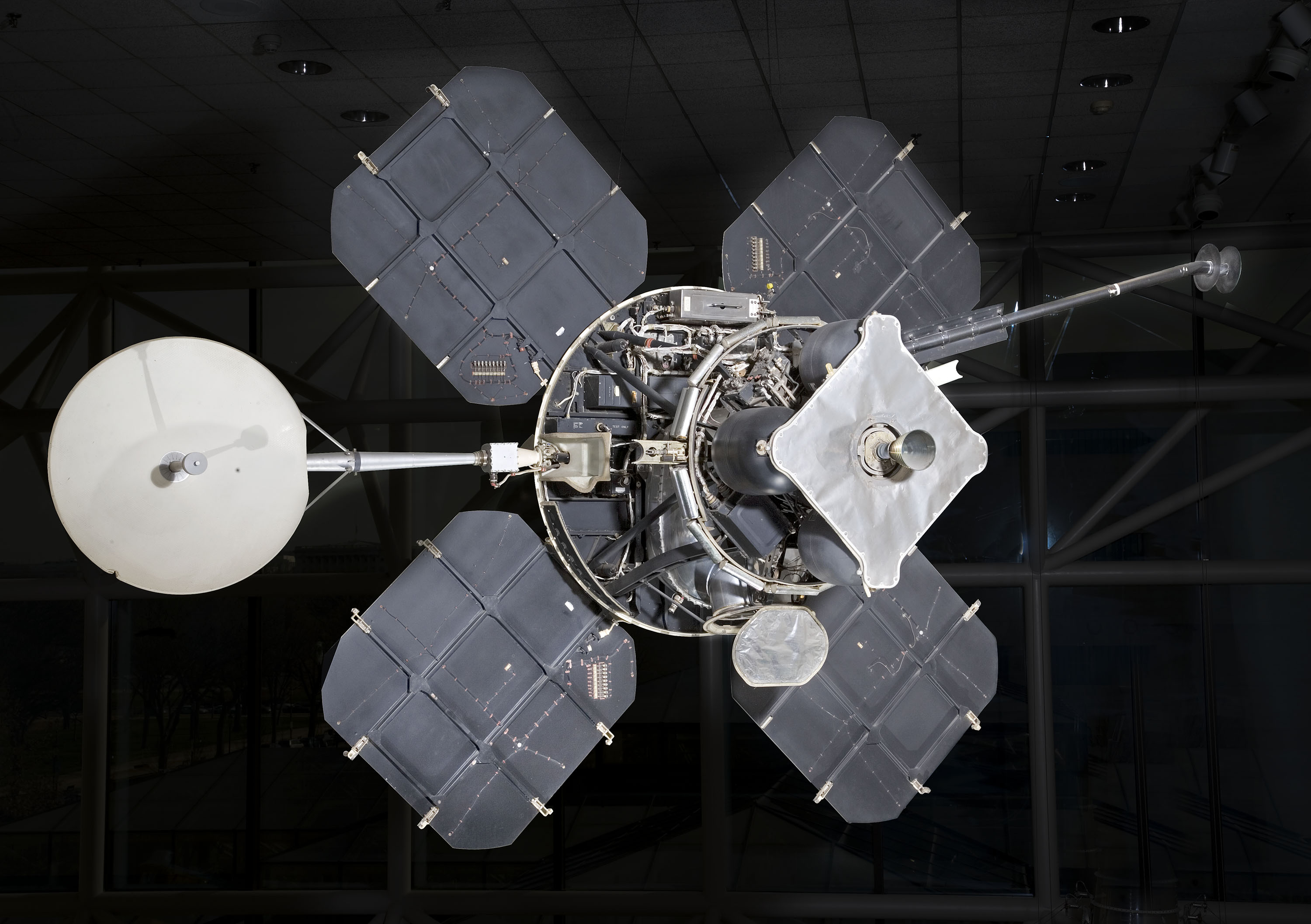
Lunar orbiter on display

Space Science

Lunar orbiter on display

Space Science

arrow-up Back to top
Home
  • Facebook facebook
  • Instagram instagram
  • LinkedIn linkedin
  • YouTube youtube

  • Contact Us
  • Get Involved
  • Shop Online
  • Job Opportunities
  • Equal Opportunity
  • Inspector General
  • Records Requests
  • Accessibility
  • Host Your Event
  • Press Room
  • Privacy
  • Terms of Use