Skip to main content Skip to main navigation
heart-solid My Visit Donate
Home Smithsonian Institution IK development site for ODI
Press Enter to activate a submenu, down arrow to access the items and Escape to close the submenu.
    • Overview
    • Museums and Zoo
    • Entry and Guidelines
    • Museum Maps
    • Dine and Shop
    • Accessibility
    • Visiting with Kids
    • Group Visits
    • Overview
    • Exhibitions
    • Online Events
    • All Events
    • IMAX & Planetarium
    • Overview
    • Topics
    • Collections
    • Research Resources
    • Stories
    • Podcasts
    • Overview
    • For Caregivers
    • For Educators
    • For Students
    • For Academics
    • For Lifelong Learners
    • Overview
    • Become a Member
    • Renew Membership
    • Make a Gift
    • Volunteer
    • Overview
    • Our Organization
    • Our Leadership
    • Reports and Plans
    • Newsdesk
heart-solid My Visit Donate

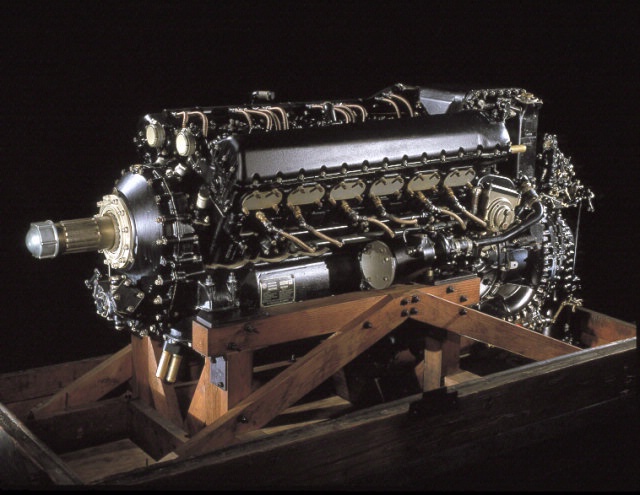
Curtiss Ricardo R-6, In-line 6 Engine

Air and Space Museum

This media is in the public domain (free of copyright restrictions). You can copy, modify, and distribute this work without contacting the Smithsonian. For more information, visit the Smithsonian's Open Access page.
International media Interoperability Framework
IIIF provides researchers rich metadata and media viewing options for comparison of works across cultural heritage collections. Visit the IIIF page to learn more.
View manifest View in Mirador Viewer

    Object Details

    Manufacturer

    Curtiss Aeroplane and Motor Company

    Physical Description

    Type: Reciprocating, 6 cylinders, In-line, Liquid-cooled
    Power rating: 298 kW (400 hp) at 1,450 rpm
    Displacement: 30.2 L (1,847.26 cu. in.)
    Bore and Stroke: 178 mm (7 in.) x 203 mm (8 in.)
    Weight: 544 kg (1,200 lb)

    Summary

    Among the most successful early engines marketed in the United States were those designed and built by aviation pioneer and inventor Glenn Curtiss in his factory at Hammondsport, New York. Early Curtiss engines powered motorcycles, and were air cooled. Later, to achieve higher power, Curtiss began to develop liquid-cooled engines. Curtiss built this engine for the U.S. Navy in 1921 for experimental purposes. It incorporated the Ricardo supercharging system, designed to increase engine power at high altitude and decrease fuel consumption.
    The piston and cylinder assembly were designed so the underside of the piston compressed air on the intake stroke of the piston. The compressed air then passed through an intercooler back into the cylinder above the piston during the compression stroke. The Navy did not consider the experiment successful, as the improvements that resulted did not offset the increased weight and mechanical complexity.

    Credit Line

    Transferred from the U.S. Navy

    Date

    Circa 1921

    Inventory Number

    A19710936000

    Restrictions & Rights

    CC0

    Type

    PROPULSION-Reciprocating & Rotary

    Materials

    Steel, Preservative coating, Wood, Rubber, Textile, Aluminum, Paint, Phonolic, Copper

    Dimensions

    Height 119.4 cm (47 in.), Width 55.9 cm (22 in.), Depth 233.7 cm (92 in.)

    Country of Origin

    United States of America

    See more items in

    National Air and Space Museum Collection

    Data Source

    National Air and Space Museum

    Metadata Usage

    CC0

    Link to Original Record

    http://n2t.net/ark:/65665/nv9785da749-b7b8-45c2-9770-6dfe610510f9

    Record ID

    nasm_A19710936000

    Discover More

    Image of Packard Merlin V-1650-7 engine

    Propulsion

    Image of Packard Merlin V-1650-7 engine

    Propulsion

    arrow-up Back to top
    Home
    • Facebook facebook
    • Instagram instagram
    • LinkedIn linkedin
    • YouTube youtube

    • Contact Us
    • Get Involved
    • Shop Online
    • Job Opportunities
    • Equal Opportunity
    • Inspector General
    • Records Requests
    • Accessibility
    • Host Your Event
    • Press Room
    • Privacy
    • Terms of Use