Skip to main content Skip to main navigation
heart-solid My Visit Donate
Home Smithsonian Institution IK development site for ODI
Press Enter to activate a submenu, down arrow to access the items and Escape to close the submenu.
    • Overview
    • Museums and Zoo
    • Entry and Guidelines
    • Museum Maps
    • Dine and Shop
    • Accessibility
    • Visiting with Kids
    • Group Visits
    • Overview
    • Exhibitions
    • Online Events
    • All Events
    • IMAX & Planetarium
    • Overview
    • Topics
    • Collections
    • Research Resources
    • Stories
    • Podcasts
    • Overview
    • For Caregivers
    • For Educators
    • For Students
    • For Academics
    • For Lifelong Learners
    • Overview
    • Become a Member
    • Renew Membership
    • Make a Gift
    • Volunteer
    • Overview
    • Our Organization
    • Our Leadership
    • Reports and Plans
    • Newsdesk
heart-solid My Visit Donate

Curtiss June Bug Propeller, fixed-pitch, two-blade

Air and Space Museum

There are restrictions for re-using this image. For more information, visit the Smithsonian's Terms of Use page .
International media Interoperability Framework
IIIF provides researchers rich metadata and media viewing options for comparison of works across cultural heritage collections. Visit the IIIF page to learn more.
View manifest View in Mirador Viewer

    Object Details

    Manufacturer

    Glenn H. Curtiss

    Physical Description

    Type: Two-Blade, Fixed-Pitch, Wood
    Diameter: 160.3 cm (63.125 in.)
    Chord: 19.7 cm (7.75 in. )
    Engine Application: Curtiss air-cooled V8, 30 kw (40 hp)

    Summary

    This is an original propeller from the "June Bug," an airplane designed by Glen H. Curtiss and other members of the Aerial Experimental Association. It was named by Dr. Alexander Graham Bell, inventor of the telephone and the Association's founder, after a beetle known in North America as the June bug because it flew similarly to aircraft. Piloted by Curtiss, the aircraft won the Scientific American Trophy and $25,000 on a flight exceeding a distance of 1 kilometer (0.625 mile) on July 4, 1908 at Hammondsport, New York.
    The June Bug was later modified by adding floats to it in an attempt to create a seaplane, renamed Loon. Unfortunately it could not take off, and on January 2, 1909 one of the floats filled with water, causing the aircraft to sink. The propeller was presented as a souvenir by Curtiss to Hugh L. Willoughby, a wealthy aviation pioneer, who donated it to the Smithsonian in 1939.

    Credit Line

    Gift of Hugh L. Willoughby

    Date

    Circa 1908

    Inventory Number

    A19390019000

    Restrictions & Rights

    Usage conditions apply

    Type

    PROPULSION-Propellers & Impellers

    Materials

    Unidentified wood, Steel, Paint

    Dimensions

    3-D: 160 × 19.7 × 15.2cm, 2.3kg (5 ft. 3 in. × 7 3/4 in. × 6 in., 5lb.)
    Storage (Aluminum Pallet): 191.8 × 122.6 × 86.4cm, 90.7kg (6 ft. 3 1/2 in. × 4 ft. 1/4 in. × 2 ft. 10 in., 200lb.)

    Country of Origin

    United States of America

    See more items in

    National Air and Space Museum Collection

    Data Source

    National Air and Space Museum

    Metadata Usage

    Not determined

    Link to Original Record

    http://n2t.net/ark:/65665/nv9b1d312b6-2611-4042-b3d2-90847fded382

    Record ID

    nasm_A19390019000

    Discover More

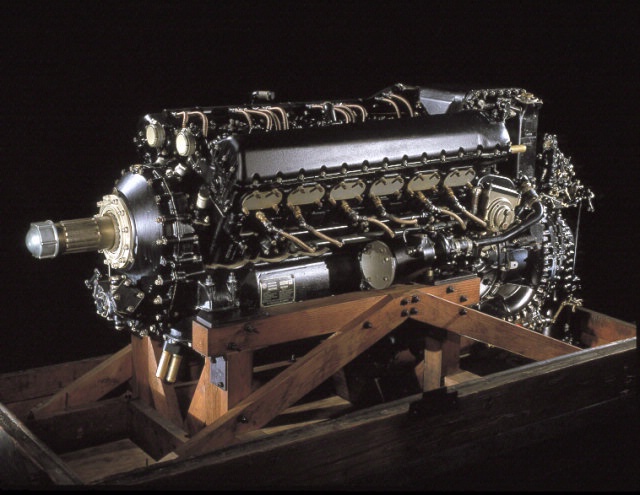
    Image of Packard Merlin V-1650-7 engine

    Propulsion

    Image of Packard Merlin V-1650-7 engine

    Propulsion

    arrow-up Back to top
    Home
    • Facebook facebook
    • Instagram instagram
    • LinkedIn linkedin
    • YouTube youtube

    • Contact Us
    • Get Involved
    • Shop Online
    • Job Opportunities
    • Equal Opportunity
    • Inspector General
    • Records Requests
    • Accessibility
    • Host Your Event
    • Press Room
    • Privacy
    • Terms of Use