
Object Details
Manufacturer
Curtiss Aeroplane and Motor Company
Physical Description
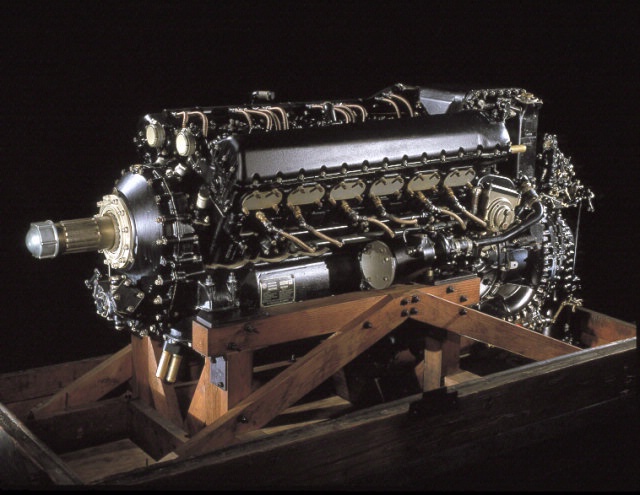
Type: Reciprocating, 6 cylinders, two-row, radial, air-cooled
Power rating: 138 kW (185 hp) at 2,000 rpm
Displacement: 9.88 L (603 cu in.)
Bore and Stroke: 130 mm (5.125 in.) x 124 mm (4.875 in.)
Weight: 190.5 kg (420 lb)
Summary
The Challenger engine, which followed the water cooled Curtiss V-8 OX-5 engine that powered the World War I JN-4 “Jenny” trainer aircraft, was designed as a lower-cost, medium-power engine specifically intended for small commercial cabin aircraft and open cockpit sport planes. The engine received its original Approved Type Certificate (No. 5) in 1928, which was revised and re-issued in 1930.
The small, compact configuration of two staggered rows of three cylinders was intended to provide better dynamic balance and, thus, smoother operation, as well as low frontal area for improved airframe streamlining and better pilot visibility. However, although being economical, the Challenger did not run smoothly, and was frequently replaced by aircraft owners because of a vibration problem.
The Challenger powered a variety of aircraft types including the Curtiss Robin, Curtiss Fledgling, Curtiss Tanager, Curtiss-Wright Sedan 15-C, Command-Aire Model 5C3, and Eastman Sea Rover E-2.
Credit Line
Gift of Wright Aeronautical Corporation
Date
Circa 1928
Inventory Number
A19490008000
Restrictions & Rights
CC0
Type
PROPULSION-Reciprocating & Rotary
Materials
HAZMAT: Magnesium
Aluminum, Steel, Copper, Rubber, Paint, Preservative coating
Dimensions
Diameter 108.3 cm (42.6 in.)
Country of Origin
United States of America
See more items in
National Air and Space Museum Collection
Data Source
National Air and Space Museum
Link to Original Record
Record ID
nasm_A19490008000