
Object Details
Manufacturer
U.S. Army Ballistic Missile Agency, Redstone Arsenal
Summary
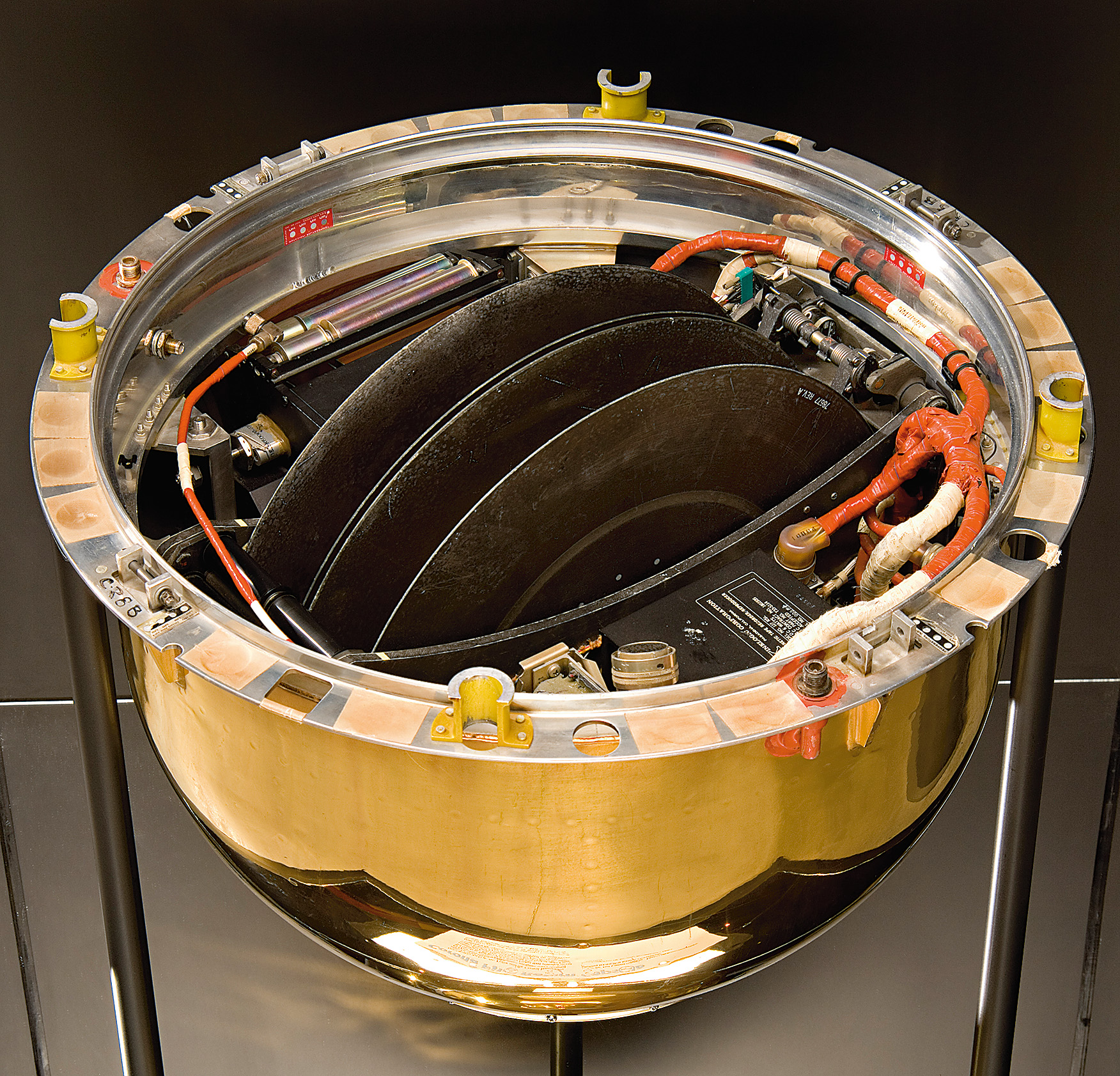
This cradle secured Able, a female rhesus monkey, in her biocapsule during the first flight to recover a primate from space. On May 28, 1959, an Army Ballistic Missile Agency Jupiter rocket at Cape Canaveral launched Able and Baker (a female squirrel monkey housed in a separate capsule) in its nose cone. Their biomedical condition was monitored throughout the flight as part of Department of Defense experiments to determine the effects of spaceflight on living animals. They reached an altitude of approximately 300 miles, a maximum speed of 10,000 mph, and were recovered alive some 1,500 miles downrange by U.S. Navy ships. The experiment provided important biomedical data for the human spaceflight program.
The capsule was built by the Army Ballistic Missile Agency, which transferred it to NASM in 1960. A preserved Able is displayed in the cradle.
Credit Line
Transferred by the Army Ballistic Missile Agency
Inventory Number
A19600218000
Restrictions & Rights
Usage conditions apply
Type
SPACECRAFT-Crewed-Test Vehicles
Materials
Overall- Fiberglass
Pad- Foam Rubber
Dimensions
3-D: 22.9 × 21.6 × 78.7cm (9 × 8 1/2 × 31 in.)
Country of Origin
United States of America
See more items in
National Air and Space Museum Collection
Data Source
National Air and Space Museum
Link to Original Record
Record ID
nasm_A19600218000