Skip to main content Skip to main navigation
heart-solid My Visit Donate
Home Smithsonian Institution IK development site for ODI
Press Enter to activate a submenu, down arrow to access the items and Escape to close the submenu.
    • Overview
    • Museums and Zoo
    • Entry and Guidelines
    • Museum Maps
    • Dine and Shop
    • Accessibility
    • Visiting with Kids
    • Group Visits
    • Overview
    • Exhibitions
    • Online Events
    • All Events
    • IMAX & Planetarium
    • Overview
    • Topics
    • Collections
    • Research Resources
    • Stories
    • Podcasts
    • Overview
    • For Caregivers
    • For Educators
    • For Students
    • For Academics
    • For Lifelong Learners
    • Overview
    • Become a Member
    • Renew Membership
    • Make a Gift
    • Volunteer
    • Overview
    • Our Organization
    • Our Leadership
    • Reports and Plans
    • Newsdesk
heart-solid My Visit Donate

Core Memory Block, Air Traffic Control Computer, IBM 9020

Air and Space Museum

There are restrictions for re-using this image. For more information, visit the Smithsonian's Terms of Use page .
International media Interoperability Framework
IIIF provides researchers rich metadata and media viewing options for comparison of works across cultural heritage collections. Visit the IIIF page to learn more.
View manifest View in Mirador Viewer

    Object Details

    Manufacturer

    IBM Corporation

    Summary

    This is a core memory unit from an IBM 9020 computer. It stored data in a three-dimensional array of donut-shaped "cores" of magnetic material. Each core stored a binary number one or zero, depending on the direction of its magnetization.
    The IBM 9020 was a large, mainframe computer configured for real-time operation and programmed to handle en-route air traffic control functions at about two dozen centers across the continental United States. The 9020 consisted of three standard commercial mainframes, the IBM System/360 Model 50. All three ran in tandem to ensure high reliability. Unlike standard IBM mainframes of the day, the 9020 was programmed to operate in "real time": that is, to compute and generate results as fast as or faster than data were fed into it.
    A full system consisted of this computer coupled to air traffic controllers' consoles, with data fed into the system from long-range radar and other ground stations. IBM 9020s were in use at en-route centers from about 1967 through 1997. This system was used at the FAA en-route center in Leesburg, VA.

    Credit Line

    Transferred from the Federal Aviation Administration

    Inventory Number

    A19970494000

    Restrictions & Rights

    Usage conditions apply

    Type

    INSTRUMENTS-Computers, General Purpose

    Materials

    Plastic, Foam, Gold Plating, Steel, Phenolic Resin, Paper, Adhesive, Paint, Nylon, Mylar (Polyester), Aluminum, Acrylic (Plexiglas), Synthetic Fabric

    Dimensions

    3-D: 33 x 20.3 x 20.3cm (13 x 8 x 8 in.)
    Storage (Aluminum pallet and frame with fabric dust cover): 1232.5 × 121.9 × 109.2cm, 140.6kg (40 ft. 5 1/4 in. × 48 in. × 43 in., 310lb.)

    Country of Origin

    United States of America

    See more items in

    National Air and Space Museum Collection

    Data Source

    National Air and Space Museum

    Metadata Usage

    Not determined

    Link to Original Record

    http://n2t.net/ark:/65665/nv907ab2269-a004-40f0-baff-1b813fb6497b

    Record ID

    nasm_A19970494000

    Discover More

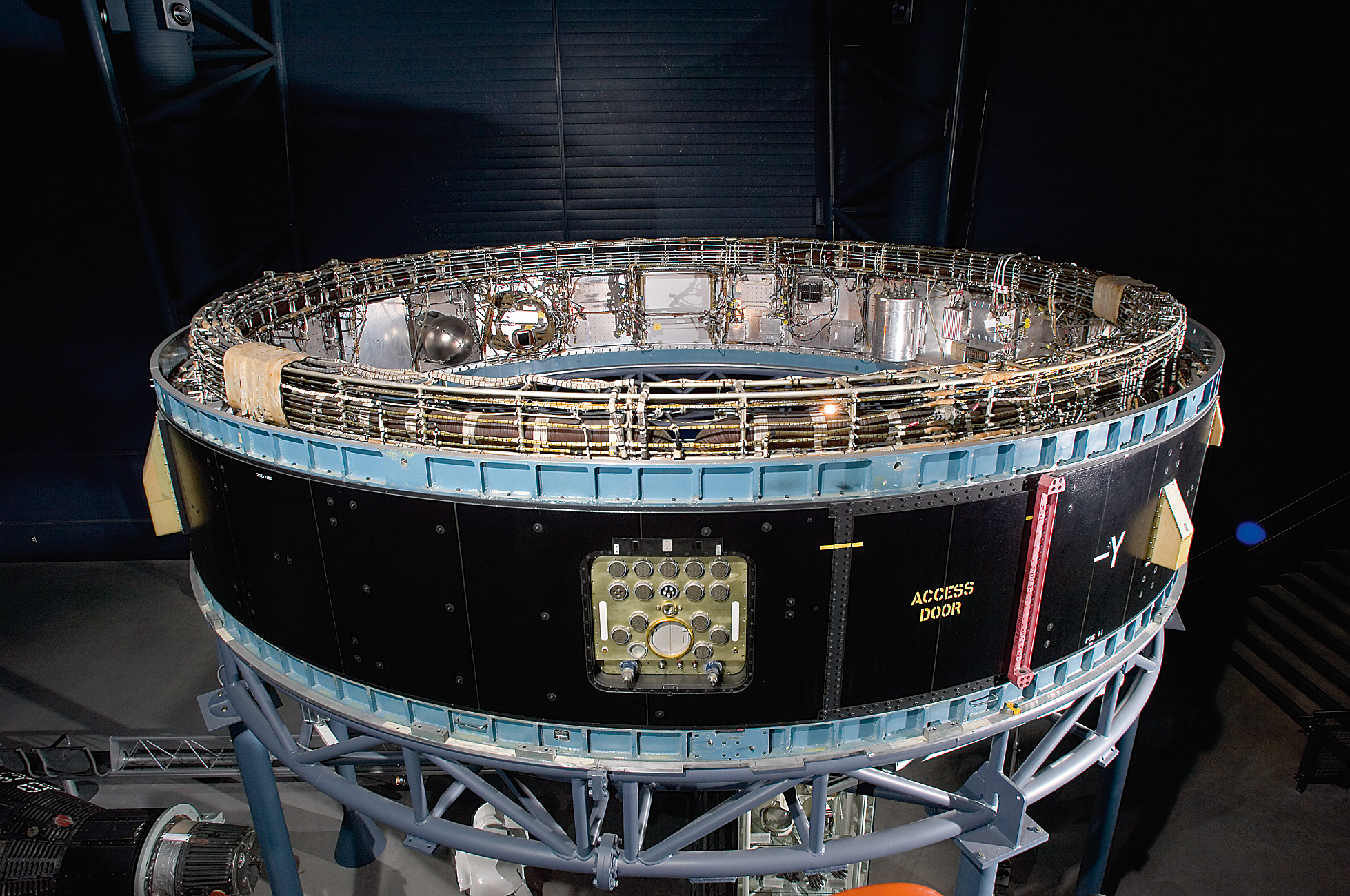
    Image of Saturn 5 guidance and control ring

    Guidance, Navigation, and Control

    Image of Saturn 5 guidance and control ring

    Guidance, Navigation, and Control

    arrow-up Back to top
    Home
    • Facebook facebook
    • Instagram instagram
    • LinkedIn linkedin
    • YouTube youtube

    • Contact Us
    • Get Involved
    • Shop Online
    • Job Opportunities
    • Equal Opportunity
    • Inspector General
    • Records Requests
    • Accessibility
    • Host Your Event
    • Press Room
    • Privacy
    • Terms of Use