
Object Details
maker
Canadian American Art Works, Ltd.
Description (Brief)
Round Community Chest button. The button is white with a red border. White text on the border reads “Community Chest.” Blue text in the white center reads “I’ve Given.”
In 1913 the first Community Chest was established in Cleveland, Ohio. The aim of a Community Chest was to pool local monetary resources, particularly those from local business and social services, and to then distribute the money among the community for its needs. Community Chests grew in popularity in the United States and Canada during World War I, during which time they were known as War Chests—over three hundred cities had War Chests by the summer of 1918. The typical mode of donating to a community War Chest was to pledge part of your salary to the chest. Today the Community Chest organization is known as United Way.
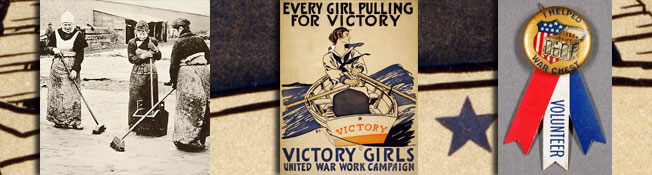
Much like the use of military insignia to identify its wearer (by association with an organization) and his/her achievements, these pins and buttons were meant to be worn by Americans on the home front during World War I to show their membership in an organization and/or their contribution to a particular war effort, such as the United War Work Campaign. The pins and buttons displayed the wearer’s patriotism and generosity and undoubtedly also served to prompt others to become similarly involved in the various war efforts.
SOURCE:
“History,” United Way, unitedway.org/pages/history.
“History,” United Way of LaPorte County, unitedwaylpc.org/history.
Oliver Zunz, Philanthropy in America: A History (Princeton, NJ: Princeton University Press, 2012), 51–66.
Location
Currently not on view
date made
ca 1914-1918
ID Number
2006.0098.0309
accession number
2006.0098
catalog number
2006.0098.0309
Object Name
button
Physical Description
cellulose nitrate (overall material)
Measurements
overall: 3 cm; 1 3/16 in
overall: 3/16 in x 1 in; .47625 cm x 2.54 cm
place made
Canada: Quebec, Montreal
See more items in
Medicine and Science: Chemistry
Clothing & Accessories
Military
Advertising
World War I Pins & Buttons
Data Source
National Museum of American History
Link to Original Record
Record ID
nmah_1317530