
Object Details
Manufacturer
Smithsonian Astrophysical Observatory
Summary
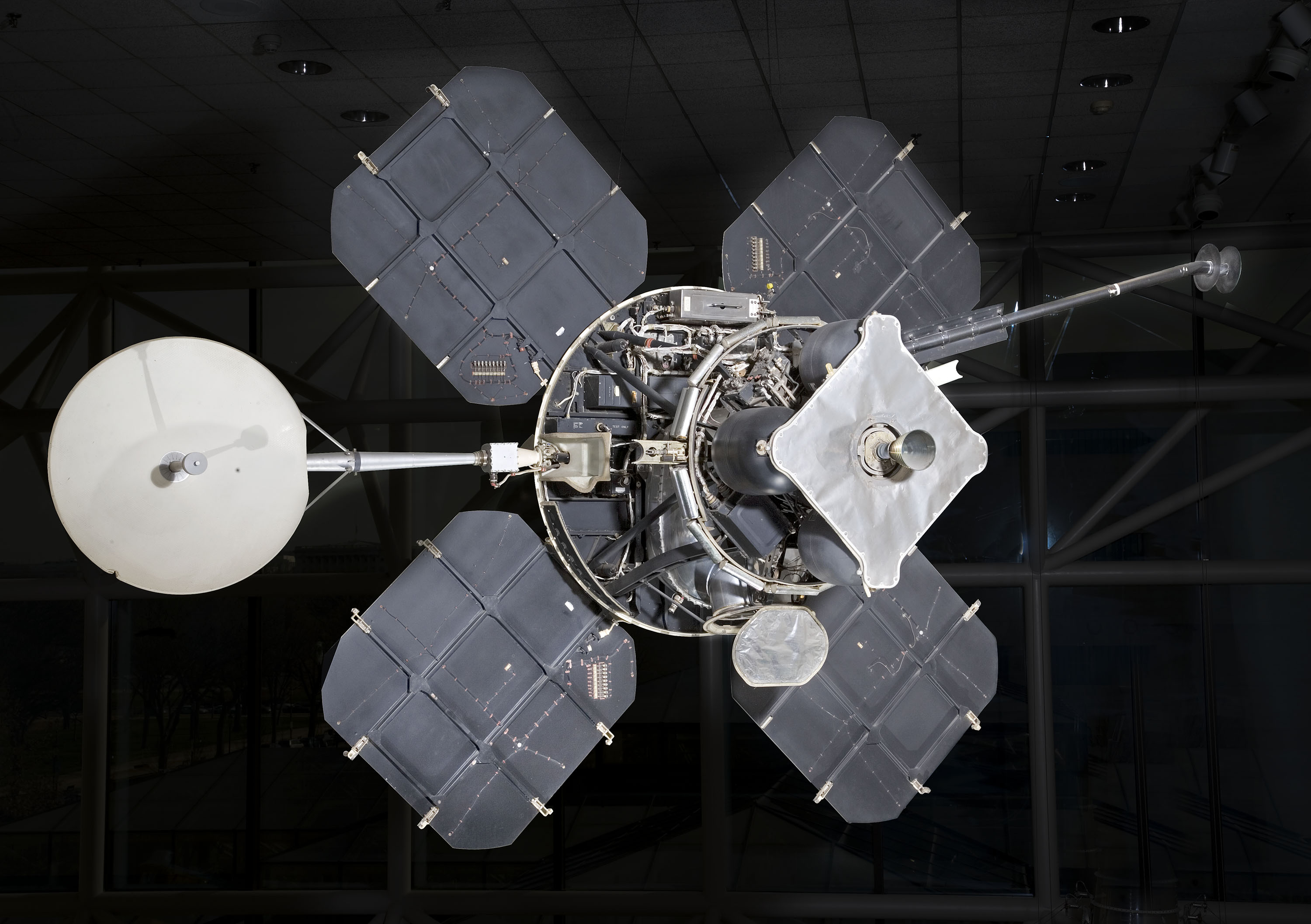
This is the main component of the engineering verification unit for the hydrogen maser oscillator (clock) developed by Vessot and Levine at the Smithsonian Astrophysical Observatory (SAO). The unit was designed to measure how varying gravitational fields effect the rate of passage of time as predicted by Einstein's general theory of relativity. Einstein's theory of general relativity proposes that time and gravity are closely related. In order to test this proposal, the SAO designed and built a hydrogen maser oscillator, more commonly known as an atomic clock, to be placed into a microgravity environment. This space-qualified instrument was sent up to 10,000 kilometers on a two-hour sub-orbital flight on a Scout launch vehicle in 1976. By 1979, Vessot concluded that this experiment, named Gravity Probe A, indeed verified Einstein's predicted gravitational red shift effect.
This object was transferred to NASM by SAO in December 1978.
Credit Line
Transferred from the Smithsonian Astrophysical Obervatory
Inventory Number
A19790136000
Restrictions & Rights
Usage conditions apply
Type
INSTRUMENTS-Scientific
Materials
Aluminum, Steel, Stainless Steel, Foam, Nylon, Phenolic Resin, Gold Plating, Paper, Glass, Epoxy, Rubber (Silicone), Synthetic Fabric, Plastic, Adhesive, Cadmium Plating
Dimensions
Storage (Rehoused on Aluminum Pallet with one other object): 121.9 × 121.9 × 121.9cm, 106.1kg (48 × 48 × 48 in., 234lb.)
Country of Origin
United States of America
See more items in
National Air and Space Museum Collection
Data Source
National Air and Space Museum
Link to Original Record
Record ID
nasm_A19790136000