Skip to main content Skip to main navigation
heart-solid My Visit Donate
Home Smithsonian Institution IK development site for ODI
Press Enter to activate a submenu, down arrow to access the items and Escape to close the submenu.
    • Overview
    • Museums and Zoo
    • Entry and Guidelines
    • Museum Maps
    • Dine and Shop
    • Accessibility
    • Visiting with Kids
    • Group Visits
    • Overview
    • Exhibitions
    • Online Events
    • All Events
    • IMAX & Planetarium
    • Overview
    • Topics
    • Collections
    • Research Resources
    • Stories
    • Podcasts
    • Overview
    • For Caregivers
    • For Educators
    • For Students
    • For Academics
    • For Lifelong Learners
    • Overview
    • Become a Member
    • Renew Membership
    • Make a Gift
    • Volunteer
    • Overview
    • Our Organization
    • Our Leadership
    • Reports and Plans
    • Newsdesk
heart-solid My Visit Donate

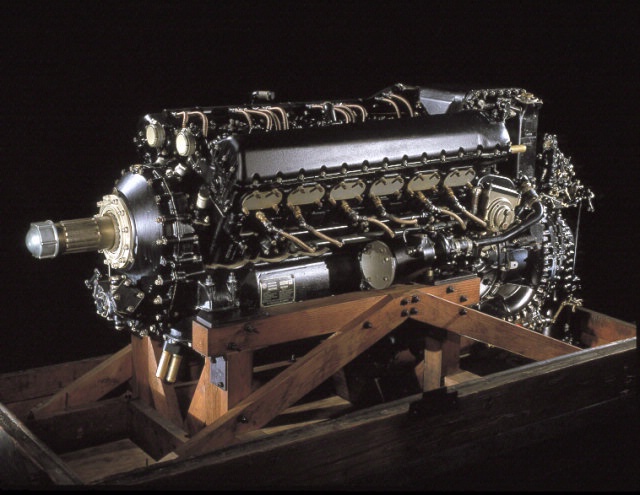
Chrysler XI-2220-11, Inverted V-16 Engine

Air and Space Museum

There are restrictions for re-using this image. For more information, visit the Smithsonian's Terms of Use page .
International media Interoperability Framework
IIIF provides researchers rich metadata and media viewing options for comparison of works across cultural heritage collections. Visit the IIIF page to learn more.
View manifest View in Mirador Viewer

Object Details

Manufacturer

Chrysler Corporation

Physical Description

Type: Reciprocating, 16 cylinders, V-type, inverted, water-cooled, turbosupercharged
Power rating: 1,864 kW (2,500 hp) at 2,700 rpm
Displacement: 36.4 L (2,220 cu in.)
Bore and Stroke: 147 mm (5.8 in.) x 133 mm (5.25 in.)
Weight: 1,081.4 kg (2,384 lb)

Summary

In response to Army Air Corps 1939 interest in a high performance V-type pursuit aircraft engine, a 1941 contract was given to Chrysler for the development of the IV-2220 (later designated XI-2220). To achieve the goals of 1,491 kW (2,000 shp), extremely low frontal area, and minimum vibration characteristics, Chrysler conceived of two inverted V-8s, back-to-back with mid-drive to the front gearbox. The engine was turbo-supercharged, and incorporated Chrysler's first hemispherical combustion chamber with the spark plug in the center.
Single-cylinder tests began in May 1941, and the first engine was tested at the end of 1942. With the Republic P-47D-15 aircraft selected as the testbed, the first flight took place in July 1945.
This very rare XI-2220-11 engine (serial number 6) was flight tested in August, and the program terminated in November when a propeller shaft broke. The war was over and so was any requirement for such an engine.

Credit Line

Transferred from the U.S. Army Air Forces

Date

July 7, 1945

Inventory Number

A19660454000

Restrictions & Rights

Usage conditions apply

Type

PROPULSION-Reciprocating & Rotary

Materials

Steel, Aluminum, Textile, Plastic, Rubber, Paint

Dimensions

Overall: 44 x 34 x 120in., 2384lb. (111.8 x 86.4 x 304.8cm, 1081.4kg)

Country of Origin

United States of America

See more items in

National Air and Space Museum Collection

Data Source

National Air and Space Museum

Metadata Usage

Not determined

Link to Original Record

http://n2t.net/ark:/65665/nv92c688c2a-499d-489d-aff4-10279c92d69b

Record ID

nasm_A19660454000

Discover More

Image of Packard Merlin V-1650-7 engine

Propulsion

Image of Packard Merlin V-1650-7 engine

Propulsion

arrow-up Back to top
Home
  • Facebook facebook
  • Instagram instagram
  • LinkedIn linkedin
  • YouTube youtube

  • Contact Us
  • Get Involved
  • Shop Online
  • Job Opportunities
  • Equal Opportunity
  • Inspector General
  • Records Requests
  • Accessibility
  • Host Your Event
  • Press Room
  • Privacy
  • Terms of Use