Skip to main content Skip to main navigation
heart-solid My Visit Donate
Home Smithsonian Institution IK development site for ODI
Press Enter to activate a submenu, down arrow to access the items and Escape to close the submenu.
    • Overview
    • Museums and Zoo
    • Entry and Guidelines
    • Museum Maps
    • Dine and Shop
    • Accessibility
    • Visiting with Kids
    • Group Visits
    • Overview
    • Exhibitions
    • Online Events
    • All Events
    • IMAX & Planetarium
    • Overview
    • Topics
    • Collections
    • Research Resources
    • Stories
    • Podcasts
    • Overview
    • For Caregivers
    • For Educators
    • For Students
    • For Academics
    • For Lifelong Learners
    • Overview
    • Become a Member
    • Renew Membership
    • Make a Gift
    • Volunteer
    • Overview
    • Our Organization
    • Our Leadership
    • Reports and Plans
    • Newsdesk
heart-solid My Visit Donate

Capsule, Mercury

Air and Space Museum

This media is in the public domain (free of copyright restrictions). You can copy, modify, and distribute this work without contacting the Smithsonian. For more information, visit the Smithsonian's Open Access page.
International media Interoperability Framework
IIIF provides researchers rich metadata and media viewing options for comparison of works across cultural heritage collections. Visit the IIIF page to learn more.
View manifest View in Mirador Viewer

    Object Details

    Manufacturer

    NASA - Langley Research Center
    NASA, Lewis Research Center

    Summary

    On September 9, 1959, NASA launched this unoccupied Mercury spacecraft from Cape Canaveral, Florida, on a suborbital flight that lasted 13 minutes. Its launch was the second in the Mercury program and the first using an Atlas booster. The flight helped NASA evaluate the booster, the new ablative heat shield, the capsule's flight dynamics and aerodynamic shape, and spacecraft recovery systems and procedures.
    The heavily instrumented "Big Joe" was the most massive American spacecraft launched up to that time. It weighed about as much as a manned version would, and its success paved the way for the beginning of manned Mercury launches in 1961.

    Alternate Name

    Mercury Capsule

    Credit Line

    Transferred from the National Aeronautics and Space Administration

    Inventory Number

    A19680244000

    Restrictions & Rights

    CC0

    Type

    SPACECRAFT-Crewed-Test Vehicles

    Materials

    Structure: Inconel alloy; Heatshield: Phenolic Fiberglass
    Heatshield: phenolic resins, fiberglass

    Dimensions

    Overall: 9 ft. 4 in. tall x 6 ft. 1 in. wide, 2555 lb. (284.5 x 185.4cm, 1158.9kg)

    Country of Origin

    United States of America

    See more items in

    National Air and Space Museum Collection

    Location

    Steven F. Udvar-Hazy Center in Chantilly, VA

    Exhibit Station

    Human Spaceflight

    Data Source

    National Air and Space Museum

    Metadata Usage

    CC0

    Link to Original Record

    http://n2t.net/ark:/65665/nv9d64e7729-a8b9-4c9f-951b-2c8f4ac1d056

    Record ID

    nasm_A19680244000

    Discover More

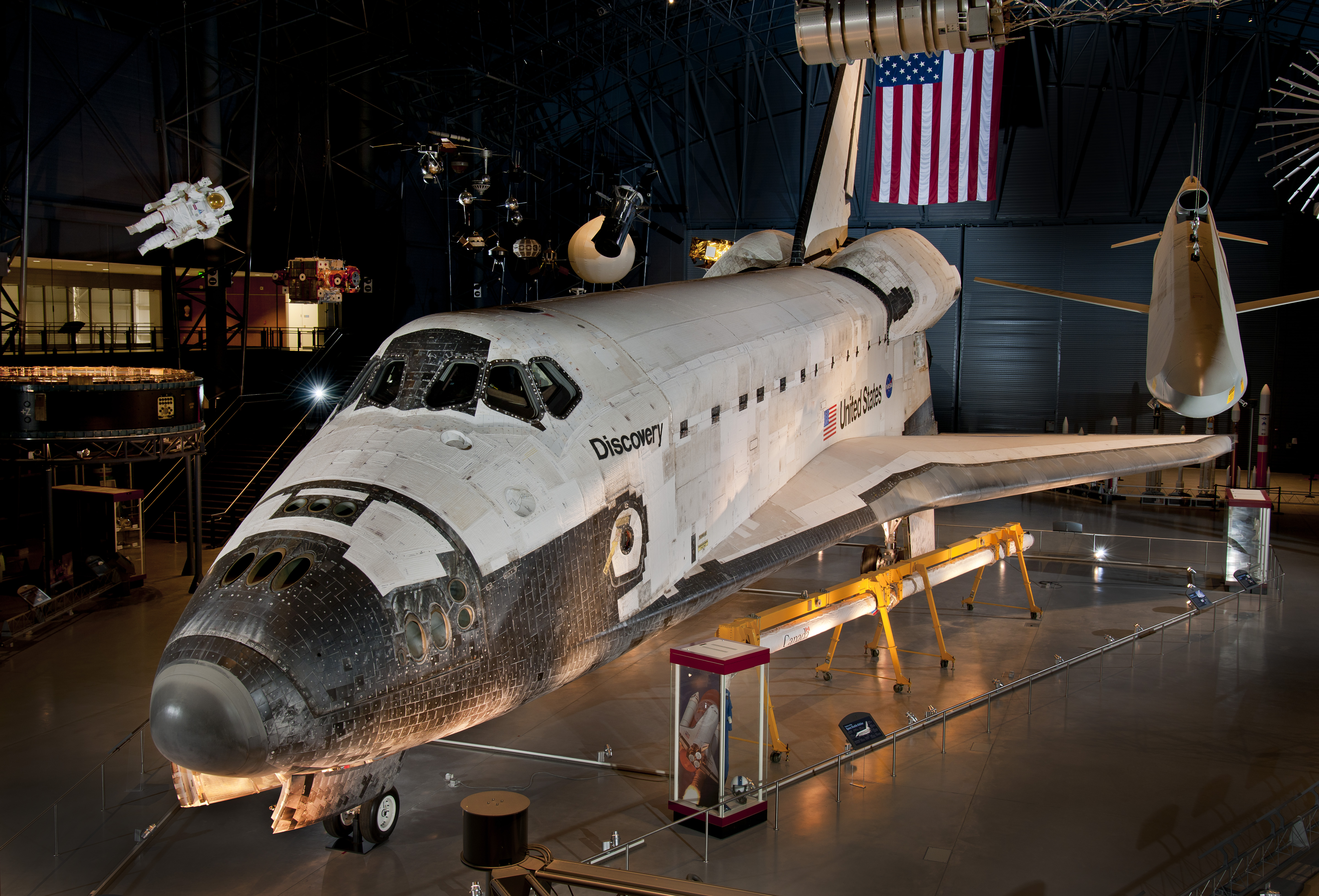
    Space Shuttle orbiter Discovery on display in the McDonnell Space Hangar at the Steven F. Udvar-Hazy Center

    Human Spaceflight

    Space Shuttle orbiter Discovery on display in the McDonnell Space Hangar at the Steven F. Udvar-Hazy Center

    Human Spaceflight

    arrow-up Back to top
    Home
    • Facebook facebook
    • Instagram instagram
    • LinkedIn linkedin
    • YouTube youtube

    • Contact Us
    • Get Involved
    • Shop Online
    • Job Opportunities
    • Equal Opportunity
    • Inspector General
    • Records Requests
    • Accessibility
    • Host Your Event
    • Press Room
    • Privacy
    • Terms of Use