Skip to main content Skip to main navigation
heart-solid My Visit Donate
Home Smithsonian Institution IK development site for ODI
Press Enter to activate a submenu, down arrow to access the items and Escape to close the submenu.
    • Overview
    • Museums and Zoo
    • Entry and Guidelines
    • Museum Maps
    • Dine and Shop
    • Accessibility
    • Visiting with Kids
    • Group Visits
    • Overview
    • Exhibitions
    • Online Events
    • All Events
    • IMAX & Planetarium
    • Overview
    • Topics
    • Collections
    • Research Resources
    • Stories
    • Podcasts
    • Overview
    • For Caregivers
    • For Educators
    • For Students
    • For Academics
    • For Lifelong Learners
    • Overview
    • Become a Member
    • Renew Membership
    • Make a Gift
    • Volunteer
    • Overview
    • Our Organization
    • Our Leadership
    • Reports and Plans
    • Newsdesk
heart-solid My Visit Donate

Capsule, Mercury, MR-2

Air and Space Museum

There are restrictions for re-using this image. For more information, visit the Smithsonian's Terms of Use page .
International media Interoperability Framework
IIIF provides researchers rich metadata and media viewing options for comparison of works across cultural heritage collections. Visit the IIIF page to learn more.
View manifest View in Mirador Viewer

    Object Details

    Manufacturer

    McDonnell Aircraft Corp.

    Summary

    Mercury spacecraft #5 was launched on the Mercury-Redstone 2 (MR-2) mission on January 31, 1961. Onboard for the 17-minute suborbital flight was the chimpanzee "Ham." Due to problems with the Redstone booster and with the abort sensing system, the capsule and its occupant ascended to an altitude of 157 miles instead of 115, and landed 422 miles downrange instead of 290. Ham experienced higher "g" forces than anticipated, but survived without problems. The flight successfully tested the Mercury environmental control system, but fatigue on the landing bag system caused by ocean waves resulted in a loss of the beryllium heat shield after landing, forcing a redesign before the first manned flight. NASA also modified the Redstone booster and carried out an extra launch test before Alan Shepard was launched on May 5, 1961. NASA transferred the MR-2 capsule to the Smithsonian in 1967.

    Credit Line

    Transferred from the National Aeronautics and Space Administration

    Inventory Number

    A19680267000

    Restrictions & Rights

    Usage conditions apply

    Type

    SPACECRAFT-Crewed-Test Vehicles

    Materials

    Skin & Structure: Titanium
    Shingles: Nickel-steel alloy (spacecraft); Beryllium (cylindrical section)
    Heatshield: Beryllium

    Dimensions

    Overall: 112 in tall x 73 in. diameter (284.5 x 185.4cm)

    Country of Origin

    United States of America

    See more items in

    National Air and Space Museum Collection

    Data Source

    National Air and Space Museum

    Metadata Usage

    Not determined

    Link to Original Record

    http://n2t.net/ark:/65665/nv9cc79cbea-1d51-4dbb-9e7e-d08bc127790b

    Record ID

    nasm_A19680267000

    Discover More

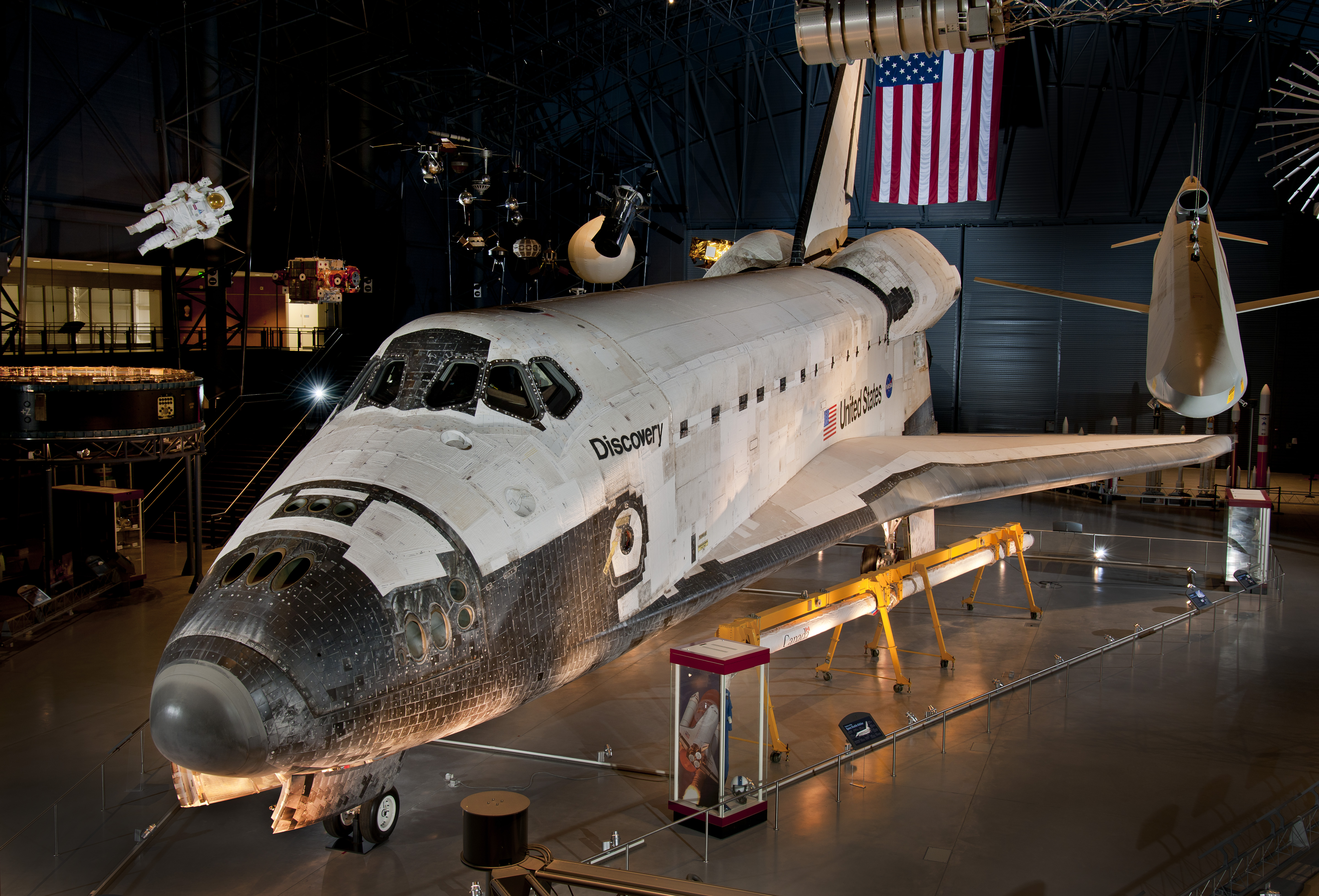
    Space Shuttle orbiter Discovery on display in the McDonnell Space Hangar at the Steven F. Udvar-Hazy Center

    Human Spaceflight

    Space Shuttle orbiter Discovery on display in the McDonnell Space Hangar at the Steven F. Udvar-Hazy Center

    Human Spaceflight

    arrow-up Back to top
    Home
    • Facebook facebook
    • Instagram instagram
    • LinkedIn linkedin
    • YouTube youtube

    • Contact Us
    • Get Involved
    • Shop Online
    • Job Opportunities
    • Equal Opportunity
    • Inspector General
    • Records Requests
    • Accessibility
    • Host Your Event
    • Press Room
    • Privacy
    • Terms of Use