Skip to main content Skip to main navigation
heart-solid My Visit Donate
Home Smithsonian Institution IK development site for ODI
Press Enter to activate a submenu, down arrow to access the items and Escape to close the submenu.
    • Overview
    • Museums and Zoo
    • Entry and Guidelines
    • Museum Maps
    • Dine and Shop
    • Accessibility
    • Visiting with Kids
    • Group Visits
    • Overview
    • Exhibitions
    • Online Events
    • All Events
    • IMAX & Planetarium
    • Overview
    • Topics
    • Collections
    • Research Resources
    • Stories
    • Podcasts
    • Overview
    • For Caregivers
    • For Educators
    • For Students
    • For Academics
    • For Lifelong Learners
    • Overview
    • Become a Member
    • Renew Membership
    • Make a Gift
    • Volunteer
    • Overview
    • Our Organization
    • Our Leadership
    • Reports and Plans
    • Newsdesk
heart-solid My Visit Donate

Capsule, Gemini IV

Air and Space Museum

There are restrictions for re-using this image. For more information, visit the Smithsonian's Terms of Use page .
International media Interoperability Framework
IIIF provides researchers rich metadata and media viewing options for comparison of works across cultural heritage collections. Visit the IIIF page to learn more.
View manifest View in Mirador Viewer
  • Side view of the gray space capsule, with one of the exterior hatches opened. Seats visible inside.
  • Two black, bell-shaped space capsules side by side.
  • Side view of the gray space capsule. The exterior hatch is shut.
  • Angled view of the front of the gray space capsule. Yellow plastic structure near top of capsule.
  • Side view of the exterior of a gray space capsule. The front is circular while the rear extends outward, forming a vaguely cylindrical shape.
  • View of the bottom of the gray space capsule. There is visible whitish scoring on the metal.
  • Side view of the gray space capsule, with one of the exterior hatches opened. Control panel visible inside.
  • Close up view of the interior of a gray space capsule with red lining. Two metal seats lined with foam are inside.

    Object Details

    Astronaut

    Edward H. White, II
    James A. McDivitt

    Manufacturer

    McDonnell Aircraft Corp.

    Summary

    On June 3, 1965, a Titan II rocket launched this spacecraft, Gemini IV, carrying astronauts James McDivitt and Edward White into orbit. The flight lasted four days and included a historic space walk by White, the first by an American, early in the mission. Ten weeks earlier, Soviet cosmonaut Alexei Leonov had become the first human to "walk in space." NASA broadcast the audio from White's 22-minute "extra-vehicular activity" (EVA) live; he enormously enjoyed the experience.
    The flight plan also included a rendezvous with the discarded second stage of the Titan II rocket. It was aborted, however, after pilot Jim McDivitt experienced unexpected difficulties reaching the booster because he had not been properly trained in rendezvous techniques. Other experiments during this flight included Earth photography, space radiation measurements, and medical effects of prolonged weightlessness. In 1967 NASA transferred the spacecraft to the Smithsonian.

    Impact or Innovation

    Gemini IV achieved the first American spacewalk, a major step toward living and working in space.

    Brief Description

    The Gemini program provided a critical bridge between the one-person Mercury program and the sophisticated Apollo missions to the Moon. During the Gemini IV mission, astronaut Ed White ventured out of this spacecraft to complete America's first "space walk."

    Credit Line

    Transferred from the National Aeronautics and Space Administration

    Inventory Number

    A19670209000

    Restrictions & Rights

    Usage conditions apply

    Type

    SPACECRAFT-Crewed

    Materials

    Structure: Titanium; cylindrical section: beryllium alloy; conical section: Rene 41 (nickel-steel alloy); heat shield: silicone elastomer
    Skin: Beryllium, Nickel Alloy

    Dimensions

    Overall: 228.6 × 251.5cm, 1369.9kg (7 ft. 6 in. × 8 ft. 3 in., 3020lb.)
    Approximate (cylindrical reaction control section): 64.8 × 100.3cm (25 1/2 × 39 1/2 in.)

    Country of Origin

    United States of America

    See more items in

    National Air and Space Museum Collection

    Location

    National Air and Space Museum in Washington, DC

    Exhibition

    Boeing Milestones of Flight Hall

    Data Source

    National Air and Space Museum

    Metadata Usage

    Not determined

    Link to Original Record

    http://n2t.net/ark:/65665/nv9250c6f9e-4f7c-4d5c-9fa0-3bf35be847a6

    Record ID

    nasm_A19670209000

    Discover More

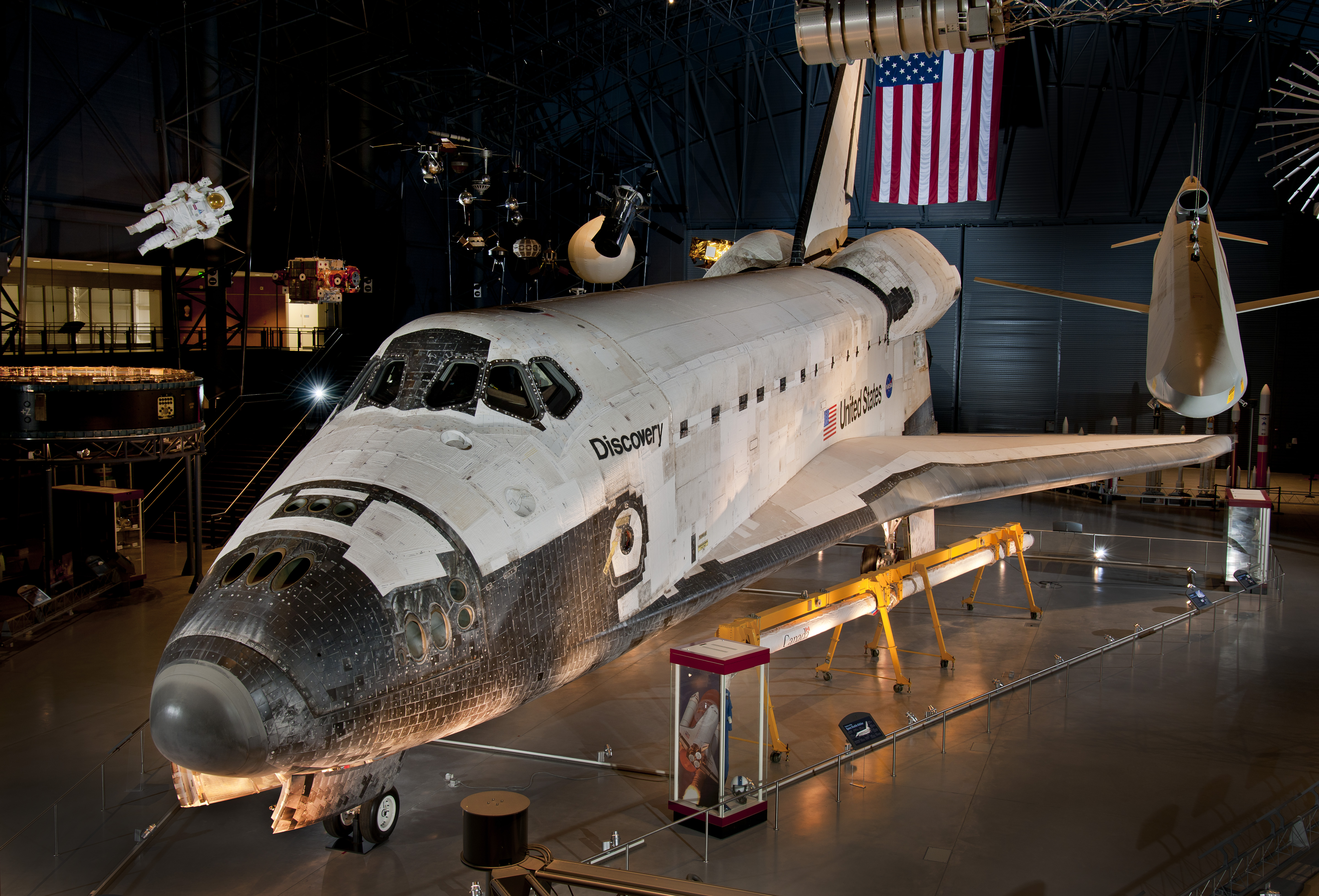
    Space Shuttle orbiter Discovery on display in the McDonnell Space Hangar at the Steven F. Udvar-Hazy Center

    Human Spaceflight

    Space Shuttle orbiter Discovery on display in the McDonnell Space Hangar at the Steven F. Udvar-Hazy Center

    Human Spaceflight

    arrow-up Back to top
    Home
    • Facebook facebook
    • Instagram instagram
    • LinkedIn linkedin
    • YouTube youtube

    • Contact Us
    • Get Involved
    • Shop Online
    • Job Opportunities
    • Equal Opportunity
    • Inspector General
    • Records Requests
    • Accessibility
    • Host Your Event
    • Press Room
    • Privacy
    • Terms of Use