
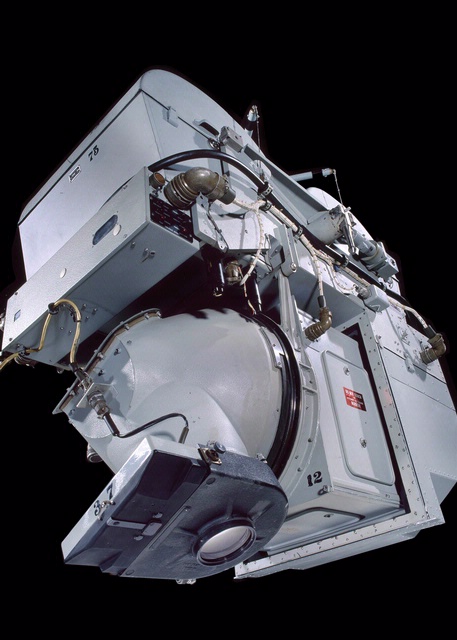
Object Details
Manufacturer
Graflex Corp.
Physical Description
Brown box, with Taylor-Hobson lens; cook anastimat sn#157701,6.5in
Summary
Charles and Anne Lindbergh used this camera, a popular model of its day, during archeological surveys of Pueblo ruins in the Southwest and Mayan ruins in Mexico in 1929. Flying a Curtiss D-12 Falcon, the Lindberghs explored and photographed the Canyon de Chelly area in New Mexico and found several Indian ruins hidden from ground view. During the Lindbergh-Carnegie Maya Expedition, they located unknown Mayan ruins in Mexico. Both surveys highlighted the value of aviation and aerial photography to archeological research in remote areas.
Credit Line
Donated by Juan T. Trippe
Inventory Number
A19791497000
Restrictions & Rights
Usage conditions apply
Type
EQUIPMENT-Photographic
Materials
Metal, Glass, Fabric
Dimensions
3-D (Lens Open, Focusing Hood Open): 41.9 × 15.2 × 41.3cm (1 ft. 4 1/2 in. × 6 in. × 1 ft. 4 1/4 in.)
3-D (lens open, bellows closed): 1 ft. 5 1/4 in. × 6 1/2 in. × 8 3/4 in., 8lb. (43.8 × 16.5 × 22.2cm, 3.6kg)
Country of Origin
United States of America
See more items in
National Air and Space Museum Collection
Location
National Air and Space Museum in Washington, DC
Exhibition
Thomas W. Haas We All Fly
Data Source
National Air and Space Museum
Link to Original Record
Record ID
nasm_A19791497000