Skip to main content Skip to main navigation
heart-solid My Visit Donate
Home Smithsonian Institution IK development site for ODI
Press Enter to activate a submenu, down arrow to access the items and Escape to close the submenu.
    • Overview
    • Museums and Zoo
    • Entry and Guidelines
    • Museum Maps
    • Dine and Shop
    • Accessibility
    • Visiting with Kids
    • Group Visits
    • Overview
    • Exhibitions
    • Online Events
    • All Events
    • IMAX & Planetarium
    • Overview
    • Topics
    • Collections
    • Research Resources
    • Stories
    • Podcasts
    • Overview
    • For Caregivers
    • For Educators
    • For Students
    • For Academics
    • For Lifelong Learners
    • Overview
    • Become a Member
    • Renew Membership
    • Make a Gift
    • Volunteer
    • Overview
    • Our Organization
    • Our Leadership
    • Reports and Plans
    • Newsdesk
heart-solid My Visit Donate

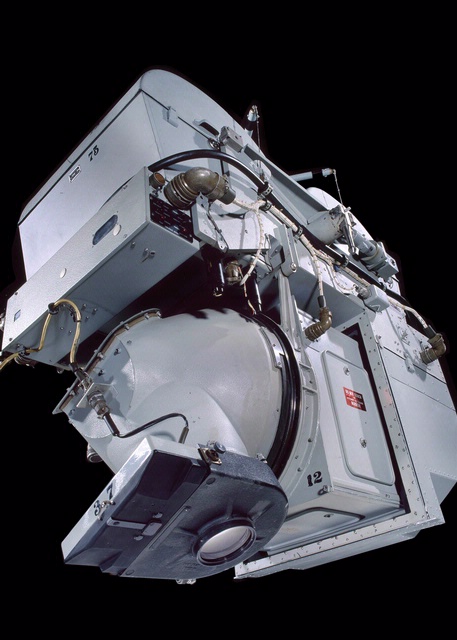
Camera, Balloon Recon, HYAC

Air and Space Museum

There are restrictions for re-using this image. For more information, visit the Smithsonian's Terms of Use page .
International media Interoperability Framework
IIIF provides researchers rich metadata and media viewing options for comparison of works across cultural heritage collections. Visit the IIIF page to learn more.
View manifest View in Mirador Viewer

    Object Details

    Physical Description

    Fiberglass housing and painted black with a f/5 lens.

    Summary

    The HYAC (high-acuity) direct-scanning panoramic camera was designed to combine high resolution and a 120 degree wide swath of coverage from high altitudes using 70mm film. In 1958, plastic reconnaissance balloons carryng three HYAC I cameras and other types of cameras were launched for WS461L, a program ostensibly to gather meteorological information but in fact a secret Air Force balloon reconnaissance program over the Soviet Union. As with a similar ill-fated 1956 program, the majority of the balloons fell into Eastern European countries and Soviet hands; the resulting political furor ended the project. This HYAC 1 camera was only used for testing.
    Walter Levison of Itek Corp. developed this aerial camera made of fiberglas to reduce radar reflectivity and flown at altitudes of 15,000 to 30,000 meters.

    Credit Line

    Donated by Lockheed Martin Missile and Space Corporation

    Inventory Number

    A19830266000

    Restrictions & Rights

    Usage conditions apply

    Type

    EQUIPMENT-Photographic

    Materials

    Metal, Rubber, Glass, Wires, Phenolic Resin, Leather

    Dimensions

    Approximate: 73.66 x 73.66 x 31.75cm (2ft 5in. x 2ft 5in. x 1ft 1/2in.)
    Lens 3in diameter, 12in focal length
    Control box 8in long, 6in wide
    Film width 2-3/4in

    Country of Origin

    United States of America

    See more items in

    National Air and Space Museum Collection

    Data Source

    National Air and Space Museum

    Metadata Usage

    Not determined

    Link to Original Record

    http://n2t.net/ark:/65665/nv92e085e18-0529-42bd-868f-06f803b965d1

    Record ID

    nasm_A19830266000

    Discover More

    Lockheed SR-71 Blackbird at the National Air and Space Museum

    Art of Aerial Spying

    Reconnaissance camera used on U-2

    Aerial Cameras

    Reconnaissance camera used on U-2

    Aerial Cameras

    Lockheed SR-71 Blackbird at the National Air and Space Museum

    Art of Aerial Spying

    arrow-up Back to top
    Home
    • Facebook facebook
    • Instagram instagram
    • LinkedIn linkedin
    • YouTube youtube

    • Contact Us
    • Get Involved
    • Shop Online
    • Job Opportunities
    • Equal Opportunity
    • Inspector General
    • Records Requests
    • Accessibility
    • Host Your Event
    • Press Room
    • Privacy
    • Terms of Use