
Object Details
Manufacturer
Bristol-Siddeley (England)
Physical Description
Type: Turbofan, vectored thrust VTOL engine, 4 swivel exhausts
Thrust: 68,944 N (15,500 lb) at take-off
Compressor: 2-stage front fan, bypass; 7-stage axial
Combustor: Cannular
Turbine: 3-stage axial
Weight: 975 kg (2,150 lb)
Summary
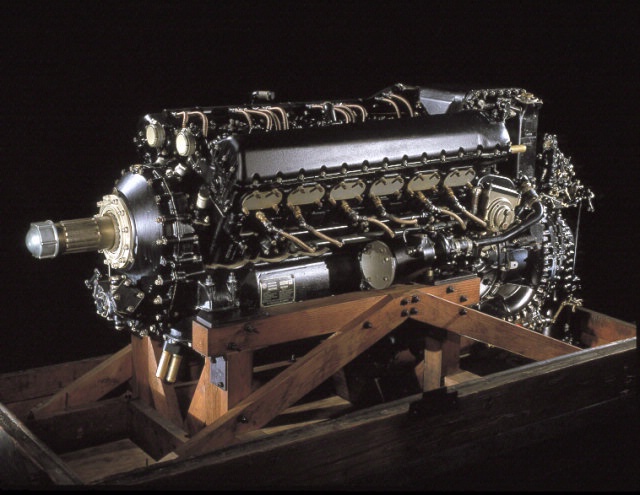
The Pegasus turbofan engine was developed under the NATO Mutual Weapons Development Program. The engine ran for the first time in 1959, and flight trials in the Hawker Siddeley P.1127 Kestrel prototypes began in October 1960. The P.1127 became the BAe Harrier, the first operational fixed-wing vertical/short take-off and landing (V/STOL) fighter aircraft. The Pegasus first entered operational service with the Royal Air Force in 1969.
Originally designed by Bristol Siddeley and later manufactured by Rolls-Royce plc, the vectored-thrust engine uses movable nozzles to direct the fan and turbine thrust, giving the aircraft V/STOL capability. In service for the U.S. Marine Corps, the engine is given the designation F402.
The unique Pegasus engine powers all versions of the Hawker Siddeley Harrier multi-role military aircraft. Rolls-Royce licensed Pratt & Whitney to build the Pegasus for US built versions. However Pratt & Whitney never completed any engines, with all new build being manufactured by Rolls-Royce in Bristol, England.
Credit Line
Transferred from the U.S. Air Force, Wright-Patterson AFB, Ohio
Date
Circa 1960s
Inventory Number
A19720632000
Restrictions & Rights
Usage conditions apply
Type
PROPULSION-Turbines (Jet)
Materials
Steel, Aluminum, Rubber, Paint, Inconel, Stainless Steel, Titanium, Magnesium, Cadmium plating
Dimensions
Length 251 cm (98.8 in.), Diameter 121.9 cm (48 in.)
Country of Origin
United Kingdom
See more items in
National Air and Space Museum Collection
Data Source
National Air and Space Museum
Link to Original Record
Record ID
nasm_A19720632000