Object Details
Manufacturer
NASA Manned Spacecraft Center
Summary
As part of the Apollo program, a number of so-called "boilerplate" (BP) command modules were constructed to undergo various tests and to serve as training vehicles for astronauts and other mission crew members. BP 1102A is constructed of aluminum, with its sidewalls painted with a bronze epoxy paint to simulate the look of a real Apollo Command module after splashdown. It was fitted with an actual Command Module hatch. The initial use of BP1102A was as the water egress trainer for all Apollo flights, including by the crew of Apollo 11, the first lunar landing mission. As such, it was fitted with actual or mock-up interior components and used by astronauts to practice routine and emergency exits from the spacecraft.
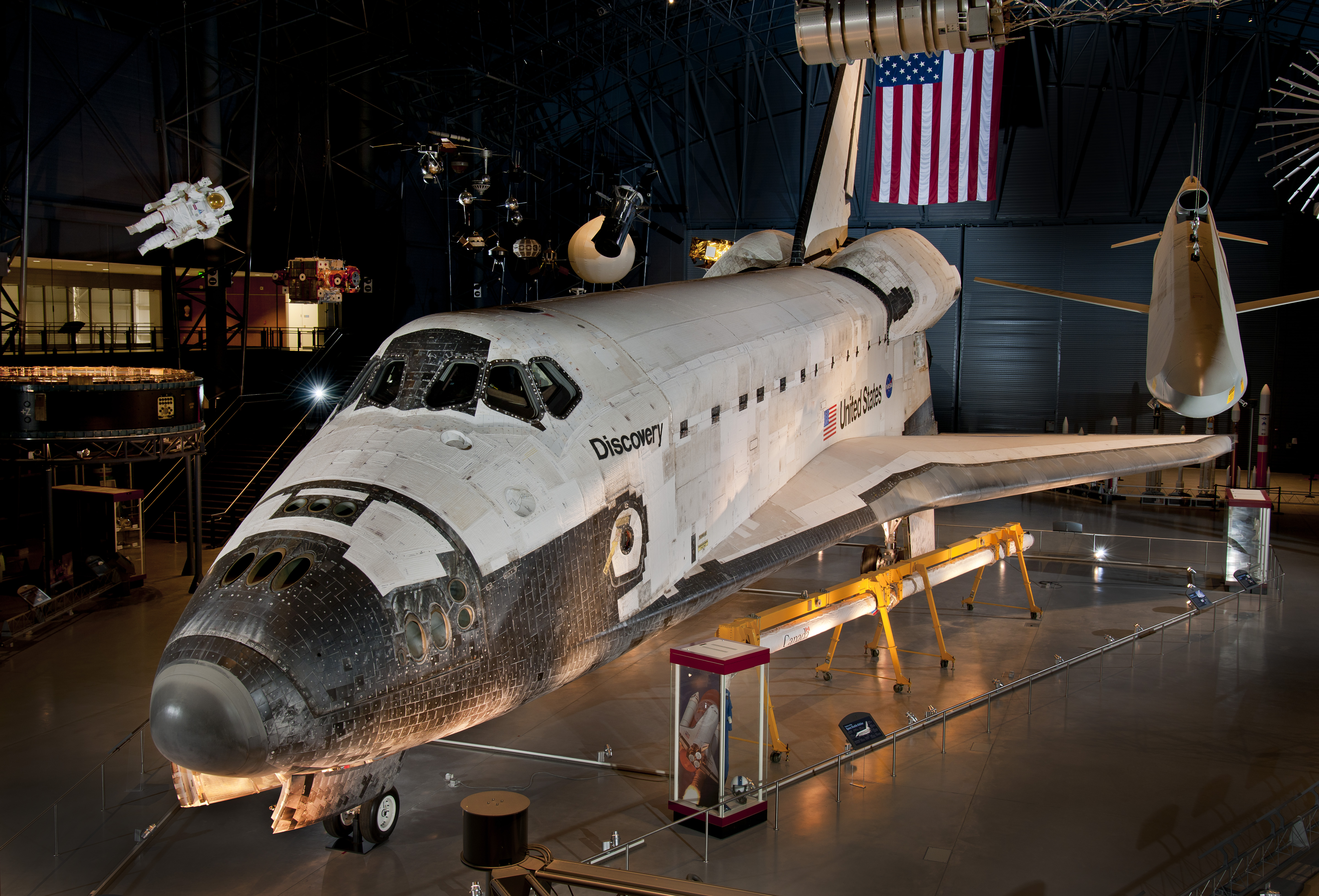
Subsequently, the interior was set up to be configured either as Apollo/Soyuz or a five-man rescue vehicle as once proposed for Skylab so that astronauts could train for those missions. It was finally transferred from NASA to the Smithsonian in 1977 and is displayed now at the Hazy Center with the flotation collar and bags that were attached to Columbia at the end of its historic mission.
Alternate Name
Apollo Boilerplate Command Module
Credit Line
Transferred from the National Aeronautics and Space Administration
Inventory Number
A19800160000
Restrictions & Rights
Usage conditions apply
Type
SPACECRAFT-Crewed-Test Vehicles
Materials
Aluminum structure
Dimensions
Overall: 10 ft. 7 in. tall x 12 ft. 10 in. diameter, 4000 lb. (322.58 x 391.16cm, 1814.4kg)
Country of Origin
United States of America
See more items in
National Air and Space Museum Collection
Location
Steven F. Udvar-Hazy Center in Chantilly, VA
Exhibit Station
Human Spaceflight
Data Source
National Air and Space Museum
Link to Original Record
Record ID
nasm_A19800160000