Skip to main content Skip to main navigation
heart-solid My Visit Donate
Home Smithsonian Institution IK development site for ODI
Press Enter to activate a submenu, down arrow to access the items and Escape to close the submenu.
    • Overview
    • Museums and Zoo
    • Entry and Guidelines
    • Museum Maps
    • Dine and Shop
    • Accessibility
    • Visiting with Kids
    • Group Visits
    • Overview
    • Exhibitions
    • Online Events
    • All Events
    • IMAX & Planetarium
    • Overview
    • Topics
    • Collections
    • Research Resources
    • Stories
    • Podcasts
    • Overview
    • For Caregivers
    • For Educators
    • For Students
    • For Academics
    • For Lifelong Learners
    • Overview
    • Become a Member
    • Renew Membership
    • Make a Gift
    • Volunteer
    • Overview
    • Our Organization
    • Our Leadership
    • Reports and Plans
    • Newsdesk
heart-solid My Visit Donate

Boeing T50-BO-8A (502-10VC) Turboshaft Engine

Air and Space Museum

This media is in the public domain (free of copyright restrictions). You can copy, modify, and distribute this work without contacting the Smithsonian. For more information, visit the Smithsonian's Open Access page.
International media Interoperability Framework
IIIF provides researchers rich metadata and media viewing options for comparison of works across cultural heritage collections. Visit the IIIF page to learn more.
View manifest View in Mirador Viewer

    Object Details

    Manufacturer

    Boeing Company

    Physical Description

    Type: Turboshaft
    Power Rating: 224 kW (300 hp) at 28,380 rpm
    Compressor: Single-stage centrifugal
    Combustor: 2 combustion chambers
    Turbine: Single-stage axial
    Weight: 152 kg (334 lb)

    Summary

    In the mid-1940s, Boeing engineers conducted research to become familiar with gas turbines, but it became apparent that the research engines were significant in themselves. First engine run was the 667 N (150 lb) thrust Model 500 turbojet, closely followed by the 119 kw (160 shp) Model 502 turboprop. Because no applications materialized for the turbojet, efforts were focused on the Model 502, initially developed as a turboprop and later as the more widely used turboshaft engine, first delivered in 1949.
    In late-1951, a Model 502 powered Kaman K-225 helicopter became the world's first gas turbine-powered helicopter, and, in late-1952, a Model 502 powered Cessna XL-19B Bird Dog became the world's first turboprop-powered light aircraft.
    By the mid-1960s, significant power and reliability improvements produced the Model 502-10VC, the first U.S. turbine engine in the 149 to 224 kw (200 to 300 shp) range to receive an approved 150-hour qualification. This artifact powered the Gyrodyne QH-50C (DSN-3) drone helicopter.

    Credit Line

    Transferred from the U.S. Navy, Naval Supply Center, Norfolk, Virginia

    Date

    Circa 1950s

    Inventory Number

    A19740506000

    Restrictions & Rights

    CC0

    Type

    PROPULSION-Turbines (Jet)

    Materials

    Aluminum, Steel, Paint, Rubber, Copper, Stainless Steel, Titanium

    Dimensions

    Length 101.6 cm (40.0 in.), Diameter 61.0 cm (24.0 in.)

    Country of Origin

    United States of America

    See more items in

    National Air and Space Museum Collection

    Data Source

    National Air and Space Museum

    Metadata Usage

    CC0

    Link to Original Record

    http://n2t.net/ark:/65665/nv9bbcc2de6-ead1-4db5-8653-41ed6ed795ab

    Record ID

    nasm_A19740506000

    Discover More

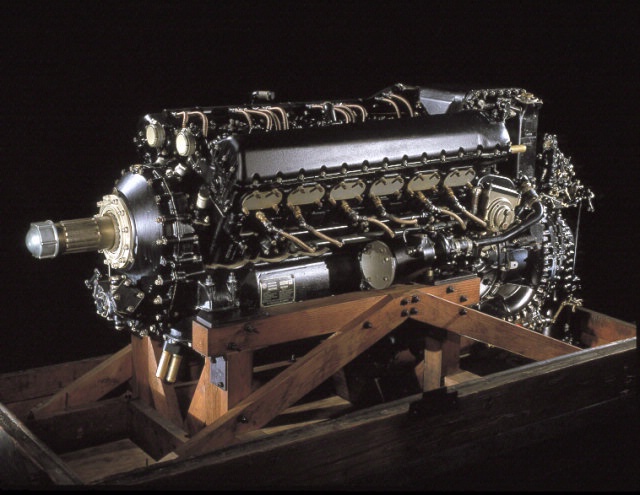
    Image of Packard Merlin V-1650-7 engine

    Propulsion

    Image of Packard Merlin V-1650-7 engine

    Propulsion

    arrow-up Back to top
    Home
    • Facebook facebook
    • Instagram instagram
    • LinkedIn linkedin
    • YouTube youtube

    • Contact Us
    • Get Involved
    • Shop Online
    • Job Opportunities
    • Equal Opportunity
    • Inspector General
    • Records Requests
    • Accessibility
    • Host Your Event
    • Press Room
    • Privacy
    • Terms of Use