Skip to main content Skip to main navigation
heart-solid My Visit Donate
Home Smithsonian Institution IK development site for ODI
Press Enter to activate a submenu, down arrow to access the items and Escape to close the submenu.
    • Overview
    • Museums and Zoo
    • Entry and Guidelines
    • Museum Maps
    • Dine and Shop
    • Accessibility
    • Visiting with Kids
    • Group Visits
    • Overview
    • Exhibitions
    • Online Events
    • All Events
    • IMAX & Planetarium
    • Overview
    • Topics
    • Collections
    • Research Resources
    • Stories
    • Podcasts
    • Overview
    • For Caregivers
    • For Educators
    • For Students
    • For Academics
    • For Lifelong Learners
    • Overview
    • Become a Member
    • Renew Membership
    • Make a Gift
    • Volunteer
    • Overview
    • Our Organization
    • Our Leadership
    • Reports and Plans
    • Newsdesk
heart-solid My Visit Donate

BMW 003 Turbojet Engine

Air and Space Museum

There are restrictions for re-using this image. For more information, visit the Smithsonian's Terms of Use page .
International media Interoperability Framework
IIIF provides researchers rich metadata and media viewing options for comparison of works across cultural heritage collections. Visit the IIIF page to learn more.
View manifest View in Mirador Viewer

    Object Details

    Manufacturer

    BMW (Bayerische Motoren Werke)

    Physical Description

    Type: Turbojet
    Thrust: 6,894 N (1,550 lb) at 9,000 rpm
    Compressor: 7-stage axial
    Combustor: Annular
    Turbine: Single-stage axial
    Weight: 624 kg (1,375 lb.)

    Summary

    Preliminary work by BMW on jet propulsion began in 1934 with formation of its aircraft engine organization. Development included consideration of ducted fans and turbochargers before evolving into the BMW 109-003 in 1939, the company’s principal turbojet during World War II. Flight tests were conducted on a Me 262 as early as 1942. Approaching the production stage, flight testing continued in late-1943 with a Junkers Ju 88 as a test-bed, with the engine mounted below the aircraft fuselage and its fuel tank in the bomb bay. Following the liberation of France in 1944, continuing test cell based development moved to an abandoned salt mine from its previous border location. War time exigencies required further changes including type of fuel and use of sheet metal construction.
    Application of the BMW 003 was planned for the Arado Ar 234 four engine bomber; however, aircraft development slowed because of Allied bombing. BMW manufactured about 3,500 109-003 type engines.

    Credit Line

    Found in collection

    Date

    Circa World War II

    Inventory Number

    A19670125000

    Restrictions & Rights

    Usage conditions apply

    Type

    PROPULSION-Turbines (Jet)

    Materials

    Aluminum, Wood, Plastic, Steel, Paint, Rubber, Copper, Textile, Magnesium

    Dimensions

    Length 363.2 cm (143 in.), Diameter 69.1 cm (27.19 in.)

    Country of Origin

    Germany

    See more items in

    National Air and Space Museum Collection

    Data Source

    National Air and Space Museum

    Metadata Usage

    Not determined

    Link to Original Record

    http://n2t.net/ark:/65665/nv996f850a0-72ef-4dc1-8c5d-f5f4d907be49

    Record ID

    nasm_A19670125000

    Discover More

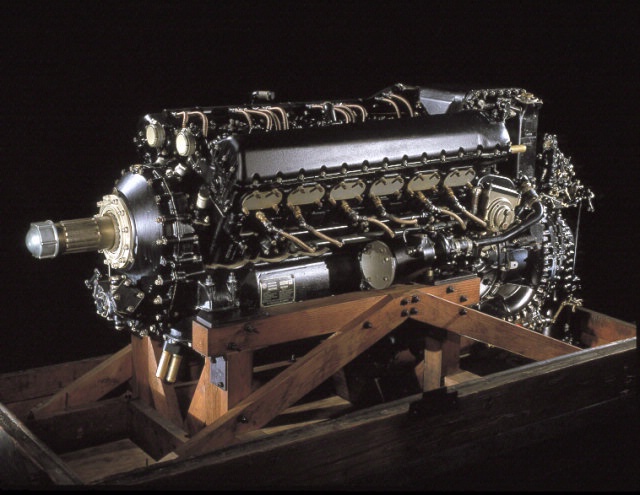
    Image of Packard Merlin V-1650-7 engine

    Propulsion

    Image of Packard Merlin V-1650-7 engine

    Propulsion

    arrow-up Back to top
    Home
    • Facebook facebook
    • Instagram instagram
    • LinkedIn linkedin
    • YouTube youtube

    • Contact Us
    • Get Involved
    • Shop Online
    • Job Opportunities
    • Equal Opportunity
    • Inspector General
    • Records Requests
    • Accessibility
    • Host Your Event
    • Press Room
    • Privacy
    • Terms of Use