Skip to main content Skip to main navigation
heart-solid My Visit Donate
Home Smithsonian Institution IK development site for ODI
Press Enter to activate a submenu, down arrow to access the items and Escape to close the submenu.
    • Overview
    • Museums and Zoo
    • Entry and Guidelines
    • Museum Maps
    • Dine and Shop
    • Accessibility
    • Visiting with Kids
    • Group Visits
    • Overview
    • Exhibitions
    • Online Events
    • All Events
    • IMAX & Planetarium
    • Overview
    • Topics
    • Collections
    • Research Resources
    • Stories
    • Podcasts
    • Overview
    • For Caregivers
    • For Educators
    • For Students
    • For Academics
    • For Lifelong Learners
    • Overview
    • Become a Member
    • Renew Membership
    • Make a Gift
    • Volunteer
    • Overview
    • Our Organization
    • Our Leadership
    • Reports and Plans
    • Newsdesk
heart-solid My Visit Donate

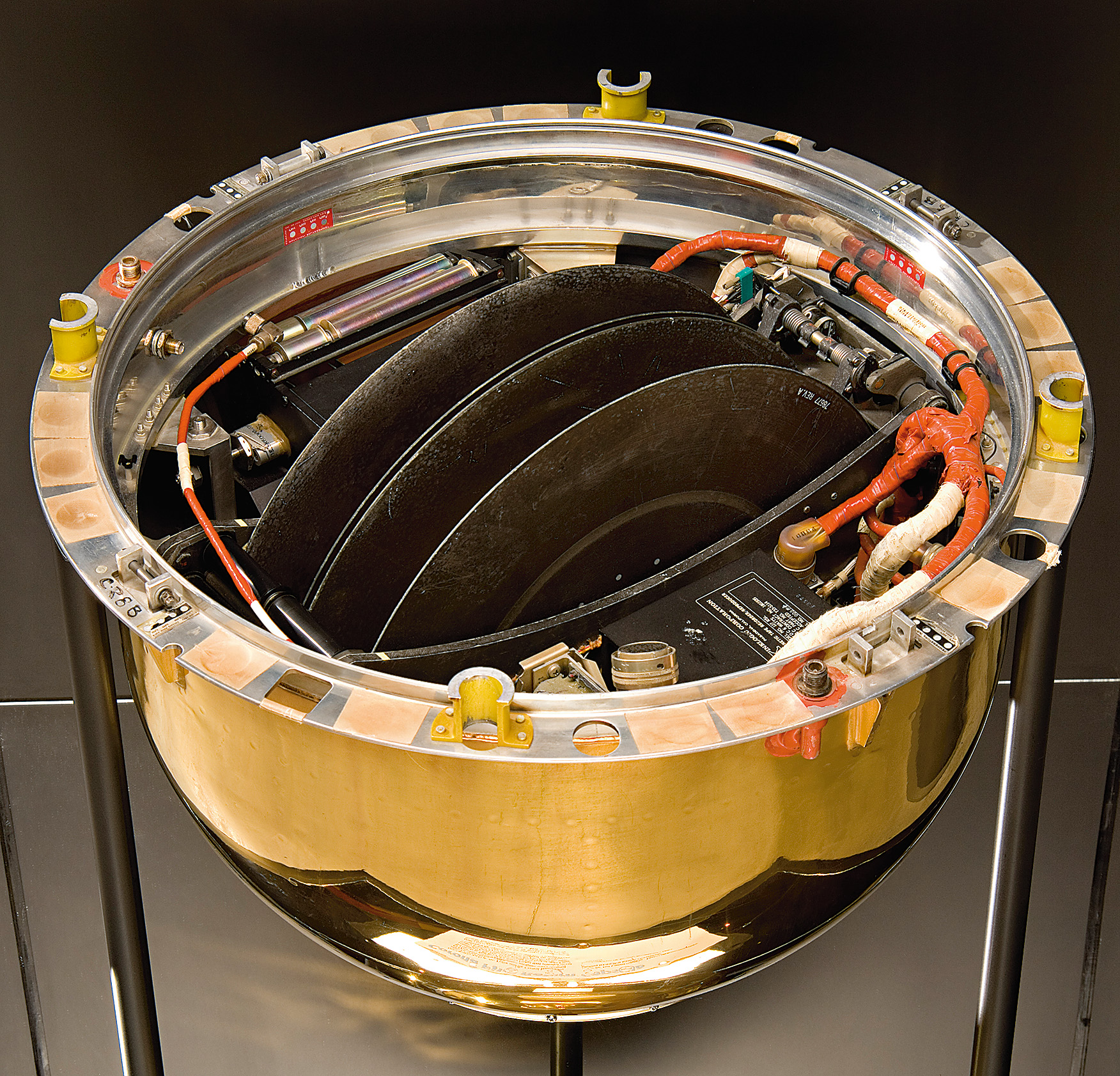
Biocapsule, Primate

Air and Space Museum

This media is in the public domain (free of copyright restrictions). You can copy, modify, and distribute this work without contacting the Smithsonian. For more information, visit the Smithsonian's Open Access page.
International media Interoperability Framework
IIIF provides researchers rich metadata and media viewing options for comparison of works across cultural heritage collections. Visit the IIIF page to learn more.
View manifest View in Mirador Viewer
  • Full view of a gray disc with red and black text on it. The red text reads ABMA, while the black text reads US Army NASA, AOMC Meds, Bio Medical Experiment No. 2B.
  • Full view of a brown and gray disc with rivets around the gray center. A white plaque reads Moisture Absorber.
  • Full view of a gray tube with red and blue accessories and silver pipes.
  • Full view of a gray tube with red and blue accessories and silver pipes.

    Object Details

    Manufacturer

    U.S. Army Ballistic Missile Agency, Redstone Arsenal

    Summary

    This biocapsule carried Able, a female rhesus monkey, during the first flight to recover a primate from space. On May 28, 1959, an Army Ballistic Missile Agency Jupiter rocket at Cape Canaveral launched Able and Baker (a female squirrel monkey housed in a separate capsule) in its nose cone. Their biomedical condition was monitored throughout the flight as part of Department of Defense experiments to determine the effects of spaceflight on living animals. They reached an altitude of approximately 300 miles, a maximum speed of 10,000 mph, and were recovered alive some 1,500 miles downrange by U.S. Navy ships. The flight provided important biomedical data for the human spaceflight program. The capsule was built by the Army Ballistic Missile Agency, which transferred it to NASM in 1960.

    Credit Line

    Transferred from U.S. Army Ballistic Missile Agency

    Inventory Number

    A19600217000

    Restrictions & Rights

    CC0

    Type

    SPACECRAFT-Crewed-Test Vehicles

    Materials

    Components: Plastic
    Overall - Aluminum
    Wiring - Copper, Steel

    Dimensions

    3-D (Body): 111.8 × 66 × 92.1cm (3 ft. 8 in. × 2 ft. 2 in. × 3 ft. 1/4 in.)

    Country of Origin

    United States of America

    See more items in

    National Air and Space Museum Collection

    Data Source

    National Air and Space Museum

    Metadata Usage

    CC0

    Link to Original Record

    http://n2t.net/ark:/65665/nv93fe94c2b-7a59-4fef-9d61-d48bf574ac73

    Record ID

    nasm_A19600217000

    Discover More

    Image of Discoverer XIII film return capsule

    National Security Space

    Image of Discoverer XIII film return capsule

    National Security Space

    arrow-up Back to top
    Home
    • Facebook facebook
    • Instagram instagram
    • LinkedIn linkedin
    • YouTube youtube

    • Contact Us
    • Get Involved
    • Shop Online
    • Job Opportunities
    • Equal Opportunity
    • Inspector General
    • Records Requests
    • Accessibility
    • Host Your Event
    • Press Room
    • Privacy
    • Terms of Use