
Object Details
Manufacturer
Besler Brothers (Emeryville, California)
Physical Description
Type: Reciprocating, two-cylinder compound double acting, V-type, steam engine, reproduction
Power rating: 112 kW (150 hp) at 1,625 rpm, 1,200 psi boiler pressure
Displacement: 1.41 L (86.1 cu in)
Bore and Stroke: 76.2 mm (3 in.) x 76.2 mm (3 in.) high-pressure cylinder, 133 mm (5.25 in.) x 76.2 mm (3 in.) low pressure cylinder
Weight: 82 kg (180 lb) engine, 136 kg (300 lb) boilers and condensers
Summary
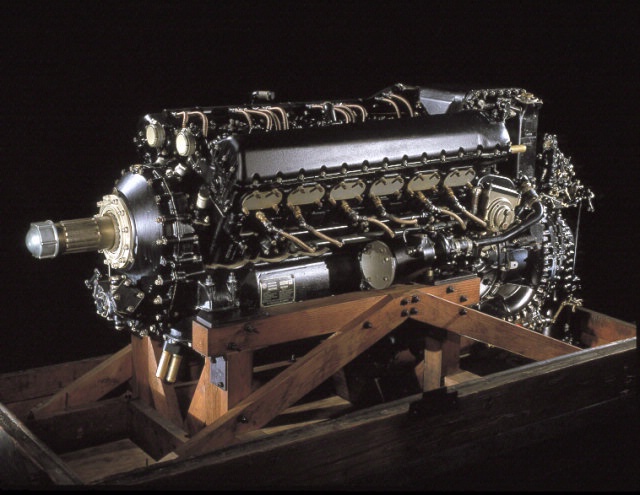
Besler Steam Engine Replica
This is a replica of the only steam engine to power a full-size aircraft in flight. On April 12, 1933 at Oakland, California, William J. Besler made the first flight with his Besler steam engine installed in a Travel Air 2000 aircraft. The engine was a two-cylinder V-type engine that generated 150 hp. The engine weighed 180 lb and the boilers and condensers weighed an additional 300 lb (3.2 lb/hp).
The engine was quiet and could be reversed instantly both in flight and on the ground to steepen landing approaches and shorten the landing run after touchdown. Because the steam engine was heavier, less efficient, and more complex than conventional internal combustion engines, it could not compete with them and thus was never put into production.
Credit Line
Transferred from the U.S. Navy
Date
Circa 1933
Inventory Number
A19650253000
Restrictions & Rights
Usage conditions apply
Type
PROPULSION-Reciprocating & Rotary
Materials
AluminumSteelCopper AlloyNatural FabricRubberGlassPaint
Chrome Plating
Plastic
Anodized Aluminum
Ceramic
Cadmium Plating
Adhesive
Dimensions
Storage: 162.6 × 86.7 × 146.1cm (64 × 34 1/8 × 57 1/2 in.)
Country of Origin
United States of America
See more items in
National Air and Space Museum Collection
Data Source
National Air and Space Museum
Link to Original Record
Record ID
nasm_A19650253000