Skip to main content Skip to main navigation
heart-solid My Visit Donate
Home Smithsonian Institution IK development site for ODI
Press Enter to activate a submenu, down arrow to access the items and Escape to close the submenu.
    • Overview
    • Museums and Zoo
    • Entry and Guidelines
    • Museum Maps
    • Dine and Shop
    • Accessibility
    • Visiting with Kids
    • Group Visits
    • Overview
    • Exhibitions
    • Online Events
    • All Events
    • IMAX & Planetarium
    • Overview
    • Topics
    • Collections
    • Research Resources
    • Stories
    • Podcasts
    • Overview
    • For Caregivers
    • For Educators
    • For Students
    • For Academics
    • For Lifelong Learners
    • Overview
    • Become a Member
    • Renew Membership
    • Make a Gift
    • Volunteer
    • Overview
    • Our Organization
    • Our Leadership
    • Reports and Plans
    • Newsdesk
heart-solid My Visit Donate

Ampule, Chlorine, Apollo 11

Air and Space Museum

There are restrictions for re-using this image. For more information, visit the Smithsonian's Terms of Use page .
International media Interoperability Framework
IIIF provides researchers rich metadata and media viewing options for comparison of works across cultural heritage collections. Visit the IIIF page to learn more.
View manifest View in Mirador Viewer

    Object Details

    Manufacturer

    Unknown

    Summary

    To insure that drinking water during the Apollo missions did not become contaminated with microorganisms, chemical disinfectants were periodically injected into the water supply by the astronauts. A chlorine solution was used for the Command Module. The chlorine (sodium hypochlorite diluted to 1860 mg/L) was contained in 20 cc cylindrical ampules, like this one. Twenty minutes before water was consumed, the ampule was inserted into the water tank. Immediately afterward, a second ampule, containing a buffer (sodium dihydrogen phosphate) was inserted to neutralize the pH of the water, with an inhibitor, sodium nitrate (to slow corrosion). After waiting the 20 additional minutes for the chemicals to disperse throughout the tank, the water was potable.
    This ampule was flown on Apollo 11 Command Module and was returned unused. In 1970 NASA transferred it to the Smithsonian along with the rest of the contents of the Command Module.

    Credit Line

    Transferred from the NASA - Johnson Space Center

    Inventory Number

    A19700102151

    Restrictions & Rights

    Usage conditions apply

    Type

    SPACECRAFT-Crewed-Life Support

    Materials

    Synthetic
    Coating

    Dimensions

    3-D: 3.2 × 3.2 × 8.1cm (1 1/4 × 1 1/4 × 3 3/16 in.)

    Country of Origin

    United States of America

    See more items in

    National Air and Space Museum Collection

    Data Source

    National Air and Space Museum

    Metadata Usage

    Not determined

    Link to Original Record

    http://n2t.net/ark:/65665/nv9dcf531c4-bfc3-4725-89fd-b43c810a6ab1

    Record ID

    nasm_A19700102151

    Discover More

    Apollo 11 Object Group

    Apollo 11

    Apollo 11 Object Group

    Apollo 11

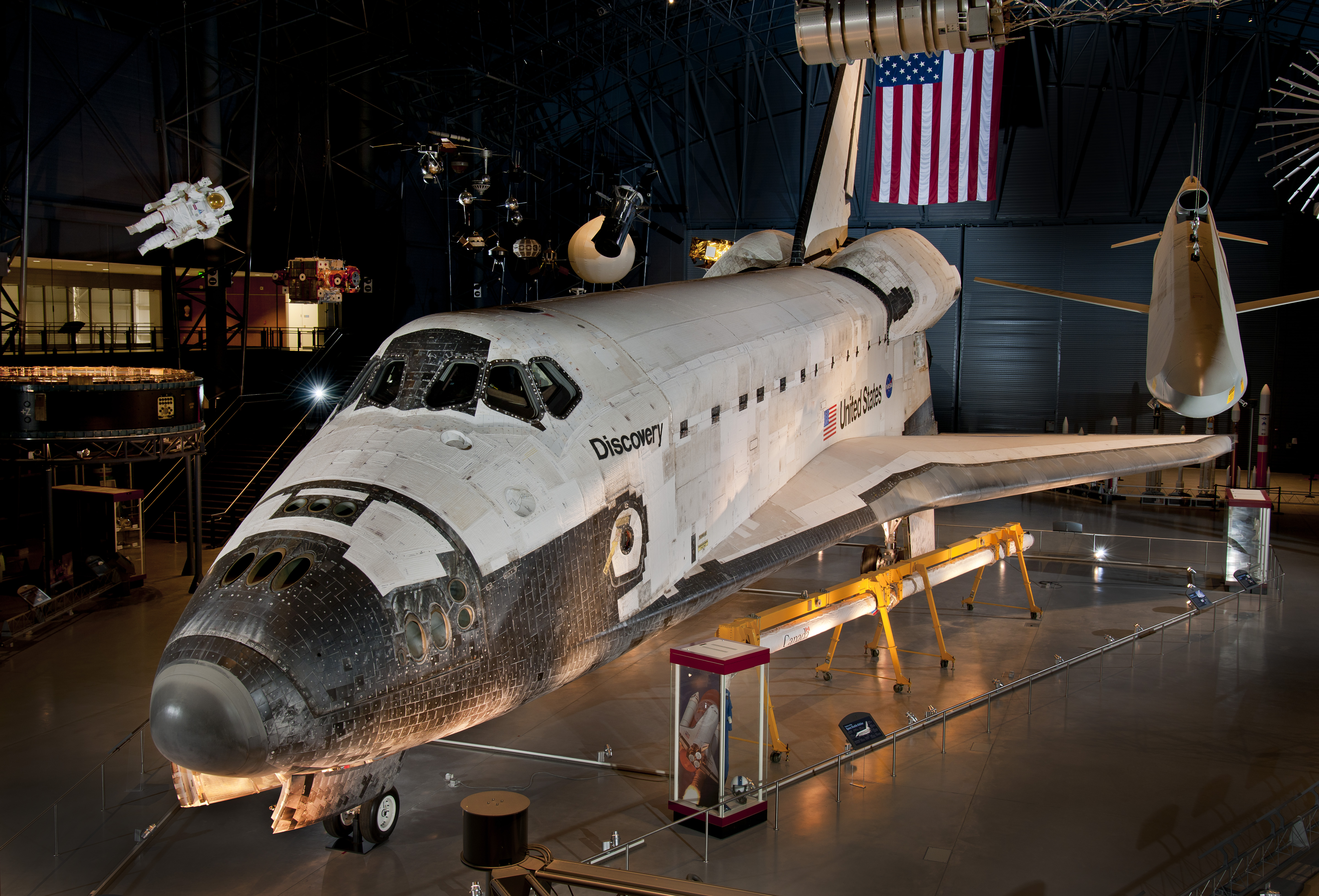
    Space Shuttle orbiter Discovery on display in the McDonnell Space Hangar at the Steven F. Udvar-Hazy Center

    Human Spaceflight

    Space Shuttle orbiter Discovery on display in the McDonnell Space Hangar at the Steven F. Udvar-Hazy Center

    Human Spaceflight

    arrow-up Back to top
    Home
    • Facebook facebook
    • Instagram instagram
    • LinkedIn linkedin
    • YouTube youtube

    • Contact Us
    • Get Involved
    • Shop Online
    • Job Opportunities
    • Equal Opportunity
    • Inspector General
    • Records Requests
    • Accessibility
    • Host Your Event
    • Press Room
    • Privacy
    • Terms of Use