Skip to main content Skip to main navigation
heart-solid My Visit Donate
Home Smithsonian Institution IK development site for ODI
Press Enter to activate a submenu, down arrow to access the items and Escape to close the submenu.
    • Overview
    • Museums and Zoo
    • Entry and Guidelines
    • Museum Maps
    • Dine and Shop
    • Accessibility
    • Visiting with Kids
    • Group Visits
    • Overview
    • Exhibitions
    • Online Events
    • All Events
    • IMAX & Planetarium
    • Overview
    • Topics
    • Collections
    • Research Resources
    • Stories
    • Podcasts
    • Overview
    • For Caregivers
    • For Educators
    • For Students
    • For Academics
    • For Lifelong Learners
    • Overview
    • Become a Member
    • Renew Membership
    • Make a Gift
    • Volunteer
    • Overview
    • Our Organization
    • Our Leadership
    • Reports and Plans
    • Newsdesk
heart-solid My Visit Donate

American Propeller and Mfg Co. Propeller, fixed-pitch, three-blade, wood

Air and Space Museum

There are restrictions for re-using this image. For more information, visit the Smithsonian's Terms of Use page .
International media Interoperability Framework
IIIF provides researchers rich metadata and media viewing options for comparison of works across cultural heritage collections. Visit the IIIF page to learn more.
View manifest View in Mirador Viewer

Object Details

Manufacturer

American Propeller and Manufacturing Company

Physical Description

Type: Three-Blade, Fixed-Pitch, Wood and Metal
Diameter: 261.6 cm (103 in.)
Chord: 23.2 cm (9.13 in.)
Engine Application: Unknown

Summary

An early predominant manufacturer in the United States, Spencer Heath's American Propeller and Manufacturing Company opened in Baltimore in 1909. Heath was first to use machines for mass production of aircraft propellers and, under the Paragon trademark, these were widely used in World War I. Like most propellers of that era, construction was a wood laminate because of light weight, strength, fabrication ease, and resistance to fatigue in a vibrating and flexing environment.
Heath demonstrated the first "engine-powered, engine-controlled, variable and reversible pitch propeller" in 1919, but was unsuccessful in convincing the Army of the practicality of the concept. He sold the company to the Bendix Corporation in 1929 and retired from aeronautics two years later.
This propeller was for Rhode Island's Gallaudet Aircraft Co., begun in 1908 and primarily involved in manufacture of Navy seaplanes. Its wide hub is likely associated with Gallaudet aircraft having engines buried behind the cockpit, with a propeller rotating around the fuselage.

Credit Line

Gift of American Propeller & Manufacturing Co.

Inventory Number

A19300040000

Restrictions & Rights

Usage conditions apply

Type

PROPULSION-Propellers & Impellers

Materials

Wood
Varnish
Adhesive
Paint
Copper Alloy
Steel

Dimensions

Rotor/Propeller: 259.1 x 23.2 x 55.2 x 15.2 x 24.1cm (102 x 9 1/8 x 21 3/4 x 6 x 9 1/2 in.)

Country of Origin

United States of America

See more items in

National Air and Space Museum Collection

Data Source

National Air and Space Museum

Metadata Usage

Not determined

Link to Original Record

http://n2t.net/ark:/65665/nv91fe2648d-2129-4779-82b0-26679401e3cc

Record ID

nasm_A19300040000

Discover More

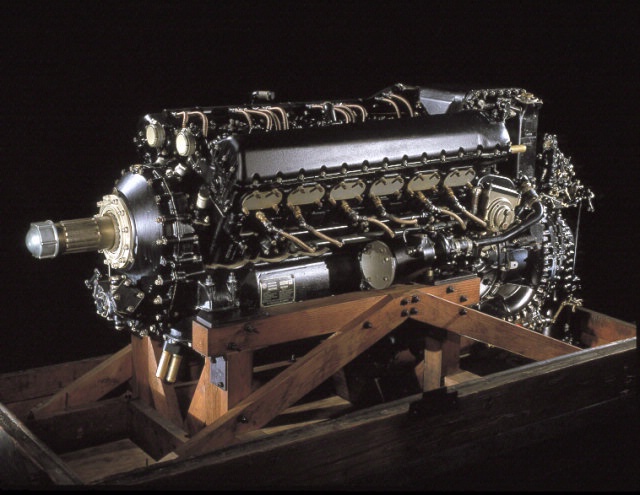
Image of Packard Merlin V-1650-7 engine

Propulsion

Image of Packard Merlin V-1650-7 engine

Propulsion

arrow-up Back to top
Home
  • Facebook facebook
  • Instagram instagram
  • LinkedIn linkedin
  • YouTube youtube

  • Contact Us
  • Get Involved
  • Shop Online
  • Job Opportunities
  • Equal Opportunity
  • Inspector General
  • Records Requests
  • Accessibility
  • Host Your Event
  • Press Room
  • Privacy
  • Terms of Use