

Object Details
Description
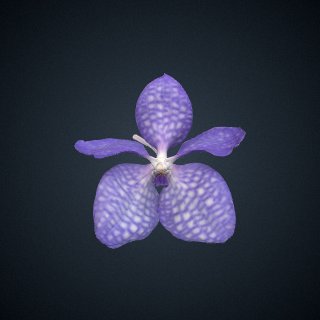
This medium to large sized orchid was the cause of much excitement when it was first brought to Europe in 1847, due to its large, blue flowers. Many expeditions were sent to gather the orchid, imperiling it. The medical properties of this orchid are currently being researched.
Bloom Time (Northern Hemisphere)
August to December; peaks in November
Medicinal / Pharmaceutical
In India, the flowers have been used to treat chest conditions, and juice from the leaves to treat diarrhea and dysentary, and skin conditions externally.
Provenance
From a cultivated plant not of known wild origin
Accession Number
2018-1008A
Restrictions & Rights
CC0
Life Form
Epiphytic
Bloom Characteristics
Erect or suberect inflorescence is up to 2 feet (.6 meters) long with few to several long-lasting white flowers covered in a blue crosshatch. Flowers are 4" (10 cm) across.
Fragrance
Fragrant
Plant Size
20-75" x 18-30" (51-191 x 46-76 cm), excluding inflorescence
Range
Arunachal Pradesh to China (S Yunnan) and Indo-China
Habitat
On exposed, dwarf oak trees in forests with dry season; 2625-5600ft (800-1700m)
See more items in
Smithsonian Gardens Orchid Collection
Common Name
The Blue Vanda
Group
[vascular plants]
Class
Equisetopsida
Subclass
Magnoliidae
Superorder
Lilianae
Order
Asparagales
Family
Orchidaceae
Subfamily
Epidendroideae
Genus
Vanda
Species
coerulea
Data Source
Smithsonian Gardens
Topic
Orchids
Living Collections
Link to Original Record
Record ID
ofeo-sg_2018-1008A