
Object Details
Collector
Jamestown Rediscovery (Preservation Virginia)
Summary
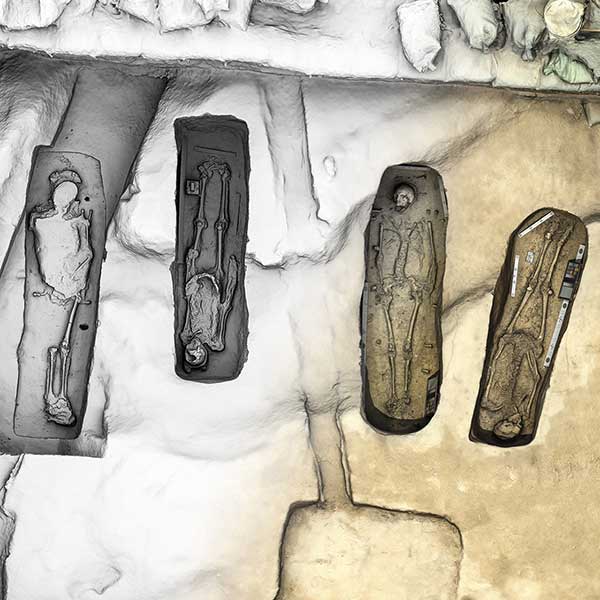
The skeletal data indicate the remains represent a male of European ancestry, about 35 - 40 years old at death. One feature suggesting he is the oldest man buried in the chancel is his worn teeth. English diet in the late 1500s and early 1600s - more abrasive than today - caused greater tooth wear with advancing age. Historical records show that the Rev. Robert Hunt was 39 when he died at James Fort. Based on details from historic documents related to the identities of the other named men, Hunt was indeed the oldest of the four buried in the church. Chemical testing of the bones for lead supports this identification. Lead is a posion that enters the body through contamined foods, can be breathed in as dust, or absorbed through the skin. High lead content in 17th-century bone usually indicates a person of means since the wealthy routinely dined on pewter and displayed it in their homes. The lead content in these bones was the lowest of the four burials indicating a man of more limited means.
Field Identifier
Jamestown Chancel Burial A 2993B
Credit Line
The Jamestown Chancel Burial investigation is a collaboration between the Smithsonian's Skeletal Biology Program, the Smithsonian 3D Digitization Program Office and Jamestown Rediscovery.
Site Name
Historic Jamestowne
Taxonony
Homo sapiens
Data Source
NMNH - Anthropology Dept.
Record ID
dpo_3d_200008